
This site stays free thanks to small commissions from links like the ones below — it never costs you anything extra, and it never changes what we recommend. As an Amazon Associate we earn from qualifying purchases. Learn more.
You don’t need a generator to survive a winter power outage — you need to trap and hold body heat well. This guide covers how to stay warm during a winter power outage without relying on running an appliance, plus which heating devices are actually safe to use indoors.
Quick answer
Close off and heat one small room instead of the whole house, seal drafts around it, layer clothing (wool or synthetic, never cotton), and use sleeping bags rated well below the outdoor temperature. Body heat, blankets, and a well-insulated small space do more than people expect. If you add a supplemental heater, it must be rated for indoor use and paired with a working carbon monoxide detector.
Pick one room and seal it
- Choose a small, interior room if possible — fewer exterior walls and windows means less heat loss. A bathroom or bedroom away from the north/windward side works well.
- Close the door and block the gap underneath with a rolled towel or a draft stopper.
- Cover windows with blankets, heavy curtains, or even taped-up cardboard and plastic sheeting — glass loses heat fast.
- Close vents to the rest of the house if your system allows it, so you’re not heating rooms you’re not using.
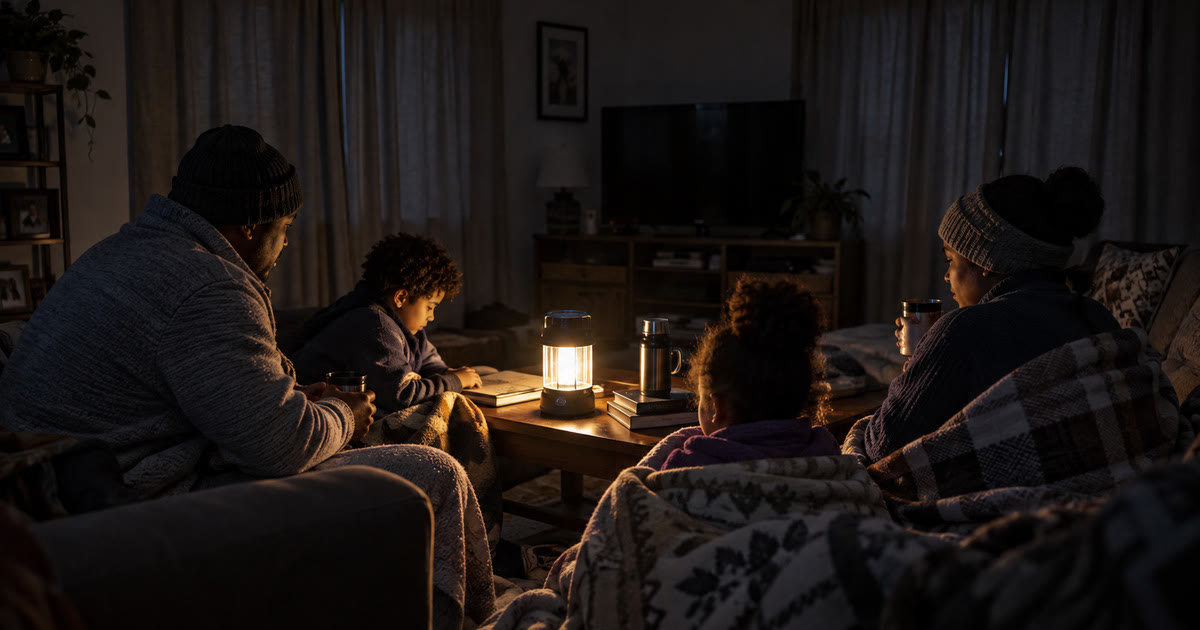
- Everyone in one room concentrates body heat, which genuinely adds up for a family.
Layer your body correctly
Wear multiple looser layers rather than one thick one: a moisture-wicking base layer, an insulating mid layer (fleece, wool, down), and keep dry outer layers on hand. Cover your head, neck, hands, and feet — these lose heat fastest. Wool socks and a hat make a bigger difference than most people expect, even indoors. See our full guide to layering for cold weather.
Build a warm sleeping setup
- Insulate from below — a sleeping pad, extra blankets, or couch cushions under you matter as much as what’s on top, since the floor pulls heat away fast.
- A sleeping bag rated well below expected temperatures, or layered blankets with a sealed-in air gap, holds heat far better than blankets alone.
- Share body heat — family members or pets sleeping close together, or two people in one large sleeping bag setup, stay measurably warmer.
- A knit hat while sleeping reduces heat loss meaningfully; a surprising amount of heat leaves through the head.
Safe supplemental heat sources
- Propane or kerosene heaters rated for indoor use, used in a ventilated room, with a CO detector running. See our portable heater picks.
- Battery or power-station-run electric heaters are the safest option (no combustion, no CO risk) but draw a lot of power — fine for a few hours, not for days on a small battery bank.
- Chemical hand and body warmers tucked into gloves, boots, and pockets extend comfort cheaply.
- A safely built fire in a proper fireplace or wood stove with the flue open and clear.
What NEVER to use indoors
Charcoal or gas grills, camp stoves, generators, and any unvented fuel-burning device produce carbon monoxide, which is odorless and can kill in an enclosed space with no warning. Never run any of these indoors, in a garage, or near an open window or vent — even briefly. Keep a battery-powered CO detector in the room with any indoor-rated combustion heater, since even approved heaters can malfunction or run low on oxygen in a sealed room.
Food, drink, and movement
- Eat and drink regularly — your body needs calories to generate heat, and dehydration makes you feel colder.
- Warm (not hot) drinks and soups help more than you’d think; avoid alcohol, which dilates blood vessels and speeds heat loss despite feeling warming.
- Light movement — stretching, walking in place — generates heat without breaking a sweat, which would cool you faster once you stop.
Watch for hypothermia signs
Shivering, clumsiness, confusion, and slurred speech in a cold room are warning signs, not just discomfort — especially in young children, older adults, and anyone with limited mobility. See our guide to recognizing and treating hypothermia and frostbite and don’t hesitate to seek help if anyone in the house is showing those signs.
Frequently asked questions
What is the warmest way to survive a power outage without a generator?
Close off and heat one small interior room instead of the whole house, seal the door and windows, layer clothing properly, and use a sleeping bag or layered blankets with insulation underneath as well as on top. Concentrating everyone in one room adds meaningful body heat.
Can you use a propane heater indoors during a power outage?
Only if it’s specifically rated for indoor use, used in a ventilated room, and paired with a working battery carbon monoxide detector. Charcoal grills, camp stoves, and generators are never safe indoors under any circumstances.
How do you keep a room warm without electricity?
Seal drafts around the door and windows, cover windows with blankets or plastic sheeting, insulate the floor you’re sitting or sleeping on, and layer clothing. A safely vented fireplace, wood stove, or an indoor-rated propane heater with a CO detector can add supplemental heat.
Does covering your head really help you stay warm?
Yes. While the popular “you lose 50% of heat through your head” claim is exaggerated, the head and neck are thinly insulated and lose heat disproportionately to their size, so a hat and a scarf or neck gaiter make a real difference.
Why shouldn’t you drink alcohol to warm up in the cold?
Alcohol dilates blood vessels near the skin, which feels warming but actually speeds heat loss from the body’s core and impairs your judgment and shivering response, increasing the real risk of hypothermia.
How cold does it need to be indoors before it’s dangerous?
Indoor temperatures below about 60°F (16°C) raise hypothermia risk for vulnerable people over time, and risk climbs sharply as it approaches freezing. Young children, older adults, and anyone with limited mobility or certain health conditions are at higher risk at any given temperature.
Bottom line
Concentrate your effort on one small, sealed room, layer clothing and bedding correctly, and only add combustion heat with proper ventilation and a working CO detector. Most winter power outages are survived comfortably with insulation and layering alone — the heater is a backup, not the plan.
Related guides
🧡 How to Layer Clothing for Cold Weather
🔥 Best Portable Heaters for Power Outages
🔌 How to Prepare for a Long-Term Power Outage
This article is for general informational purposes only. Sources: CDC extreme cold and carbon monoxide safety guidance; Ready.gov winter weather preparedness; American Red Cross winter storm safety.