
This site stays free thanks to small commissions from links like the ones below — it never costs you anything extra, and it never changes what we recommend. As an Amazon Associate we earn from qualifying purchases. Learn more.
Staying warm in the cold is less about one heavy coat and more about a system of layers you can adjust as conditions and your activity level change. This guide covers how to layer clothing for cold weather: the three-layer system, fabric choices, and the mistakes that get people cold or dangerously wet.
Quick answer
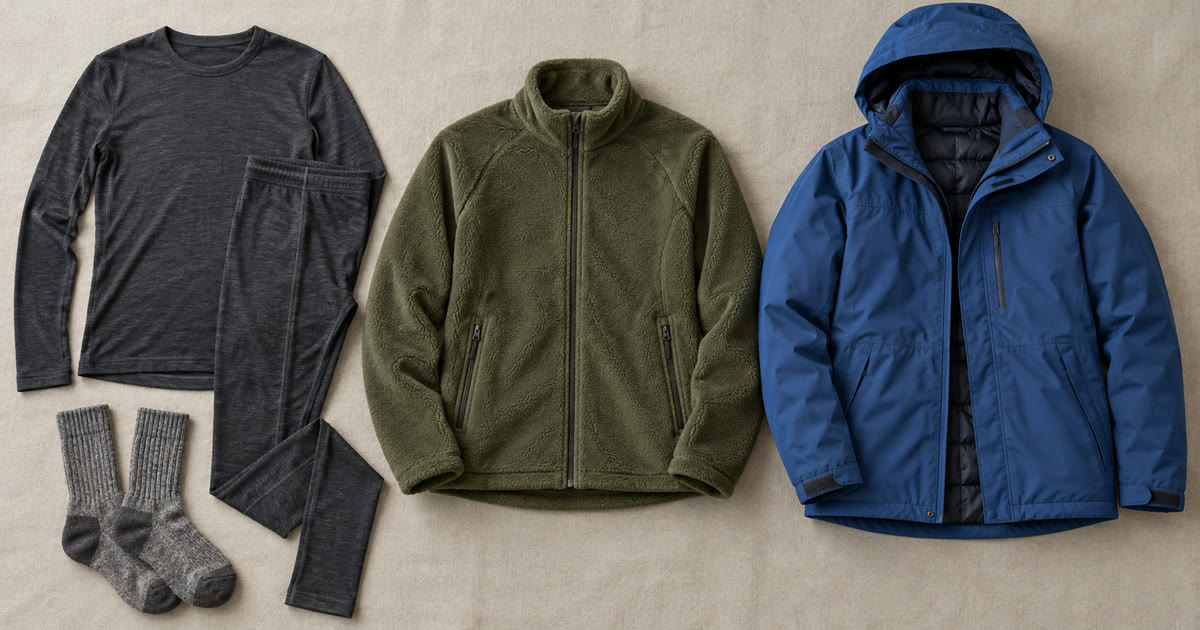
Use three layers: a moisture-wicking base layer against your skin, an insulating mid layer (fleece, wool, or down) for warmth, and a weatherproof outer shell to block wind and wet. Avoid cotton entirely in cold or wet conditions. Adjust layers before you get too hot or too cold — sweat that can’t escape is what actually makes people dangerously cold.
Layer 1: base layer (moisture management)
Worn against the skin, its job is to move sweat away from your body, not to insulate much on its own.
- Merino wool — warm even damp, resists odor, comfortable across a wide temperature range. Higher cost.
- Synthetic (polyester/polypropylene) — dries fast, cheaper, very effective at wicking, but holds odor more.
- Avoid cotton completely for this layer. Cotton absorbs sweat and holds it against your skin, which cools you rapidly once you stop moving — a real contributor to hypothermia even in mild cold.
- A merino base layer set (top and bottom) is worth the investment if you’re regularly out in the cold.
Layer 2: mid layer (insulation)
Traps warm air near your body. Choose based on conditions and packability:
- Fleece — breathable, insulates even when damp, dries fast, budget-friendly. The all-around choice for active use.
- Down — best warmth-to-weight ratio and compresses small, but loses almost all insulating power when wet unless it’s treated (“hydrophobic down”). Best for dry cold.
- Synthetic insulation (PrimaLoft and similar) — nearly as warm as down, keeps insulating when wet, heavier and bulkier. Better for damp climates.
- Layer thin mid layers rather than one thick one — two lighter fleeces adjust to changing conditions better than one heavy one.
Layer 3: outer shell (protection)
Blocks wind, rain, and snow from stripping away the heat your other layers built.
- Waterproof-breathable shells (Gore-Tex and similar membranes) for wet snow, rain, or active use where you’ll sweat.
- Windproof, water-resistant shells are lighter and cheaper, good for dry cold with wind.
- Insulated parkas combine mid and outer layers for very cold, low-activity conditions (standing around, not hiking).
- Look for pit zips or other ventilation so you can dump heat during exertion without fully removing the shell.
Don’t forget extremities
You lose disproportionate heat through your head, hands, feet, and neck relative to their size.
- Head: a wool or synthetic hat covering the ears; add a hood in wind.
- Neck: a gaiter or scarf you can pull over your face in wind.
- Hands: liner gloves under insulated mittens or gloves — mittens are warmer than gloves since fingers share heat.
- Feet: wool or synthetic socks (never cotton), sized so boots aren’t tight — tight boots restrict circulation and make feet colder, not warmer. A liner sock plus a thicker sock works well.
The core mistake: sweating in your layers
Overheating and sweating while active, then cooling down once you stop, is one of the most common ways people get dangerously cold outdoors. Manage it actively:
- Start slightly cool when you head out — you’ll warm up moving.
- Vent before you sweat: unzip, remove a layer, or open pit zips at the first sign of warming up, not after you’re already damp.
- Change into dry layers as soon as you stop moving for any length of time, especially base layers if they’re damp.
- Carry a dry “stop” layer — an insulated jacket you only put on during breaks, kept dry in your pack.
Adjusting the system by activity
- High exertion (hiking, shoveling, working outside): lighter layers, more venting, expect to run warmer than standing still.
- Low exertion (waiting, standing watch, riding in a vehicle): heavier insulation, less ventilation needed, extremities get cold faster.
- Sleeping outdoors or in an unheated space: dry base layer plus insulation, a hat, and insulation underneath you (a pad matters as much as a bag).
Frequently asked questions
Why is cotton bad for cold weather?
Cotton absorbs sweat and rain and holds the moisture against your skin instead of wicking it away, which cools your body rapidly once you stop moving or the wind picks up. This is a real contributor to hypothermia, sometimes summarized as “cotton kills” in outdoor safety guidance.
What is the best base layer material for cold weather?
Merino wool and synthetic fabrics like polyester are the two solid choices. Merino stays warm even when damp and resists odor; synthetics dry faster and cost less but hold odor more. Either works well as long as it isn’t cotton.
Is down or synthetic insulation better for winter layering?
Down offers the best warmth for its weight and packs smaller, but loses most of its insulating power when wet unless treated. Synthetic insulation is slightly heavier and bulkier but keeps insulating even when damp, making it better for wet or humid cold.
How many layers do you actually need in cold weather?
Three functional layers usually cover it: a moisture-wicking base, an insulating mid layer, and a weatherproof outer shell. Adding a second, thinner mid layer for very cold or low-activity conditions is often better than one thick layer, since it’s easier to adjust.
Why do my feet get cold even in warm boots?
Boots that are too tight restrict blood circulation, which makes feet colder even with plenty of insulation. Make sure there’s room for a liner sock plus a thicker wool or synthetic sock without compressing your foot, and avoid cotton socks.
Should you take off layers if you start sweating in the cold?
Yes, immediately. Vent or remove a layer at the first sign of overheating rather than after you’re already sweaty, since damp clothing cools you rapidly once you slow down or stop, which is a common cause of getting dangerously cold outdoors.
Bottom line
Build a base, mid, and shell layer system, keep cotton away from your skin, protect your head, hands, feet, and neck, and actively manage sweat by venting before you overheat. A good layering system adapts as you move, rest, and the weather changes — a single heavy coat can’t.
Related guides
🧡 Treating Hypothermia and Frostbite
🏠 Staying Warm During a Power Outage
🏙️ Winter Bug-Out Bag Checklist
This article is for general informational purposes only. Sources: REI Co-op expert layering advice; National Outdoor Leadership School (NOLS) cold-weather clothing guidance; CDC extreme cold safety.