
This site stays free thanks to small commissions from links like the ones below — it never costs you anything extra, and it never changes what we recommend. As an Amazon Associate we earn from qualifying purchases. Learn more.
A bug-out bag is built to leave home for days. A get-home bag has a narrower, more likely job: get you the 5, 15, or 40 miles from your office, campus, or car back to your front door when transport stops — a bad storm, a grid outage, a road closure, a transit shutdown. If you commute, this is the emergency kit you’re most likely to actually use. Here’s a practical get-home bag checklist for commuters, sized to the distance you’d have to cover on foot.
Quick answer
Pack a low-profile daypack you can walk in for hours: water and a filter, comfortable walking shoes and socks, weather protection, a phone battery and charging cable, a headlamp, snacks, a small first aid kit, cash, and a paper map with your route home marked. Scale food, water, and layers to how far you’d realistically have to walk.
How far is your walk home?
| Distance | On-foot time | Bag focus |
|---|---|---|
| Under 5 miles | 1–2 hrs | Shoes, water, light, phone battery, rain shell |
| 5–15 miles | 2–6 hrs | Add real snacks, 1–2 L water + filter, blister kit, extra socks |
| 15–40 miles | Most of a day / overnight | Add layers, a light tarp or bivy, more food, backup navigation, foot care |
Time yourself on a real walk once. Most people average 3 mph on pavement and far less on hills, in heat, in dress shoes, or carrying weight.
The get-home bag checklist
The bag
A plain 15–25 L daypack that doesn’t look tactical — you want to blend in, not stand out. It should ride comfortably with a hip or sternum strap. A packable daypack works if desk space is tight.
Feet (the part that ends your walk early)
- Broken-in walking or trail shoes if you commute in dress shoes or heels
- 2 pairs of wool or synthetic socks
- Blister kit: Leukotape or moleskin, small scissors
Water
- 1–2 L in a bottle or collapsible bottle
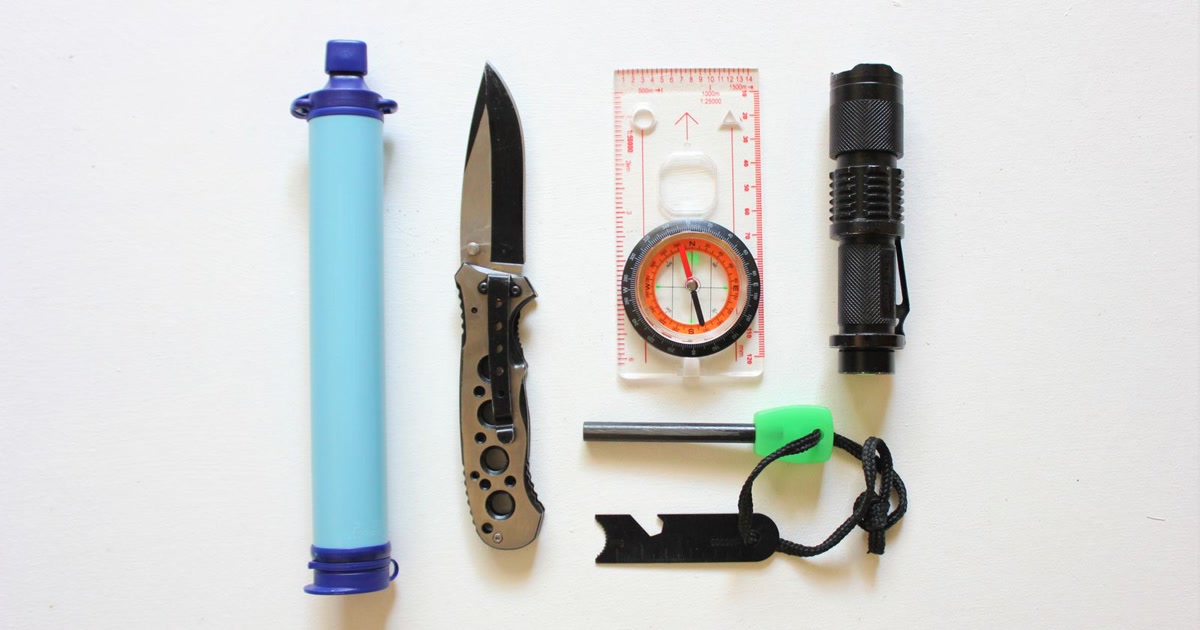
- A pocket water filter or purification tablets for a longer walk
- Electrolyte tabs or drink mix
Food
- 600–1,200 calories of no-cook, no-melt snacks: energy bars, jerky, nut butter packets, trail mix
- Rotate these every few months so they’re never stale
Weather and layers
- A packable rain shell and a warm layer (fleece or puffy) sized to your climate
- Gloves, a beanie, and a Mylar emergency bivvy for cold-weather commutes
- Sun protection: hat, sunscreen, sunglasses
Light and power
- A headlamp plus spare batteries
- A 10,000 mAh power bank and the right charging cable for your phone (test it)
Navigation and comms
- A paper map of your metro area with 2–3 routes home drawn on it — roads may be closed and phones may be down
- A small compass, and your route notes: landmarks, water points, people you could shelter with
- A whistle and a small pocket AM/FM radio or NOAA weather radio
First aid and hygiene
- A compact first aid kit: bandages, gauze, tape, blister care, pain reliever, any personal meds, a few days of prescriptions if possible
- Hand sanitizer, wet wipes, a small pack of tissues, an N95 mask
Tools and documents
- A multitool, a lighter, duct tape wrapped around a pencil, a few zip ties
- $50–$100 in small bills and coins (card readers and ATMs go down)
- Photocopies of your ID and emergency contacts in a zip bag; a printed contact card
- Spare house key
Where to keep it
At your desk or locker, or in the trunk of your car if you drive — not somewhere you’d have to go back into a building to reach. If you keep it in a vehicle, use gear that tolerates heat and cold, and check the food and battery a few times a year.
Get-home bag vs. bug-out bag
They overlap, but the goals differ. A get-home bag is lighter, lower-profile, and optimized for walking a known route for hours. A bug-out bag is heavier and built to live out of for 72 hours or more while leaving your area. Many commuters keep a get-home bag at work and a bug-out bag at home. See our 72-hour kit guide for the larger version.
Common mistakes
- No broken-in shoes. A long walk in office footwear ends in blisters within a mile.
- Only digital maps. Have paper; phones die and networks fail.
- A tactical-looking bag. Blend in during a stressful event.
- Never test-walking the route. Do it once so you know the time, the hills, and the water.
- Forgetting the charging cable that fits your phone. A power bank with the wrong cable is a brick.
Frequently asked questions
What is a get-home bag?
A compact emergency kit kept at work or in your vehicle, designed to help you travel on foot from wherever you are back to your home when normal transportation is unavailable. It focuses on walking comfort, water, weather protection, light, and navigation.
How is a get-home bag different from a bug-out bag?
A get-home bag is smaller and built for a few hours of walking a known route home. A bug-out bag is larger and built to sustain you for 72 hours or more while you evacuate your area. Many people keep both — the get-home bag at work, the bug-out bag at home.
What should I put in a get-home bag for a short commute?
For under five miles: comfortable walking shoes and socks, water, a rain shell, a headlamp, a phone power bank and cable, snacks, a small first aid kit, cash, and a paper map with your route marked.
How much water should a get-home bag hold?
Carry 1–2 liters and add a pocket filter or purification tablets if your walk home is more than a couple of hours, so you can safely refill from taps, fountains, or streams along the way.
Where should I keep my get-home bag?
Somewhere you can grab it without re-entering a building — your desk, locker, or vehicle trunk. If it lives in a car, choose heat- and cold-tolerant items and check the food and battery a few times a year.
Should a get-home bag look tactical?
No. A plain, everyday-looking daypack helps you blend in and avoid unwanted attention during a stressful event. Save the MOLLE and camo for the range or the trail.
Bottom line
Your get-home bag is the emergency kit you’re most likely to need. Build it around your feet, water, weather, light, and a paper route home, size the consumables to your real walking distance, keep it where you can grab it, and walk the route once so the plan is more than theory.
Related guides:
- How to Build the Perfect 72-Hour Survival Kit
- What to Put in a Survival First Aid Kit
- How to Purify Water in the Wild
This article is for general informational purposes only. Sources: FEMA Ready.gov “Build a Kit”; American Red Cross “Survival Kit Supplies”; U.S. Department of Homeland Security.