
This site stays free thanks to small commissions from links like the ones below — it never costs you anything extra, and it never changes what we recommend. As an Amazon Associate we earn from qualifying purchases. Learn more.
Fire gives you warmth, safe drinking water, cooked food, light, a signal, and a serious morale boost when things go wrong. Lose or soak your lighter, though, and you need a backup you can actually pull off. Here are nine field-tested ways to start a fire without matches — ranked roughly from easiest to hardest — plus how to build the fire so that spark turns into flames, and how to put it out responsibly.
My dad taught me to read a sky before he taught me long division, and the lesson about fire that stuck hardest was: always have a backup before you need one. I’ve had a lighter die on me mid-trip, and the only thing that saved the evening was a ferro rod I’d almost left at home.
Quick answer
The most reliable no-match methods are a ferrocerium rod (works soaking wet, lasts for thousands of strikes), a magnifying lens in sunlight, and a 9-volt battery touched to steel wool. Friction methods like the bow drill work but take skill and practice. Whatever the ignition source, success comes down to bone-dry tinder and a proper fire lay — prepare those first.
Fire-starting methods compared
| Method | Difficulty | Works when wet? | Needs | Reliability |
|---|---|---|---|---|
| Ferro rod | Easy | Yes | Ferro rod + striker | Very high |
| Magnifying / Fresnel lens | Easy | N/A (needs sun) | Lens, bright sunlight | High in sun |
| Battery + steel wool | Easy | Somewhat | 9V battery, fine steel wool | High |
| Flint & steel | Moderate | Yes | Steel striker, hard stone, char cloth | High with char cloth |
| Fire piston | Moderate | Yes | Fire piston, char/tinder fungus | High once learned |
| Bow drill | Hard | No | Spindle, fireboard, socket, cordage | Skill-dependent |
| Hand drill | Very hard | No | Spindle, fireboard, dry climate | Low without practice |
| Water bottle / ice lens | Hard | N/A (needs sun) | Clear sphere of water or ice | Low, situational |
| Chemical (permanganate + glycerin) | Moderate | Yes | Potassium permanganate, glycerin | Situational |
Which method should you choose?
For a kit you carry: a ferro rod is the clear first pick, backed by a lighter and stormproof matches in separate pockets. Add a wallet-sized Fresnel lens because it weighs nothing and never runs out. Keep a 9-volt battery and steel wool at home and in the car. Learn one friction method (bow drill) as a true no-gear fallback and a skill worth having. The exotic methods — ice lens, chemical, phone battery — are worth knowing about but not worth planning around.
Every fire needs three things
Gather all three before you make a spark, or your ember will die while you’re still snapping twigs:
- Tinder — fluffy, bone-dry material that catches a spark: dry grass, birch bark, cattail fluff, cedar bark, pine needles, dryer lint, char cloth, or cotton balls rubbed with petroleum jelly.
- Kindling — dry twigs from pencil-lead thickness up to finger thickness. Dead branches still attached to trees are drier than anything on the ground.
- Fuel wood — wrist- to arm-thick pieces added once the fire is established.
Collect roughly a hat-full of tinder, two double-handfuls of kindling, and an armload of fuel before you start. Sort it into piles by size so you’re never fishing for the next piece one-handed.
9 ways to start a fire without matches
1. Ferrocerium rod (“ferro rod”)
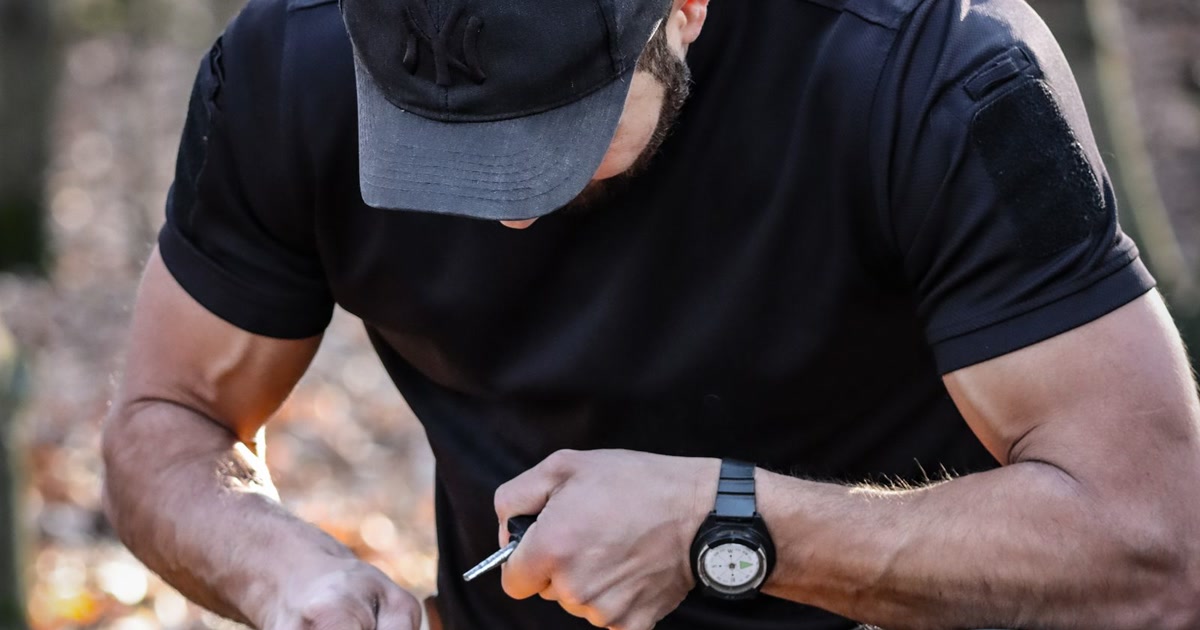
Scrape the back of your knife (or the supplied striker) down the rod with firm, steady pressure and throw a shower of 3,000°F sparks into your tinder. A quality ferro rod works when soaking wet, in wind, at altitude, and lasts for thousands of fires. Technique: hold the striker still and pull the rod back, rather than jabbing the rod forward — you’re less likely to scatter your tinder pile. This is the single best fire tool to carry. Pair it with a fatwood stick or WetFire cubes for near-guaranteed ignition.
2. Magnifying or Fresnel lens
Angle any lens — a magnifying glass, reading glasses, camera lens, or a credit-card-sized Fresnel lens — so it focuses sunlight to the smallest, brightest dot on your tinder. Hold it steady; in strong sun you’ll get smoke in seconds, then an ember to transfer to your tinder bundle. Zero moving parts, nothing to wear out — but useless at night or under heavy cloud. Dark, punky wood and char cloth take a solar ember faster than pale dry grass.
3. Battery and steel wool
Stretch a piece of fine 0000-grade steel wool into a loose rope and touch both terminals of a 9-volt battery to it (any battery works with foil as a bridge). The wool glows instantly — drop it into your tinder and blow. This is one of the easiest methods and a good reason to keep a spare 9V and a pad of steel wool in your kit. Keep the two apart in your pack, though: loose steel wool touching a battery is a fire hazard.
4. Flint and steel with char cloth
Strike a hardened steel striker against a sharp edge of flint, quartz, or chert to shave off tiny burning steel particles. Catch them on char cloth (see below), which holds the ember while you fold it into a tinder bundle and blow it to flame. A traditional method that still works reliably in the rain, and the striker never wears out.
5. Fire piston
A fire piston compresses air in a sealed tube so fast it heats past 800°F and ignites a scrap of char cloth or tinder fungus on the piston tip. One sharp thrust, and you have an ember. Compact, weatherproof, and satisfying once you’ve practiced the motion a few times. Keep the O-ring lightly greased so it stays airtight.
6. Bow drill
The most dependable friction method. You need four parts: a curved branch strung with a shoelace or paracord as the bow; a straight, dry spindle about 8 inches long and thumb-thick; a dry fireboard with a shallow starter divot and a pie-slice notch cut into it; and a socket (rock, shell, or a knot of hardwood) to press down on the spindle top. Loop the spindle into the bowstring, set it in the divot, and saw the bow full-length and steady while bearing straight down. First you get smoke, then the notch fills with dark dust, then that dust knits into a glowing coal. Tip the coal into your tinder bundle and blow it to flame. Dry, soft woods — cedar, willow, cottonwood, basswood, poplar — work best for both spindle and board.
7. Hand drill
Same idea as the bow drill but you spin the spindle between your palms, running them down the shaft while pressing into the fireboard. It demands dry conditions, the right wood, good technique, and conditioned hands — a skill worth practicing at home, not something to rely on cold and wet.
8. Water bottle or clear ice lens
Fill a smooth, round clear bottle (or freeze a clear disc of ice and shape it with your warm hands) into a lens and focus sunlight exactly as in method 2. Fiddly and weak, but it has started fires for people with nothing else and a bright sky. Filling a clear plastic bag with water and twisting it into a tight sphere is the lightest version.
9. Chemical ignition
A few drops of glycerin on a small pile of potassium permanganate (both sometimes found in first aid kits) will smoke and burst into flame after 15–30 seconds. Useful to know if those items are already in your pack; not worth carrying just for fire.
Build the fire so the spark survives
Clear a bare patch down to soil or lay a platform of dry sticks or bark to keep your tinder off wet ground. Place a loose, fluffy tinder bundle (a bird’s-nest of the finest material) at the center. Around it build a teepee of the thinnest kindling, leaving a gap on the upwind side to feed the ember in and to let air reach the base. Ignite the tinder, transfer it burning into the teepee, and shield it from wind while you blow low, steady breaths at the coals. Add kindling in stages — smallest first — and only move to fuel wood once you have steady flames a hand-span high. Going too big too fast smothers more fires than bad sparks do. In wind or rain, a log-cabin lay (stacked square) around the tinder shelters the flame better than a teepee.
Make your own tinder
- Char cloth: put squares of 100% cotton in a small tin with one pin-hole, set it in your fire until smoke stops, let it cool. It catches the faintest spark.
- Cotton and petroleum jelly: work jelly into a cotton ball; it burns for several minutes even damp.
- Fatwood: resin-soaked pine from old stumps and knots; shave into curls. Buy fatwood sticks or harvest your own.
- Dryer lint packed into a cardboard egg carton with candle wax poured over — cheap, light, waterproof, and each cup is one fire.
What to pack
- A ferro rod on your keychain and a second in your pack
- Stormproof matches and two mini lighters in separate spots (redundancy)
- A film canister or zip bag of dry tinder — WetFire or homemade
- A Fresnel lens card in your wallet — weighs nothing
Fire safety and Leave No Trace
Check for burn bans before you light anything — they’re common in dry season and violations carry heavy fines. Build only on mineral soil, rock, or in an established ring, never on peat or over roots, and keep it small. Clear a 3-foot circle of anything flammable and keep water or dirt within reach. To put it out: let the wood burn down, drench it, stir the ashes, drench again, and hold the back of your hand near it — if it’s too warm to touch, it’s too warm to leave. Scatter cold ashes and disguise the site.
Common mistakes
- Not enough tinder. Gather twice what you think you need before striking a spark.
- Damp materials. Split kindling to reach the dry core; collect standing deadwood, not ground wood.
- Building too big. Start with matchstick-thin kindling and work up gradually.
- No windbreak. Use your body, a pack, or a log to shelter the flame.
- Practicing only in an emergency. Try every method in your kit at home first — especially friction fire.
- Walking away from warm ashes. “Out” means cold to the touch.
Frequently asked questions
What is the easiest way to start a fire without matches or a lighter?
A ferrocerium rod with prepared tinder. It works wet, in wind, and at altitude, needs no sun or batteries, and lasts for thousands of strikes.
Can you really start a fire with a battery?
Yes. Touch both terminals of a 9-volt battery to fine steel wool and it glows red-hot in a second. With AA or AAA batteries, bridge the terminals with a strip of foil or a gum wrapper.
How do you start a fire with a magnifying glass?
Angle the lens toward the sun so it focuses light into the smallest, brightest possible dot on dark, dry tinder. Hold it steady until it smokes and forms an ember, then transfer that to a tinder bundle and blow it to flame. It only works in strong, direct sunlight.
Is it hard to start a fire with a bow drill?
Yes — it’s the hardest common method. Success depends on dry wood of the right species, good technique, steady downward pressure, and stamina. Expect to practice several times before you get a coal.
What is the best natural tinder?
Birch bark (burns even when damp thanks to its oils), fatwood shavings, dry grass and cattail fluff, cedar bark rubbed into fibers, and pine needles. Collect and dry tinder as you travel so you always have some.
How do you start a fire in the rain without matches?
Use a ferro rod, build a raised platform of split-dry wood, get tinder from inside standing deadwood or from resin-rich fatwood, and shelter the fire lay with your body or a tarp. See our full guide on building a fire in wet conditions.
Can you start a fire with a phone battery?
It’s risky — puncturing a lithium battery can cause a violent fire or explosion. As a last resort, shorting it across steel wool can produce ignition, but treat it as dangerous and a true last option.
How long does it take to start a fire with friction?
With a well-made bow-drill set and dry materials, an experienced person can produce a coal in under a minute of steady bowing. A beginner, or anyone working with damp or wrong-species wood, may not get one at all — which is why friction fire is a practiced skill, not a plan.
Bottom line
Carry a ferro rod, know the battery-and-steel-wool trick, keep a lens card in your wallet, and practice at least one friction method so you’re never fully dependent on gear. Then put your real effort into tinder and fire-lay — that’s what turns a spark into a fire. And whatever you light, put it dead out.
Keep building your skills:
- How to Purify Water in the Wild: 7 Field Methods
- How to Build the Perfect 72-Hour Survival Kit
- Top Wilderness Survival Skills
- What to Put in a Survival First Aid Kit
This article is for general informational purposes only. Practice fire skills responsibly, follow local fire regulations and burn bans, and never leave a fire unattended. Sources: U.S. Forest Service; National Park Service; Leave No Trace Center for Outdoor Ethics; Boy Scouts of America fire-building guidance.