
This site stays free thanks to small commissions from links like the ones below — it never costs you anything extra, and it never changes what we recommend. As an Amazon Associate we earn from qualifying purchases. Learn more.
Quick answer: Find or create dry tinder (feather sticks, birch bark, or a dedicated fire starter), shelter your fire-building area with a tarp or dense canopy, build on a raised, dry platform, and use fatwood or a waterproof fire starter to get past the wet-wood stage before adding fuel.
Step 1: Shelter the Work Area First
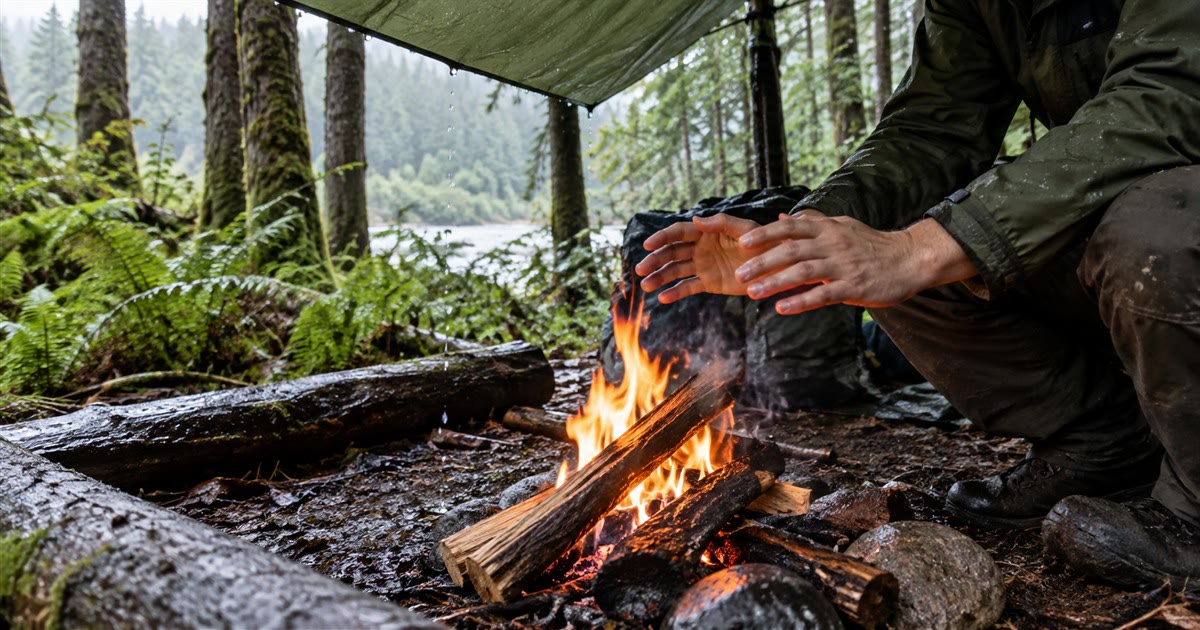
Trying to build a fire while actively getting rained on is the single biggest reason people fail. Before you gather anything, rig a simple tarp shelter, or work under a dense conifer canopy where the ground stays drier. Even a poncho stretched between two branches over your kneeling spot makes a real difference.
Step 2: Build a Dry Platform
Wet ground pulls heat away from a young fire and can kill it before it catches. Lay down a platform of dry-ish logs, bark, or flat rocks to keep your fire lay off the soaked ground.
Step 3: Find (or Make) Dry Tinder
The ground and dead leaves are the wettest things in a rainstorm — but wood on the inside is often dry even when the outside is soaked.
- Feather sticks: shave curls off a dead, standing branch with a knife — the outer wet layer peels away, exposing dry wood underneath.
- Birch bark: contains natural oils and burns even when damp — one of the best natural tinders in wet conditions.
- Fatwood (resin-soaked pine): lights easily even wet, burns hot for several minutes.
- Standing deadwood: always drier than anything lying on the ground — snap small dead branches off standing trees rather than picking up wet debris.
- Ferro rod fire starter (works wet, sparks at 3000°F+) — Check Price on Amazon
- Waterproof matches — Check Price on Amazon
- Fatwood fire starter sticks — Check Price on Amazon
- Fixed-blade knife for feather sticks — Check Price on Amazon
Step 4: Build the Lay for Wet Conditions
Skip the classic teepee if wind and rain are strong — a log cabin or lean-to lay with a solid windbreak on the weather side holds up better. Keep the structure tight and small at first; you’re trying to protect a fragile flame, not build a bonfire.
| Fire lay | Best for wet/windy conditions? |
|---|---|
| Teepee | Poor — collapses easily, exposed on all sides |
| Log cabin | Good — self-sheltering structure |
| Lean-to (against a log windbreak) | Best — shields flame from wind-driven rain |
Step 5: Get Aggressive With Ignition
In the wet, a single match often isn’t enough. A ferro rod throwing a shower of hot sparks directly onto fatwood shavings or a cotton-ball-and-petroleum-jelly fire starter gives you a much better margin than a lighter, which can fail in wind and won’t relight wet fuel easily.
Common Mistakes
Frequently Asked Questions
What’s the best natural tinder for wet weather?
Birch bark and fatwood (resin-rich pine) are the two most reliable — both contain natural oils/resins that ignite even when the surface is damp.
Can a lighter work in the rain?
A standard lighter struggles in wind and won’t ignite wet fuel well. A ferro rod or stormproof matches are more reliable because they throw a hotter, more sustained ignition source.
Should I use gasoline or lighter fluid to force a wet fire to start?
Avoid it — it’s dangerous (flash fires, burns) and unnecessary if you prepare proper dry tinder. A dedicated fire starter (fatwood, cotton/petroleum jelly balls) is safer and just as effective.
How do I keep a fire going once it’s lit in continuing rain?
Build or maintain an overhead shelter (tarp, poncho, dense branches) above the fire once established, and keep a supply of split, dry-centered wood nearby to feed it steadily.