
This site stays free thanks to small commissions from links like the ones below — it never costs you anything extra, and it never changes what we recommend. As an Amazon Associate we earn from qualifying purchases. Learn more.
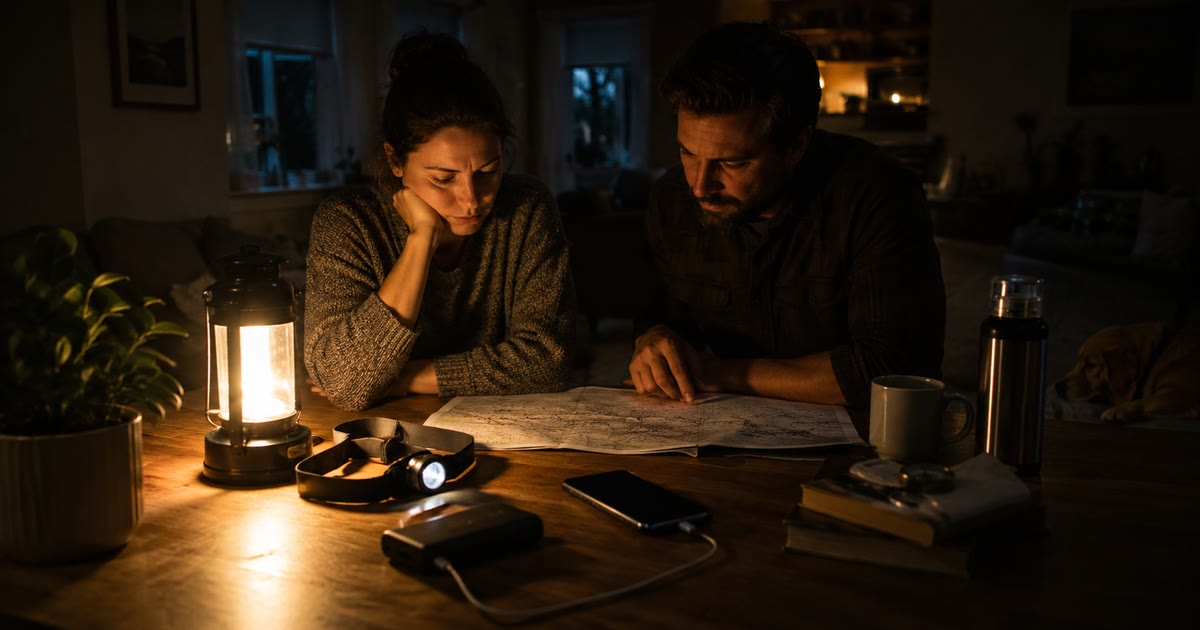
Most power outages last a few hours. But ice storms, hurricanes, wildfires, grid failures, and aging infrastructure regularly knock power out for days — and a multi-day blackout in summer heat or winter cold is a genuine safety problem, not just an inconvenience. This guide covers how to prepare for a long-term power outage at home: light, heat and cooling, food, water, communication, medical needs, and backup power, in the order that matters.
Quick answer
Cover five things before the lights go out: light (headlamps, lanterns, batteries), temperature (a safe heater or a cooling plan), food and water (two weeks of no-cook food, one gallon of water per person per day), communication (a battery or hand-crank radio, a charged power bank), and backup power for anything medical or a refrigerator (a power station or generator). Then write down a simple plan so the household knows what to do.
How long should you prepare for?
72 hours is the classic minimum and covers the large majority of outages. Two weeks is the modern recommendation from emergency agencies, because major weather events routinely exceed a week in hard-hit areas. Build to 72 hours first, then extend food, water, and fuel toward two weeks.
1. Light
- One headlamp per person — hands-free beats a flashlight for almost every task.
- Two or three battery lanterns for room lighting.
- A deep stock of the battery sizes your gear uses, plus a way to recharge (solar or power bank).
- Keep candles as a last resort only — they’re a leading cause of house fires during outages. If you use them, use enclosed holders and never leave them unattended.
2. Temperature: heat and cooling
Staying warm
An indoor-rated propane “buddy” heater with spare 1 lb cylinders can hold one room above freezing. You must have a working carbon monoxide detector and crack a window. Close off one room, seal drafts, and layer clothing and sleeping bags. Never use a stove, oven, grill, or generator indoors for heat.
Staying cool
Cooling without power is harder. Close blinds against the sun, open up at night, use battery fans, wet a shirt or towel for evaporative cooling, and drink water constantly. If someone is elderly, very young, or has a medical condition, plan to relocate to a cooling center or a friend’s house early — heat kills more people in outages than cold.
3. Food and water
- Water: one gallon per person per day, two-week target. Fill jugs and the bathtub when an outage is forecast. See how to purify water for backup.
- No-cook food: canned goods, peanut butter, crackers, jerky, granola bars, shelf-stable milk — enough that you never need to open the fridge or cook. See how to build an emergency food supply.
- The fridge and freezer: keep both closed. A full freezer holds safe temperature about 48 hours (24 if half full); a fridge about 4 hours. Move milk and meat to the freezer before it warms. A few frozen ice packs and a fridge/freezer thermometer help you decide what to keep. When in doubt, throw it out — anything above 40°F for more than 2 hours is a risk.
- Cooking: a butane or propane camp stove used outdoors or in a garage with the door open, plus fuel.
4. Communication and information
- A hand-crank / battery NOAA weather radio for alerts when cell networks fail.
- A 20,000 mAh power bank (or two) kept charged, plus car chargers — your car is a phone charger and a place to warm or cool for short periods (never run it in a closed garage).
- Reduce phone use to essential communication to stretch battery. Text instead of calling — texts get through when networks are congested.
- Know your utility’s outage-reporting number and have it written down.
5. Backup power
| Option | Powers | Runs indoors? | Notes |
|---|---|---|---|
| Portable power station (battery) | Phones, CPAP, laptop, lights, small fridge (briefly) | Yes — no fumes | Recharge from wall, car, or solar panel. Quiet. Limited capacity. |
| Inverter generator (gas) | Fridge, freezer, furnace fan, well pump, many circuits | No — outdoors only, 20+ ft from windows | Needs fuel stored safely and a stabilizer. Use a transfer switch for house circuits. |
| Standby generator (propane/natural gas) | Whole house, automatically | Installed outside | Expensive, professionally installed. Best if outages are frequent. |
If anyone in the home depends on powered medical equipment (oxygen concentrator, CPAP, refrigerated medication), a battery power station is not optional — and you should register with your utility’s medical priority program and have a plan to relocate if the outage runs long.
Before an outage you can see coming
- Charge every phone, power bank, laptop, and power station.
- Fill water containers and the bathtub; fill vehicle fuel tanks.
- Turn the fridge and freezer to their coldest settings hours ahead.
- Get cash — card readers and ATMs go down.
- Refill prescriptions if you’re low.
- Move cars out from under trees.
During the outage
- Turn off or unplug electronics and major appliances to protect them from the surge when power returns; leave one light on so you know when it’s back.
- Keep the fridge and freezer shut.
- Check on elderly or medically vulnerable neighbors.
- Run generators outside only, well away from windows and doors, and let them cool before refueling.
- If it’s cold, everyone sleeps in one closed-off room.
Common mistakes
- Running a generator or grill indoors or in an attached garage. Carbon monoxide is silent and kills fast. This is the deadliest outage mistake.
- Opening the fridge and freezer “just to check.” Every opening costs you hours.
- Only planning for 72 hours in an area where storms routinely knock power out for a week.
- No CO detector when using any fuel-burning heater.
- Forgetting the people who need power — medical equipment, insulin that needs refrigeration, a well pump for water.
Frequently asked questions
How long will food last in the fridge and freezer without power?
A closed refrigerator keeps food safe about 4 hours. A full freezer holds a safe temperature about 48 hours, or 24 hours if it’s half full. Discard perishable food that has been above 40°F for more than 2 hours.
Can I use a portable generator indoors if I open a window?
No. Portable generators produce lethal amounts of carbon monoxide and must run outdoors only, at least 20 feet from the house and away from windows, doors, and vents. An open window is not enough.
What is the safest way to heat a room during a power outage?
An indoor-rated propane “buddy” heater used with a working carbon monoxide detector and a cracked window, or simply closing off one room and using layers, sleeping bags, and body heat. Never use a stove, oven, or grill for heat.
How much water should I store for a power outage?
One gallon per person per day, with a two-week supply as the goal. Fill jugs, pots, and the bathtub when an outage is forecast, and keep a filter or purification tablets as backup.
Is a battery power station or a gas generator better for home backup?
A battery power station is quiet, produces no fumes, runs indoors, and is ideal for phones and medical devices, but has limited capacity. A gas generator can run a fridge, freezer, and furnace fan for days but must stay outdoors and needs stored fuel. Many households keep both.
What should I do with medication that needs refrigeration?
Keep it in the fridge as long as it stays cold, then move it to a cooler with ice packs. Ask your pharmacist about the specific temperature limits and safe out-of-fridge time for your medication, and plan to relocate to a place with power if the outage runs long.
Bottom line
Build to 72 hours first — light, a temperature plan, no-cook food, water, a radio, and charged power banks — then extend toward two weeks and add backup power sized to your real needs. The single rule that saves lives: nothing that burns fuel runs inside the house.
Related guides:
- Emergency Food Supply: How to Build a 1-Year Pantry on a Budget
- How to Purify Water in the Wild
- Get-Home Bag Checklist for Commuters
- How to Build a Survival First Aid Kit
This article is for general informational purposes only. Sources: Ready.gov “Power Outages”; FEMA; CDC “Power Outages” and food safety guidance; U.S. Consumer Product Safety Commission on carbon monoxide and generators; American Red Cross.