
This site stays free thanks to small commissions from links like the ones below — it never costs you anything extra, and it never changes what we recommend. As an Amazon Associate we earn from qualifying purchases. Learn more.
Cold-weather injuries build faster than most people expect — wet clothing and wind can drop your core temperature even above freezing. This guide covers how to recognize and treat hypothermia and frostbite: the warning signs, first aid steps, and when this stops being something you handle yourself.
Quick answer
For hypothermia: get the person dry, out of the wind, and insulated; warm the core (torso) before the limbs; give warm sweet drinks only if they’re fully alert; call 911 for anything beyond mild shivering. For frostbite: get out of the cold, remove wet/tight items, rewarm in body-temperature water (not hot, not by a fire or heater), and never rub the skin. Both are medical emergencies once they’re moderate or severe — treat and transport, don’t wait it out.
Hypothermia: recognizing the stages
- Mild (95–98.6°F / 35–37°C): shivering, cold hands, clumsiness, mild confusion, “-umbles” (grumbles, mumbles, fumbles, stumbles).
- Moderate (89–95°F): violent then stopping shivering, real confusion, slurred speech, poor coordination, drowsiness.
- Severe (below 89°F): shivering stops, rigid muscles, irrational or absent behavior, weak pulse, shallow breathing — can look like the person has died. Treat every unresponsive cold-exposed person as possibly alive and salvageable.
Treating hypothermia
- Get them out of the cold and wind — a vehicle, a building, or a wind-blocked, insulated spot on the ground (never lie directly on snow or cold ground).
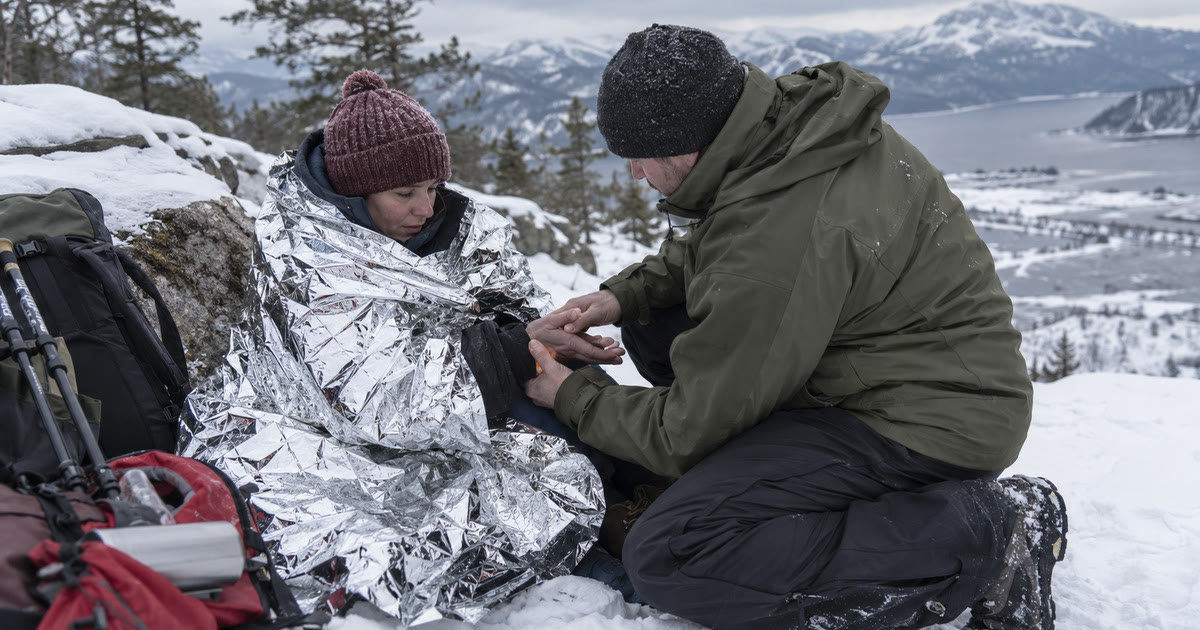
- Remove wet clothing and replace with dry layers or wrap in a emergency thermal blanket or sleeping bag. Cover the head and neck — heat loss there is significant.
- Insulate from the ground with a pad, pack, or extra clothing underneath, not just on top.
- Warm the core first: warm packs or skin-to-skin contact at the neck, armpits, and chest. Don’t focus on hands and feet first — warming the extremities before the core can push cold blood back to the heart and worsen things (“afterdrop”).
- Handle gently. Rough movement can trigger a dangerous heart rhythm in moderate-to-severe cases. Don’t massage or rub the body.
- Give warm, sweet, non-alcoholic drinks only if fully alert and able to swallow. Never give fluids to someone confused or drowsy — aspiration risk. No alcohol, ever; it accelerates heat loss.
- Call 911 for anything past mild shivering, or if you’re unsure. Moderate and severe hypothermia need hospital rewarming and monitoring.
Frostbite: recognizing it
- Frostnip (mild, reversible): cold, tingling, numb skin, usually pale or red. No blistering.
- Superficial frostbite: skin looks white/grayish-yellow and waxy, feels hard on the surface but soft underneath. May blister after rewarming.
- Deep frostbite: skin is hard, cold, and numb all the way through; looks white or bluish-gray; blisters may fill with blood. This is a hospital emergency — tissue can be lost.
- Most common on fingers, toes, nose, ears, and cheeks — the parts with least blood flow and least insulation.
Treating frostbite
- Get out of the cold and address hypothermia first if both are present — a hypothermic core takes priority over frostbitten fingers.
- Remove wet or constricting clothing and jewelry from the affected area before it swells.
- Rewarm in water, not dry heat. Use water that’s warm to a normal hand, roughly 99–104°F (37–40°C) — check with an unaffected body part or a thermometer, not the injured area. Soak for 15–30 minutes until the skin is soft and red or purple and sensation returns.
- Never rewarm near a campfire, stove, or heater, and never rub or massage frostbitten tissue — numb skin can’t feel a burn, and rubbing damages already-frozen cells.
- Only rewarm if you can keep it warm. If there’s a real risk of refreezing (still hiking out, no shelter), it is often safer to keep the area frozen and walk out than to thaw and refreeze it, which causes far worse damage. This is a judgment call — get out of the field as fast as possible either way.
- Loosely bandage rewarmed skin, separate fingers/toes with dry gauze, and elevate the area to reduce swelling.
- Pain increases sharply on rewarming — that’s expected and a good sign (nerves are alive), but manage it and get to care.
- Any blistering, discoloration lasting after rewarming, or deep/severe frostbite needs a hospital — don’t self-treat past first aid.
Who’s at higher risk
Children and older adults lose heat faster and may not report symptoms clearly. People with diabetes, poor circulation, or certain medications have blunted cold sensation and are more prone to frostbite without noticing. Alcohol impairs judgment and shivering response and dilates blood vessels, accelerating heat loss — a major factor in cold-weather deaths.
Prevention
- Layer properly and keep dry — wet cotton is dangerous in the cold. See our guide to layering for cold weather.
- Cover extremities and exposed skin: insulated gloves or mittens, a hat, and a face covering in wind chill.
- Watch wind chill, not just temperature — frostbite can set in within minutes at high wind chills.
- Stay fueled and hydrated; your body needs calories to generate heat.
- Buddy-check for the early “-umbles” signs, since hypothermia impairs the judgment needed to notice it in yourself.
Frequently asked questions
What is the fastest way to warm someone with hypothermia?
Get them dry, out of the wind, and insulated from the ground, then warm the core — chest, neck, and armpits — with warm packs or skin-to-skin contact before the arms and legs. Handle them gently and call 911 for anything beyond mild shivering.
Should you rub frostbitten skin to warm it up?
No. Rubbing or massaging frostbitten tissue damages already-frozen cells and worsens the injury. Rewarm gently in water that’s warm to a normal hand, and never use dry heat like a fire, stove, or heater.
Is it safe to give a hypothermic person alcohol to warm them up?
No. Alcohol dilates blood vessels and speeds heat loss from the core, making hypothermia worse, and it impairs judgment and shivering. Give warm, sweet, non-alcoholic drinks only if the person is fully alert and able to swallow safely.
What temperature water should you use to treat frostbite?
Water that feels warm, not hot, to an unaffected part of your body, roughly 99 to 104°F (37 to 40°C). Soak the area for 15 to 30 minutes until it softens and color and sensation return, then loosely bandage and seek medical care.
How can you tell frostbite from frostnip?
Frostnip is mild and reversible: cold, tingling, numb, pale or red skin with no blistering. Frostbite involves skin that looks white, grayish-yellow, or waxy and feels hard on the surface; it can blister on rewarming and, if deep, needs emergency medical care.
What should you do if you can’t rewarm a frostbitten hand or foot safely?
If there’s a real chance the area will refreeze before you reach shelter, it can be safer to keep it frozen and get out of the field than to thaw and refreeze it, which causes worse tissue damage. Either way, treat it as an emergency and seek care as fast as possible.
Bottom line
Hypothermia and frostbite both progress faster than people expect, and both respond to the same core steps: get out of the cold, get dry, insulate, warm gently and gradually, and escalate to real medical care once it’s past mild. Prevention — staying dry, layered, and fueled — is far easier than treatment.
Related guides
🧡 How to Layer Clothing for Cold Weather
❄️ Winter Storm Preparedness Checklist
🩹 How to Build a Survival First Aid Kit
This article is for general informational purposes only and is not a substitute for professional medical care or training. Sources: CDC extreme cold guidance; Wilderness Medical Society hypothermia and frostbite practice guidelines; American Red Cross first aid guidance.