
This site stays free thanks to small commissions from links like the ones below — it never costs you anything extra, and it never changes what we recommend. As an Amazon Associate we earn from qualifying purchases. Learn more.
A “survival garden” isn’t a normal vegetable patch — it’s planned around calories, storage life, and reliability rather than variety and salads. This guide covers how to start one: what to grow first, how much space real food takes, a simple layout, and how to keep the harvest feeding you through winter.
Quick answer
Prioritize calorie-dense, storable staples: potatoes, winter squash, dry beans, corn (for grinding), and sweet potatoes, plus onions and garlic for flavor and beets, carrots, and kale for nutrition and a long season. Grow what your climate and soil actually support, plant enough to preserve (not just eat fresh), save seed from open-pollinated varieties, and expect the first year to be a learning year, not a self-sufficient one.
Calories first: why staple crops
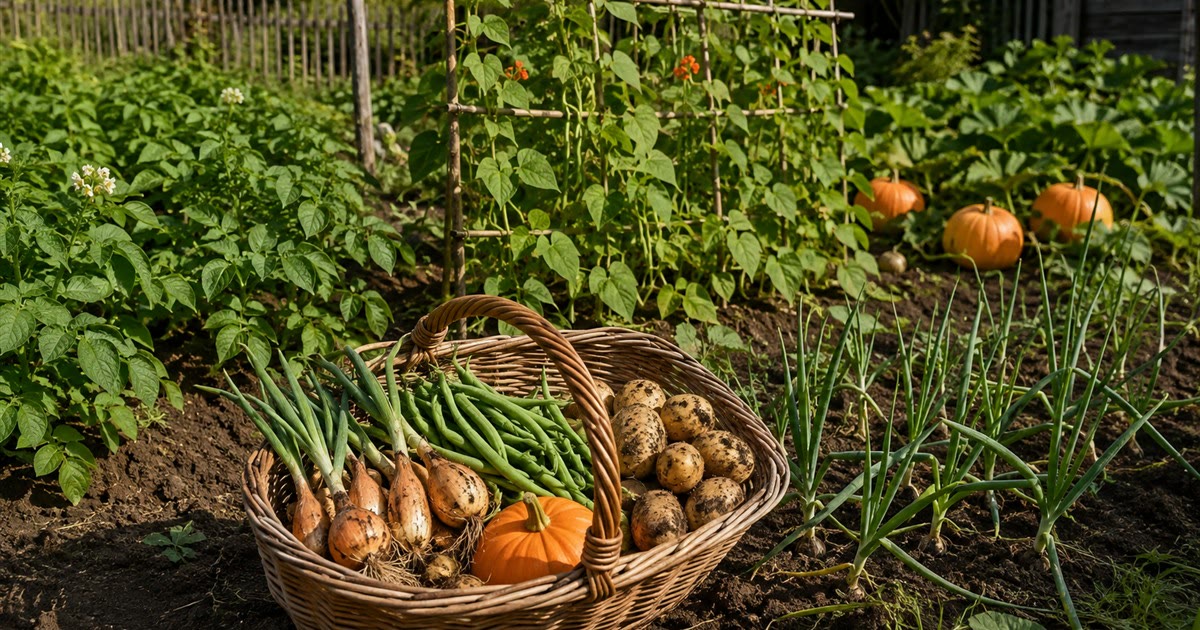
Lettuce, cucumbers, and peppers are pleasant but nearly calorie-free — you can’t live on them. A survival garden is built on crops that deliver real energy per square foot and store for months without a freezer:
- Potatoes — among the best calorie-per-area returns of any temperate crop; store in a cool, dark, humid place for months.
- Winter squash / pumpkins — high calories, cure hard-skinned, keep on a shelf 2–6 months.
- Sweet potatoes — excellent in warm climates; store well after curing.
- Dry beans — protein and calories; dry on the plant, shell, and store for years.
- Flour / dent corn — grind for cornmeal; needs space and a longer season.
- Onions, garlic, shallots — low calorie but transform stored staples into meals; cure and hang for months.
Then nutrition and season length
- Kale, collards, chard — productive for months, frost-tolerant, vitamin-dense.
- Carrots, beets, turnips — store in a root cellar or leave in the ground under mulch in mild winters.
- Cabbage — stores for weeks fresh and becomes sauerkraut for the winter.
- Tomatoes — not for calories, but a preserving workhorse: sauce, paste, canned.
- Herbs — cheap to grow, expensive to buy, dry easily.
- Berries and fruit trees — plant now; they pay off in later years.
How much space does real food take?
A useful rule of thumb: feeding one adult substantially from the garden for a year takes roughly 1,000–4,000 sq ft of productive growing area, depending on climate, skill, and crop mix — more than most people expect. So be honest about goals:
- 100–200 sq ft (a few raised beds): a meaningful supplement — a season of greens, some potatoes and beans, tomatoes to can, herbs.
- 500–1,000 sq ft: can cover a large share of one person’s vegetables and some staples with good management.
- 2,000+ sq ft: approaches feeding a person, if you preserve aggressively and grow storage crops.
Start smaller than you think and expand as you learn — a weedy, overwhelming garden yields less than a tidy small one.
A simple, productive layout
- Raised beds 3–4 ft wide so you can reach the middle without stepping on soil, with 18–24 in paths.
- Full sun — at least 6, ideally 8+ hours. Put the tallest crops (corn, trellised beans) on the north side so they don’t shade the rest.
- Group by water and season: keep thirsty crops together; keep a bed for quick successions of greens.
- Intensive spacing (square-foot style) for greens and roots; give squash and potatoes room to sprawl or hill.
- Compost bin next to the garden; a rain barrel on the nearest downspout.
Soil, water, and inputs you can’t assume
- Build soil now. Add compost and organic matter every season; healthy soil is the real yield engine and takes years to develop.
- Stockpile amendments a resilient garden might need: lime or sulfur for pH, an organic fertilizer, and mulch material. In a disruption you can’t run to the garden center.
- Plan irrigation for a dry spell: mulch heavily to cut water use, and have a hand-watering plan if the hose stops.
- Save open-pollinated (not hybrid F1) seed so your garden reproduces itself. Keep a sealed jar of extra seed in the fridge or freezer as insurance. A basic heirloom seed collection is cheap insurance to start.
Preserve, or the garden was half-wasted
A survival garden feeds you in January, not just August. Match crops to a storage method:
- Root-cellar / cool storage: potatoes, squash, onions, garlic, carrots, beets, cabbage, apples.
- Dry: beans, corn, herbs, and dehydrated fruit and tomatoes.
- Can: tomatoes and salsa (water bath, with added acid); beans, greens, and stock (pressure canner, tested recipes only).
- Ferment: cabbage to sauerkraut, cucumbers and peppers to pickles — no power needed.
See preserving without refrigeration and our homesteading guide for the preservation setup.
First-season checklist
- Pick a sunny spot; build 2–4 raised beds and fill with soil plus compost.
- Choose 6–8 crops from the staple and nutrition lists that suit your climate; buy open-pollinated seed and seed potatoes.
- Start a compost bin and add a rain barrel.
- Plant in succession — greens every few weeks, staples on their season.
- Mulch heavily; keep a simple log of what you planted and when.
- Preserve everything you don’t eat fresh; save seed from your best plants.
- Next year, expand the beds and add a fruit tree or berry bushes.
Frequently asked questions
What should I plant in a survival garden first?
Calorie-dense storage crops: potatoes, winter squash, dry beans, and (in warm climates) sweet potatoes, plus onions and garlic for flavor. Add kale, carrots, beets, and cabbage for nutrition and a long season, and tomatoes for preserving.
How big does a garden need to be to feed one person?
Roughly 1,000 to 4,000 square feet of productive area for a substantial share of one adult’s yearly food, depending on climate, skill, and crop mix. Smaller gardens are still valuable as supplements — a few raised beds can supply a season of greens, some staples, and tomatoes to can.
Should I use heirloom or hybrid seeds?
Use open-pollinated or heirloom varieties for a survival garden so you can save seed that grows true to type. Hybrid (F1) seed often performs well but its saved seed is unreliable, leaving you dependent on buying more each year.
Which vegetables store longest without a freezer?
Winter squash, potatoes, onions, garlic, and carrots keep for months in a cool, dark space. Dry beans and corn store for years. Cabbage keeps for weeks fresh and much longer as sauerkraut.
Can I grow enough food on a balcony or patio?
Not enough to live on, but containers can produce herbs, greens, cherry tomatoes, peppers, and even a few potatoes in grow bags. Pair that with sprouts and microgreens indoors and a deep pantry for real resilience.
How long before a survival garden is actually productive?
You’ll harvest vegetables the first season, but soil, skill, perennial fruit, and seed-saving systems take two to four years to mature. Start now so the learning curve is behind you before you need the output.
Bottom line
Grow calories and keepers first, plant enough to preserve, save your own seed, and build soil every year. Begin with a few well-tended beds this season, expand as your skill grows, and judge success by how much of your plate in winter came from the yard.
Related guides
🏟️ Homesteading for Preparedness
🍞 Emergency Food Supply on a Budget
🥩 How to Preserve Meat Without Refrigeration
This article is for general informational purposes only. Yields vary widely by climate, soil, and experience. Sources: USDA Cooperative Extension vegetable-garden guides; National Center for Home Food Preservation; land-grant university research on garden yields and food-plot planning.