
This site stays free thanks to small commissions from links like the ones below — it never costs you anything extra, and it never changes what we recommend. As an Amazon Associate we earn from qualifying purchases. Learn more.
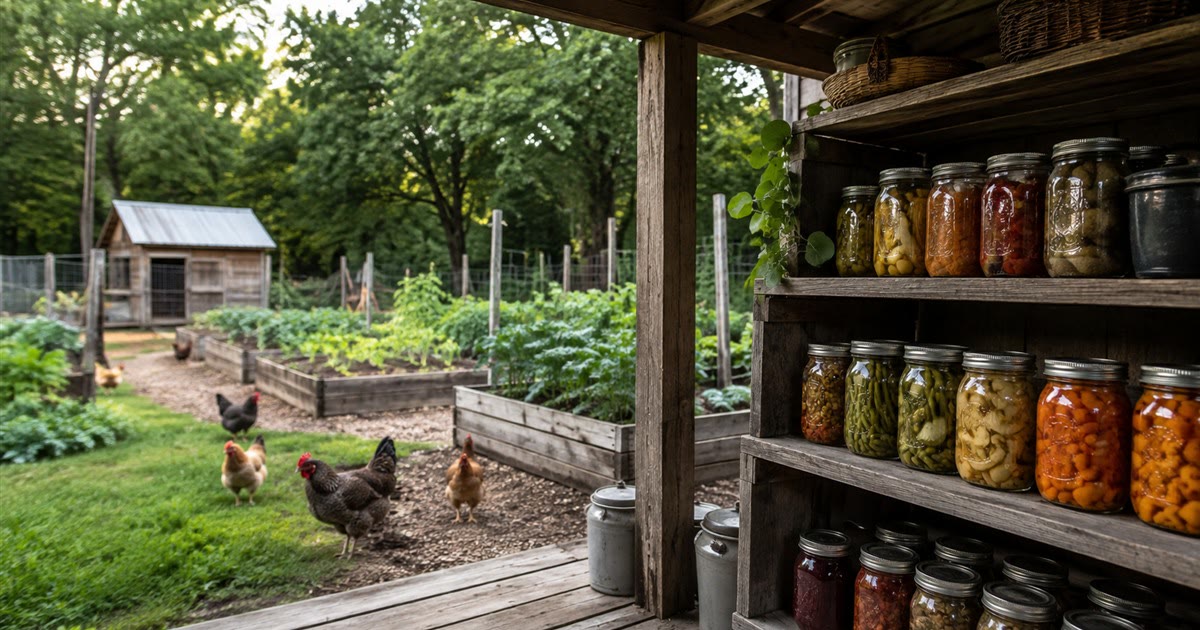
Homesteading and preparedness overlap almost completely: both are about producing, storing, and fixing more of what your household needs. You don’t need 40 acres or a career change to start. This guide covers homesteading for preparedness — what actually builds resilience, in what order, whether you have a balcony or a back forty.
Quick answer
Start with skills and storage, not livestock. Learn to grow a few high-value crops, to preserve a harvest safely (canning, drying, fermenting), and to keep a deep pantry. Add water capture and energy backup. Only then consider chickens or larger systems. The goal isn’t self-sufficiency — almost no one achieves that — it’s shrinking how much you depend on fragile supply chains, one system at a time.
Match the plan to your space
- Apartment / balcony: container herbs and greens, sprouts and microgreens, a deep pantry, water storage, fermentation, and skills you can practice anywhere (bread, repair, first aid). This alone puts you ahead of most households.
- Suburban lot: raised-bed vegetable garden, a few fruit trees or berry bushes, rain barrels, compost, a small flock of hens if allowed, and a full food-preservation setup.
- Rural acreage: all of the above at scale, plus larger livestock, hay or pasture, woodlot management, a well and off-grid power, and workshop capacity to fabricate and repair.
Pick the biggest version you can actually maintain. An overgrown garden and neglected animals teach the wrong lessons.
First: food you can grow and keep
Grow calories and value, not just salad
Space is limited, so favor crops that store well or replace expensive groceries: potatoes, winter squash, dry beans, onions and garlic, tomatoes for sauce, and productive greens like kale and chard. Add herbs, which cost little to grow and a lot to buy. See our survival garden guide for layout and yields.
Preserve the harvest safely
- Water-bath canning for high-acid foods (jams, pickles, tomatoes with added acid).
- Pressure canning for low-acid foods (vegetables, beans, meat, stock). Use a tested-recipe source; improvised canning causes botulism.
- Dehydrating for fruit, jerky, and herbs — a food dehydrator or just an oven on low.
- Fermenting (sauerkraut, kimchi, hot sauce) — cheap, no power, adds probiotics.
- Root-cellaring — a cool basement corner keeps potatoes, squash, apples, and onions for months.
Our guide to preserving meat without refrigeration covers curing and smoking.
Keep a deep pantry
Store what you already eat, rotate it (first in, first out), and build toward several weeks to several months of shelf-stable staples: rice, oats, pasta, dried beans and lentils, canned goods, cooking fat, salt, sugar, and long-life proteins. See building an emergency food supply on a budget.
Second: water and energy
- Rainwater capture: gutters into rain barrels for the garden (check local rules). For drinking, you also need filtration and disinfection — see how to purify water.
- Stored water: at least one gallon per person per day for two weeks as a floor.
- Well owners: know whether your pump works without grid power, and have a manual or solar backup way to draw water.
- Energy backup: start small — a portable power station plus a folding solar panel for phones, lights, and a CPAP or medical device; scale to a generator or a larger solar setup later. See long-term power outage prep.
Third: animals (only when the rest is running)
Livestock is a daily, year-round commitment that doesn’t pause for vacations or illness. When you’re ready, laying hens are the usual entry point: eggs, pest control, compost, and manure, for modest feed and a secure coop. Rabbits and a small number of meat birds are next steps. Larger animals (goats, pigs, a family milk cow) need land, fencing, water systems, and a real skill base — and a plan for feed if you can’t buy it. Don’t acquire animals as a hedge; acquire them when you can care for them well.
Fourth: skills and tools that make it repairable
- Hand tools and know-how to fix plumbing, framing, small engines, and fencing.
- A basic workshop: a solid knife and axe, a folding saw, a drill, and fasteners and materials on hand.
- Sewing and mending clothing and gear.
- Food skills: baking without a mix, rendering fat, making stock, cooking dried beans and grains from scratch.
- First aid and basic veterinary care if you keep animals.
- Seed saving so this year’s garden funds next year’s.
A realistic first-year plan
- Months 1–2: build the deep pantry, store water, start herbs and greens in containers, learn to ferment.
- Months 3–5: put in raised beds or a garden plot; grow a handful of storage crops; set up compost.
- Months 4–6: add rain barrels; buy and learn a pressure canner and a dehydrator; can or dry your first harvest.
- Months 6–9: add a small energy backup; plant a fruit tree or berry bushes; practice bread and scratch cooking weekly.
- Months 9–12: if space and rules allow and the rest is stable, build a coop and get 3–6 hens; start saving seed.
Frequently asked questions
Can you homestead in an apartment?
Yes, within limits. You can grow herbs, greens, sprouts, and microgreens in containers, keep a deep rotating pantry, store water, and practice fermentation, baking, mending, and repair. You can’t raise livestock or grow staple calories at scale, but the storage and skills transfer directly if you move.
What should a beginning homesteader do first?
Build food storage and preservation skills before anything else: a deep pantry of foods you actually eat, plus the ability to can (with tested recipes), dehydrate, and ferment. Then add a small garden, water capture, and an energy backup. Livestock comes last.
Which crops give the most food for the space?
Potatoes, winter squash, dry beans, onions, and garlic store for months and replace staple groceries. Add tomatoes for preserving and productive greens like kale and chard for a long harvest. Herbs give a high return on very little space.
Are chickens worth it for preparedness?
For many suburban and rural households, yes: laying hens provide eggs, pest control, and compost for modest feed and a predator-proof coop. But they need daily care year-round and a feed plan if supplies are disrupted, so add them only once your food storage, garden, water, and energy basics are working.
How much land do you need to homestead?
None to start with skills and storage. A quarter-acre suburban lot supports raised beds, fruit trees, rain barrels, and a small flock. An acre or more is needed for larger livestock, pasture, and a woodlot. Capability matters more than acreage.
Is self-sufficiency actually achievable?
Almost never completely. A more useful goal is reducing dependence: producing some of your food, storing months of the rest, capturing water, backing up energy, and being able to repair what breaks. Each system you add makes a supply-chain disruption less painful.
Bottom line
Homesteading for preparedness is a stack: skills and storage first, then water and energy, then animals, with repair capability underneath it all. Build the biggest version you can genuinely maintain, add one system at a time, and measure progress by how many of your household’s needs you could cover if the store shelves were empty for a month.
Related guides
🌱 How to Start a Survival Garden
🍞 Emergency Food Supply on a Budget
🥩 How to Preserve Meat Without Refrigeration
This article is for general informational purposes only. Follow tested recipes from a current, science-based source for all home canning. Sources: USDA Complete Guide to Home Canning; National Center for Home Food Preservation; USDA Cooperative Extension homesteading and small-flock resources.