
This site stays free thanks to small commissions from links like the ones below — it never costs you anything extra, and it never changes what we recommend. As an Amazon Associate we earn from qualifying purchases. Learn more.
A burst pipe from a hard freeze is one of the most common and expensive winter disasters — and one of the most preventable. This guide covers how to keep pipes from freezing and, if you’re too late, how to thaw one safely before it splits.
Quick answer
Pipes are at real risk once outdoor temperatures drop below about 20°F (-6°C), faster on exterior walls and unheated spaces. Prevent freezing by insulating exposed pipes, sealing drafts, keeping cabinet doors open on exterior-wall sinks, and letting faucets drip during a hard freeze. If a pipe does freeze, thaw it slowly with heat applied at the faucet end first, and never use an open flame.
Why pipes burst
Ice doesn’t burst a pipe by expanding sideways where it forms — it blocks the flow, and pressure builds up between the ice blockage and a closed faucet downstream until the pipe fails, often in a spot with no ice at all. The most vulnerable pipes are ones that run through unheated spaces: attics, crawlspaces, garages, exterior walls, and outdoor spigot lines.
Prevent freezing before it happens
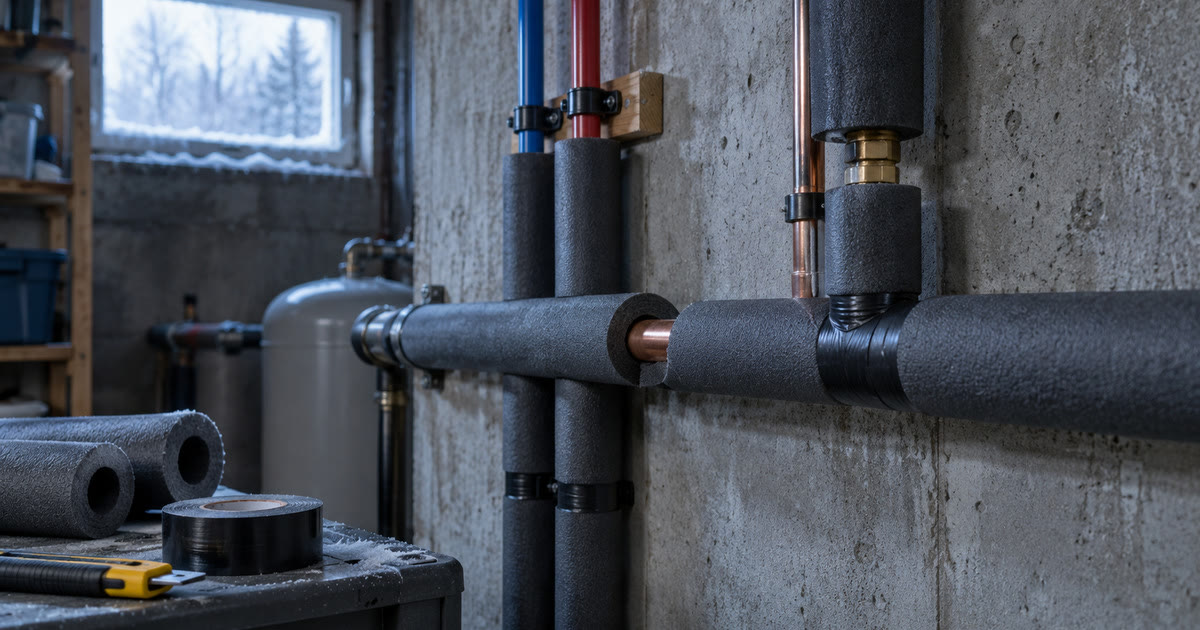
- Insulate exposed pipes in crawlspaces, attics, basements, and garages with foam pipe sleeves or wrap; add heat tape on pipes in the highest-risk spots.
- Seal air leaks around where pipes enter the house — rim joists, foundation penetrations, dryer vents — with caulk or spray foam. Cold air moving across a pipe does more damage than still cold air.
- Disconnect and drain outdoor hoses before the first freeze, and shut off and drain outdoor spigots at an interior valve if you have one.
- Open cabinet doors under sinks on exterior walls so warm room air reaches the pipes.
- Keep the whole house heated, including rooms you don’t use, to at least 55°F (13°C) even when you’re away. A cheap smart thermostat lets you monitor remotely.
- Let vulnerable faucets drip during a hard freeze — moving water is much less likely to freeze solid, and the pressure relief reduces burst risk even if it does.
- Know where your main shutoff valve is and make sure it works, before you need it in an emergency.
If you’re heading into a long power outage
Without heat, interior temperatures can drop toward freezing within a day or two in a hard winter storm. If you’re leaving the house or expect the power to be out for an extended stretch in freezing weather: shut off the main water supply, and open all faucets to drain the lines and relieve pressure, especially if you can’t guarantee any heat source will keep working. See our guide to preparing for a long-term power outage.
Signs a pipe is frozen
- A faucet that only trickles or produces nothing when fully open.
- Frost visible on an exposed section of pipe.
- An unusual smell from a drain (frozen drain traps can push sewer gas back).
- No water at one fixture while others work normally, pointing to a specific frozen section.
How to thaw a frozen pipe safely
- Open the faucet the frozen pipe feeds, so melting ice has somewhere to go and you can hear when flow returns.
- Find the coldest, most exposed section — that’s usually where the ice is.
- Start warming at the faucet end and work back toward the blockage. Warming the middle first can trap pressure between two ice plugs.
- Use safe heat sources: a hair dryer, a space heater a safe distance away, heat tape, or towels soaked in hot water wrapped around the pipe.
- Never use an open flame — a blowtorch, propane torch, or any bare flame near a pipe is a fire hazard and can damage the pipe or nearby materials.
- Keep applying heat until full water pressure returns, then check the full length of the pipe and nearby fixtures for leaks, since a hidden split can appear once pressure is restored.
- Call a plumber if you can’t locate the frozen section, if it’s inside a wall or otherwise inaccessible, or if you find a leak or split.
If a pipe has already burst
- Shut off the main water valve immediately — this matters more than anything else.
- Turn off electricity to the affected area if water is near outlets or fixtures, at the breaker, not by touching anything wet.
- Open faucets to drain remaining water from the pipes and reduce flooding.
- Move valuables and start removing standing water; get fans and dehumidifiers running once safe.
- Document damage with photos before cleanup for insurance, and call your insurer promptly.
Frequently asked questions
At what temperature do pipes start to freeze?
Risk becomes significant once outdoor temperatures drop below about 20°F (-6°C), especially for pipes in unheated spaces like attics, crawlspaces, garages, and exterior walls. Pipes in well-insulated, heated interior walls are far less vulnerable.
Does letting a faucet drip really prevent frozen pipes?
Yes. Moving water is harder to freeze solid than still water, and a dripping faucet relieves the pressure buildup that actually causes pipes to burst, even if some ice does form.
Can you use a hair dryer to thaw a frozen pipe?
Yes, a hair dryer is one of the safer methods. Open the faucet first, start warming at the end nearest the faucet and work toward the blockage, and never use an open flame or blowtorch.
What should you do first if a pipe bursts?
Shut off the main water valve immediately, then cut power to any affected area at the breaker if water is near electrical outlets or fixtures. Open faucets to drain the lines and reduce flooding before starting cleanup.
Should I shut off my water if I leave home during a hard freeze?
If you can’t guarantee the heat will stay on, yes: shut off the main supply and open faucets to drain the lines and relieve pressure. This is also the right move before an extended power outage in freezing weather.
Which pipes are most likely to freeze?
Pipes running through unheated or poorly insulated spaces: attics, crawlspaces, garages, exterior walls, and outdoor spigot lines. Interior pipes in heated, insulated walls rarely freeze.
Bottom line
Insulate exposed pipes, seal the drafts that chill them, keep the house heated even when you’re away, and let vulnerable faucets drip during a hard freeze. If you’re too late, thaw gently from the faucet end with safe heat, never an open flame, and know exactly where your main shutoff is before you need it.
Related guides
🏠 Winterize Your Home Checklist
❄️ Winter Storm Preparedness Checklist
🔌 How to Prepare for a Long-Term Power Outage
This article is for general informational purposes only and is not a substitute for a licensed plumber. Sources: U.S. Department of Energy pipe-freezing prevention guidance; American Red Cross winter storm safety; Insurance Institute for Business & Home Safety (IBHS) freeze-protection guidance.