
This site stays free thanks to small commissions from links like the ones below — it never costs you anything extra, and it never changes what we recommend. As an Amazon Associate we earn from qualifying purchases. Learn more.
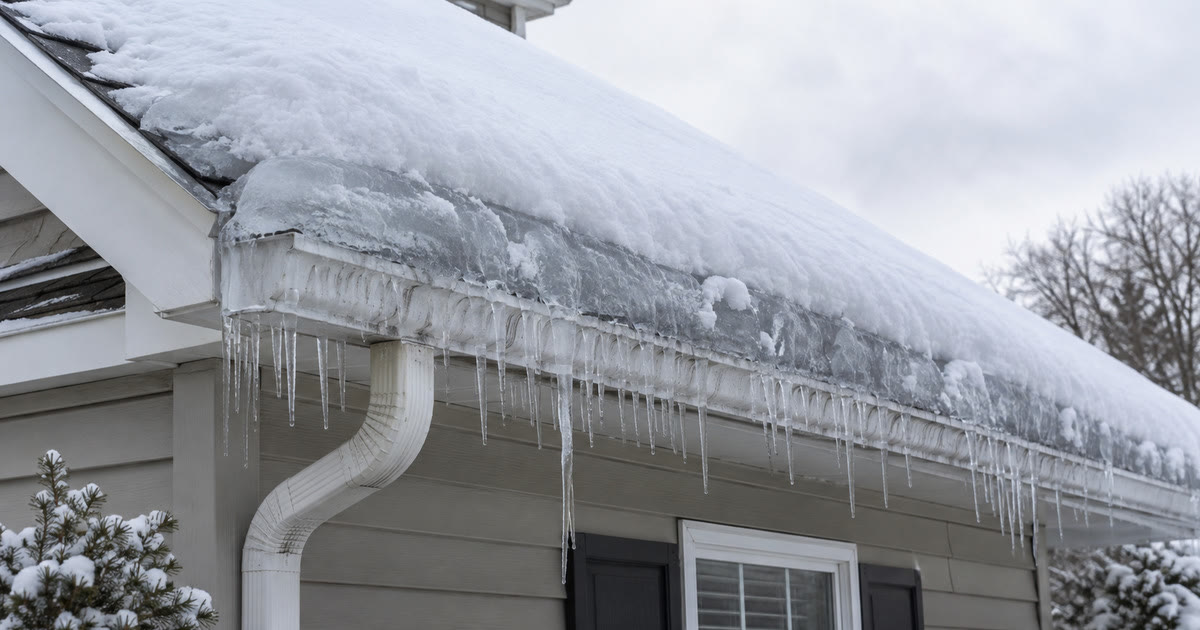
Heavy snow and ice dams cause thousands of dollars in roof and water damage every winter, and most of it is preventable with attention before the first big storm. This guide covers ice dam prevention and roof snow load safety: what causes them, how to spot danger, and what to actually do about it.
Quick answer
Ice dams form when heat escaping from your attic melts roof snow, which refreezes at the cold overhanging eave and blocks drainage — the fix is better attic insulation and ventilation, not just chipping ice. Most residential roofs can handle about 20 lb per square foot of snow load, but wet or drifted snow is much heavier than dry powder. Clear roofs only from the ground with a roof rake, and never climb onto a snow-loaded or icy roof yourself.
How ice dams actually form
- Heat leaks from the living space into the attic (poor insulation, gaps around lights/vents/hatches).
- That heat warms the roof deck, melting the underside of the snow layer even while outdoor air is freezing.
- Meltwater runs down under the snow until it reaches the unheated eave overhang, past the warm part of the roof.
- There, it refreezes into a ridge of ice — the dam — which blocks further meltwater from draining off.
- Water backs up behind the dam, works under shingles, and can leak into the attic, walls, and ceilings.
The real fix is stopping heat loss into the attic, not just removing ice after the fact — a well-insulated, well-ventilated attic keeps the whole roof close to outdoor temperature, so snow melts evenly (or not at all) instead of just at the warm spots.
Preventing ice dams before winter
- Seal attic air leaks around recessed lights, bathroom fans, the attic hatch, and plumbing/wiring penetrations — warm air escaping through these spots is the main driver.
- Add attic insulation to code level for your climate; an underinsulated attic is the single biggest cause of ice dams.
- Make sure attic ventilation is working (soffit and ridge vents) so any heat that does get in is carried out rather than warming the roof deck.
- Clean gutters in the fall so meltwater has somewhere to go instead of pooling and freezing.
- Consider heat cable along the eave and in gutters in chronically dam-prone spots as a supplemental fix, not a substitute for insulation.
If an ice dam has already formed
- Remove snow above the dam with a roof rake from the ground to reduce the meltwater feeding it, working from the edge inward.
- Create channels through the dam with a calcium chloride ice melt in a stocking or leg of pantyhose, laid across the dam so it slowly cuts a drainage path. Avoid rock salt, which can damage roofing and metal.
- Never use an axe, hammer, or sharp tool to chip ice off a roof — this routinely tears shingles and causes worse damage than the dam itself.
- If water is already coming through the ceiling, relieve pressure by poking a small hole at the lowest point of a bulging spot into a bucket, to prevent a larger, more damaging collapse, then call a roofer.
- Call a professional for steam removal (the safest full-removal method) rather than DIY-ing extensive ice removal on the roof itself.
Roof snow load: how much is too much
- Most homes are built for roughly 20 lb per square foot of ground snow load, though this varies by building code and region — older or flatter roofs may be rated lower.
- Fresh, dry powder weighs roughly 3–5 lb per cubic foot; wet, packed, or drifted snow can weigh 15–20+ lb per cubic foot — so 2 feet of wet snow can be far more dangerous than 4 feet of powder.
- Warning signs of overload: new cracks in interior walls or ceilings, doors or windows that suddenly stick, sagging ceiling tiles, creaking or popping sounds from the roof structure, or a visibly sagging roofline.
- Flat and low-slope roofs (additions, porches, garages) accumulate more snow and are more prone to overload than a steep main roof.
Clearing snow safely
- Use a roof rake from the ground to pull snow off the lower few feet of roof edge, standing well clear of what falls and away from power lines.
- Never climb onto a snow-loaded or icy roof — falls from roofs are a leading cause of winter storm injury and death, and a loaded roof is more likely to fail with a person’s weight added.
- Don’t power-wash or use hot water on a roof — it adds weight and can create new ice.
- If a roof shows real overload warning signs, evacuate the area beneath it and call a structural professional immediately rather than attempting to clear it yourself.
Frequently asked questions
What causes ice dams on a roof?
Heat escaping from the living space into an underinsulated or poorly ventilated attic warms the roof deck and melts snow from underneath, even while it’s freezing outside. That meltwater refreezes at the cold eave overhang, forming a dam that blocks drainage and backs water up under the shingles.
How do you get rid of an ice dam safely?
Remove snow above the dam with a roof rake from the ground, then cut drainage channels through the dam using calcium chloride ice melt in a sock or stocking laid across it. Never chip at ice with a hammer or axe, which typically damages shingles more than the dam itself.
How much snow can a roof safely hold?
Most residential roofs are built for roughly 20 pounds per square foot of ground snow load, but this varies by code and roof age. Wet, packed, or drifted snow is far heavier per foot of depth than dry powder, so depth alone isn’t a reliable guide.
Is it safe to clear a roof yourself in winter?
Only from the ground using a roof rake on the lower edge. Climbing onto a snow-loaded or icy roof is dangerous even for professionals and is a leading cause of winter injuries; a heavily loaded roof showing warning signs should be evaluated by a structural professional, not cleared by hand.
What are the warning signs a roof is overloaded with snow?
New cracks in interior walls or ceilings, doors or windows that suddenly stick, sagging ceiling tiles, unusual creaking or popping from the roof structure, or a visibly sagging roofline. Any of these warrant clearing the area below and calling a professional immediately.
Does adding more attic insulation actually prevent ice dams?
Yes, it’s the most effective long-term fix. Sealing air leaks and adding insulation keeps heat from escaping into the attic and warming the roof deck unevenly, so snow melts evenly across the roof or not at all, rather than forming meltwater that refreezes at the eaves.
Bottom line
Ice dams are fundamentally a heat-loss problem, so seal and insulate the attic before winter rather than just fighting the ice after it forms. Clear roof snow only from the ground, watch for real overload warning signs after heavy wet snow, and call a professional rather than climbing onto a loaded roof.
Related guides
🏠 Winterize Your Home Checklist
🛀 Prevent and Thaw Frozen Pipes
❄️ Winter Storm Preparedness Checklist
This article is for general informational purposes only and is not a substitute for a licensed roofing or structural professional. Sources: FEMA snow load safety guidance; Insurance Institute for Business & Home Safety (IBHS) winter weather readiness; U.S. Department of Energy attic insulation and ice dam guidance.