
This site stays free thanks to small commissions from links like the ones below — it never costs you anything extra, and it never changes what we recommend. As an Amazon Associate we earn from qualifying purchases. Learn more.
A stove you can actually run — with fuel you can actually get — matters more than a clever design. This guide covers survival stoves and camp cooking gear: the main stove types and what each is good for, how to think about fuel, and a simple kit that covers backpacking, car camping, and a power outage at home.
Quick answer
For home emergencies, keep a propane two-burner plus spare cylinders (use outdoors only) and a small butane cartridge stove for quick boils. For backpacking, an upright canister stove is the easiest; a white-gas stove wins in deep cold and abroad. Always keep a wood or solid-fuel backup that needs no bottled fuel. Add a pot, a windscreen, a lighter plus a ferro rod, and store more fuel than you think you need.
Stove types and what they’re for
Upright canister stoves (isobutane)
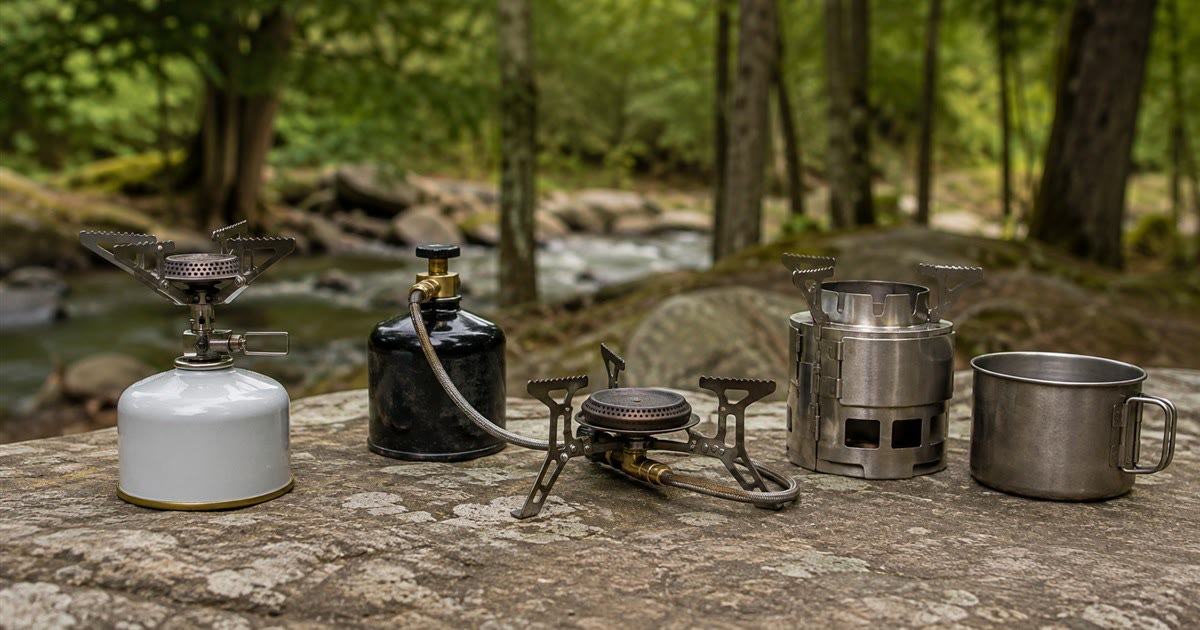
A burner that screws onto a threaded gas canister. Light, cheap, simple, and fast to boil; the standard choice for three-season backpacking and quick tasks. Downsides: performance drops below freezing, canisters are hard to gauge and can’t be refilled, and availability varies overseas. A canister stove plus one integrated pot covers most trips.
Integrated canister systems
Canister stove with a locking, heat-exchanger pot (JetBoil, MSR WindBurner style). Extremely fuel-efficient and wind-resistant for boiling water; less suited to real cooking or simmering. Great for solo fast-and-light and for a grab bag.
Remote-canister and white-gas (liquid fuel) stoves
Fuel bottle connected by a hose, sitting beside the burner. Liquid-fuel (white gas / naphtha) versions can be primed and pressurized, so they run in deep cold and at altitude and simmer well; many multi-fuel models also burn kerosene or unleaded gasoline, which is priceless when traveling. Heavier, need occasional maintenance, and priming has a small flare-up. The serious expedition and long-term choice: a multi-fuel stove.
Butane cartridge stoves (“camp bistro”)
The single-burner tabletop stoves that take a bayonet butane cartridge. Cheap, stable, easy to simmer, and cartridges are sold in supermarkets. Butane struggles in the cold, so keep it for indoor-adjacent warm-weather use and short outages. A butane stove with a few spare cartridges is a low-cost outage backup.
Propane stoves (1-lb cylinders or a hose to a 20-lb tank)
The two-burner camp stove most families already recognize. Powerful, dependable in cold, cheap fuel that stores for years, and a 20-lb barbecue tank runs one for many days. Bulky and heavy — a car-camping and home-emergency tool, not a backpacking one. A two-burner propane stove plus an adapter hose for a big tank is the backbone of home outage cooking.
Wood-burning and solid-fuel stoves
Twig stoves burn found wood, so the fuel is unlimited and free; some add a thermoelectric fan or USB charging. Slower, sooty, smoky, and banned during fire restrictions, but the only type that doesn’t depend on a fuel supply chain — which is exactly why it belongs in a long-term kit as a backup. Wood stoves and cheap folding solid-fuel (Esbit) tablet stoves both fill this role; keep tablets as an ultralight emergency option.
Alcohol stoves
A tiny burner fueled by denatured alcohol or HEET. Silent, no moving parts, fuel available almost anywhere, but low heat output, poor in wind and cold, and slow to boil. A minimalist backup, popular with long-distance hikers.
Fuel: the part people get wrong
- Store more than you plan to use. Estimate your daily burn (boils per day × minutes per boil) and multiply by the days you want to cover, then add 50%.
- Match fuel to temperature. Propane and white gas work cold; isobutane is marginal near freezing; plain butane fails in the cold.
- Shelf life: propane and canister gas store for many years; white gas keeps well sealed; pump gasoline degrades in months.
- Availability under stress: supermarket butane and barbecue propane are everywhere; specialty canisters sell out fast in an emergency.
- Never run any fuel-burning stove indoors or in a tent — carbon monoxide is odorless and kills. Cook outside or in a well-ventilated open structure, and keep a CO detector at home.
Pots, and the small stuff that makes it work
- Pot: a 1–1.5 L hard-anodized aluminum pot for solo/duo; add a second pot or a small skillet for real cooking. Titanium is lighter but hot-spots. Stainless is tough and cheap for base camp.
- Windscreen: doubles efficiency on canister and alcohol stoves. Never fully enclose an upright canister stove (heat can rupture the canister); use it with remote-canister and liquid stoves.
- Ignition: a ferro rod and stormproof matches as backups to a lighter — piezo igniters fail.
- Long lighter, pot grabber, folding spork, small cutting board, scrubber, and a repair kit (canister stoves need little; liquid stoves want an O-ring and jet kit).
- Stable base: a scrap of plywood or a stove pad so it doesn’t tip or melt into snow.
Three kits that cover most people
- Home emergency: two-burner propane stove + 2× 20-lb tanks + adapter hose; butane single burner + 8 cartridges; folding wood stove as last resort; CO detector; long lighter ×2.
- Weekend backpacker: upright canister stove + 1–1.5 L pot + 2 canisters; mini windscreen; lighter + ferro rod; spork.
- Serious / cold / travel: multi-fuel liquid stove + 20–30 oz fuel bottle + maintenance kit; 1.5–2 L pot; windscreen; alcohol or Esbit stove as a lightweight backup.
Frequently asked questions
What is the best stove for a power outage?
A two-burner propane camp stove used outdoors, backed by plenty of 1-lb cylinders or an adapter hose to a 20-lb barbecue tank. Propane is cheap, stores for years, and works in the cold. Add a small butane stove for fast boils and a wood-burning stove as a no-fuel fallback.
Can you use a camp stove indoors?
No. Propane, butane, white gas, and charcoal all produce carbon monoxide, which is odorless and can be fatal in an enclosed space. Cook outdoors or in a fully ventilated open area, and keep a battery carbon monoxide detector in the home.
Canister vs liquid fuel — which should I choose?
Choose an upright canister stove for simplicity and three-season backpacking. Choose a liquid-fuel or multi-fuel stove for deep cold, high altitude, international travel, or long-term preparedness, because it simmers better, performs in the cold, and can burn multiple fuels.
How much stove fuel should I store?
Estimate your boils per day and minutes per boil, multiply by the number of days you want to cover, then add about 50 percent margin. Favor fuels with long shelf life and wide availability, such as propane and sealed canister gas.
Are wood-burning backpacking stoves any good?
They’re slower, sootier, and useless during fire bans, but the fuel is free and unlimited, so they’re valuable as a backup that doesn’t depend on bottled gas. Keep one, plus solid-fuel tablets, alongside a primary stove rather than as your only option.
Do I need a windscreen?
Yes for alcohol, remote-canister, and liquid-fuel stoves — it can roughly double efficiency in wind. Do not wrap a foil windscreen fully around an upright canister stove, because trapped heat can overheat and burst the canister.
Bottom line
Pick the stove around the fuel you can reliably get and the temperatures you’ll cook in: propane for the house, a canister stove for the trail, liquid fuel for cold and travel — and always keep a wood or solid-fuel backup that needs no supply chain. Then store extra fuel, keep two ways to light it, and never burn it indoors.
Related guides
🔥 How to Start a Fire Without Matches
🐟 How to Cook Fish Over a Campfire
🔌 How to Prepare for a Long-Term Power Outage
This article is for general informational purposes only. Follow the stove and fuel manufacturer’s instructions and all local fire restrictions. Sources: manufacturer specifications (MSR, Jetboil, Coleman, BioLite); U.S. Forest Service stove and fire-restriction guidance; CDC carbon monoxide safety guidance.