
This site stays free thanks to small commissions from links like the ones below — it never costs you anything extra, and it never changes what we recommend. As an Amazon Associate we earn from qualifying purchases. Learn more.
A well-stocked medicine kit is one of the highest-value things you can prepare, because minor problems — a headache, a stomach bug, an allergic reaction — are far more common than dramatic emergencies. This is a practical prepper medications list: what to stock, how much, and how to keep it usable.
Quick answer
Cover pain/fever, allergies, digestive issues, cuts/infection, and your household’s prescription needs first. Buy in the largest reasonable bottle size to save money, rotate stock by expiration date, and talk to your doctor and pharmacist about an emergency prescription supply. This is general information, not medical advice — check with a pharmacist or doctor for your specific situation.
Pain and fever
- Acetaminophen (Tylenol) — pain and fever; gentler on the stomach, but watch total daily dose and liver risk with alcohol.
- Ibuprofen (Advil/Motrin) — pain, fever, and inflammation; take with food.
- Aspirin — pain/fever plus a role in suspected heart attack (chew, don’t swallow whole) if advised by emergency services; not for children due to Reye’s syndrome risk.
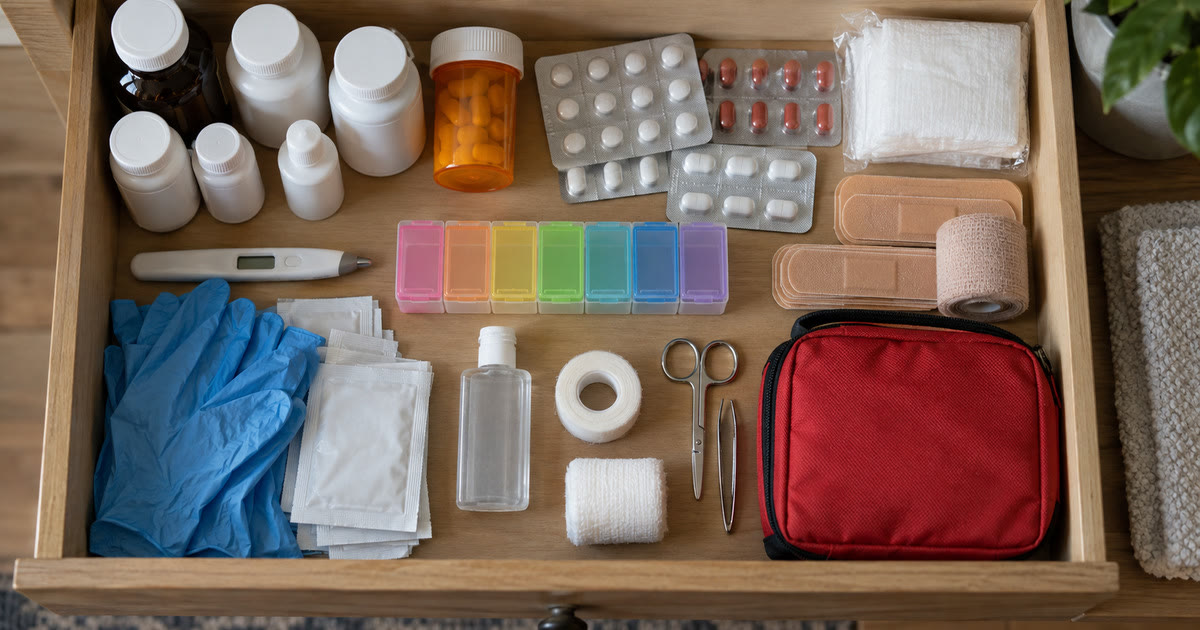
- A pill organizer keeps daily medications sorted and makes it obvious if a dose was missed.
Allergies and reactions
- Antihistamine (diphenhydramine/Benadryl, or a non-drowsy option like cetirizine) — allergic reactions, insect stings, itching, and as a sleep aid in a pinch.
- Hydrocortisone cream — rashes, insect bites, mild skin irritation.
- Epinephrine auto-injector if anyone in the household has a severe allergy — prescription only; keep it accessible and check the expiration date regularly, since it’s time-sensitive.
Digestive issues
- Anti-diarrheal (loperamide/Imodium) and oral rehydration salts — dehydration from diarrhea is a real risk, especially for kids and older adults.
- Antacid / acid reducer for heartburn and upset stomach.
- Anti-nausea medication, especially useful if travel or stress is involved.
- Laxative/stool softener — diet changes during an emergency commonly cause constipation.
Cuts, infection, and wound care
- Antibiotic ointment for minor cuts and scrapes.
- Antiseptic wipes or solution for cleaning wounds.
- A properly stocked kit belongs alongside this list — see our first aid kit checklist for bandages, gauze, and trauma supplies.
Household prescription medications
This is the category that actually matters most for anyone managing a chronic condition:
- Ask your doctor about an emergency supply — some insurers and states allow an extra 30-day supply for disaster preparedness; it’s worth asking specifically.
- Keep a written list of every medication, dose, and prescribing doctor for each household member, stored with your documents and a copy in your kit.
- Know storage requirements — insulin and some other medications need refrigeration; plan a cooler and ice packs or a small 12V cooler for a power outage.
- Rotate prescriptions like food — use the oldest stock first and refill before you’re down to your last week.
- Keep a spare pair of glasses, contact solution, and hearing aid batteries if anyone relies on them.
Other useful additions
- Electrolyte packets or sports drink powder for dehydration and heat stress.
- Cough drops and a basic cold/flu remedy.
- Any regular OTC supplement household members rely on.
- Saline nasal spray and eye wash.
How much to store
A reasonable target is a 2–4 week supply of OTC essentials beyond your normal household stock, and as much of an emergency prescription buffer as your doctor and insurer allow. Buy the largest reasonable size of things you’ll actually use before they expire, and check expiration dates twice a year.
Storage and organization
- Cool, dry, dark storage — heat and light degrade medication effectiveness faster than the printed expiration date accounts for.
- Original containers or clearly labeled ones — never mix pills unlabeled, especially in a household with children.
- Split your stock between a home kit and a portable grab bag, so you’re covered whether you shelter in place or leave.
- Check twice a year (tie it to daylight saving time changes) and replace anything expired.
Frequently asked questions
What over-the-counter medications should every prepper stock?
Pain/fever relievers (acetaminophen and ibuprofen), an antihistamine, anti-diarrheal medication and oral rehydration salts, an antacid, hydrocortisone cream, and antibiotic ointment cover most common minor issues in an emergency.
Can I get extra prescription medication stocked for emergencies?
Sometimes. Ask your doctor and insurer directly, since some plans and states allow an extra 30-day emergency supply, particularly ahead of hurricane season in affected regions. It’s worth asking even if you’re unsure your plan covers it.
How long do medications last past their expiration date?
Many medications retain significant potency for a period after their printed date if stored properly (cool, dry, dark), but this varies by drug, and some, like liquid antibiotics and epinephrine, degrade faster and shouldn’t be relied on past expiration. Check with a pharmacist about specific medications.
What should I do about insulin or refrigerated medications during a power outage?
Plan ahead with a small cooler, ice packs, or a 12V cooler that can run off a car or power station, and ask your doctor or pharmacist about how long your specific medication stays effective unrefrigerated if cooling fails. Don’t wait until an outage to find out.
How much medicine should a prepper stockpile?
A reasonable target is a 2 to 4 week supply of over-the-counter essentials beyond normal household use, plus as large an emergency prescription buffer as your doctor and insurance allow. Buy sizes you’ll realistically use before expiration.
Is it safe to store different medications together unlabeled?
No. Keep medications in original or clearly labeled containers, especially in a household with children or guests, to avoid dangerous mix-ups during a stressful emergency when you may not have time to double-check.
Bottom line
Stock the basics for pain, allergies, digestion, and wounds, but put the most effort into your household’s actual prescriptions: ask your doctor about an emergency supply, keep a written medication list, and plan for refrigeration needs. This is general information — talk to your doctor or pharmacist about what applies to your specific health situation.
Related guides
🩹 How to Build a Survival First Aid Kit
👨🧉 Emergency Prep for Elderly and Disabled Family Members
🐕 Pet Emergency Preparedness Checklist
This article is for general informational purposes only and is not medical advice. Consult a doctor or pharmacist about medications appropriate for your household. Sources: CDC emergency preparedness for medication and health needs; FDA guidance on medication storage and shelf life; Ready.gov.