
This site stays free thanks to small commissions from links like the ones below — it never costs you anything extra, and it never changes what we recommend. As an Amazon Associate we earn from qualifying purchases. Learn more.
Pets are often the piece families forget in disaster planning — and many emergency shelters won’t accept animals without specific documentation and supplies ready to go. This pet emergency preparedness checklist covers what every pet owner needs before disaster hits.
Quick answer
Keep a dedicated pet emergency kit with food, water, medication, a secure carrier, and copies of vaccination records, plus a plan for where you’ll go if your usual shelter options don’t accept animals. Make sure your pet is microchipped and wearing current ID at all times, not just during emergencies.
Food, water, and medication
- At least 3-7 days of your pet’s regular food, stored in a way that doesn’t attract pests.
- Water specifically for your pet, separate from your own household supply.
- Any regular medications, with clear dosing instructions, rotated before they expire.
- A can opener and feeding bowl if your pet eats canned food.
Identification and documents
- Microchip your pet and keep the registration information current — this is the most reliable way to be reunited if separated.
- Current ID tags on a collar at all times, not just packed in a kit.
- Copies of vaccination records — many shelters and boarding facilities require proof of rabies vaccination before accepting an animal.
- A recent photo of you together with your pet, useful for proving ownership if separated.
Carrier and restraint
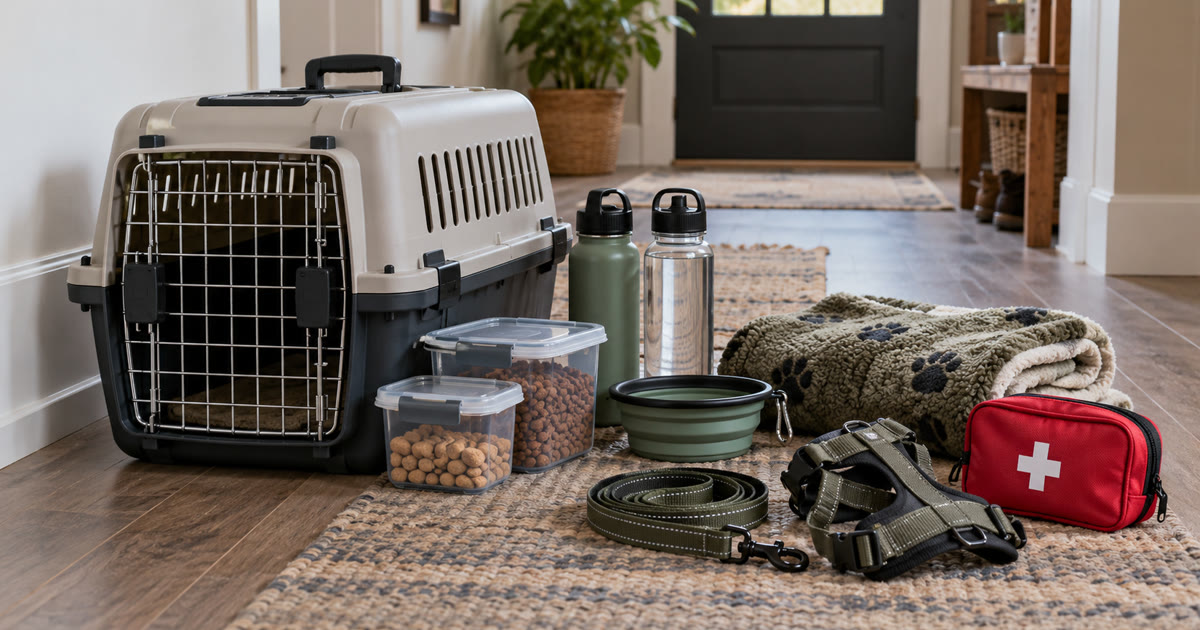
A secure, properly sized carrier is essential for evacuation, especially for cats and small animals that can bolt when scared. Even calm dogs benefit from a leash and harness kept with the kit, since stress during a disaster can cause unpredictable behavior even in well-trained animals.
Comfort and stress management
A familiar blanket or toy helps reduce a pet’s stress during an evacuation or shelter stay, similar to how comfort items help children. Pets pick up on household stress, so staying as calm as possible during the actual event helps them too.
Know your sheltering options in advance
Not all emergency shelters accept pets — research pet-friendly shelters, hotels along evacuation routes, and boarding facilities in your area before you need them, rather than discovering the gap during an actual disaster. See our full guide on evacuating with pets for the complete plan.
Frequently asked questions
Do emergency shelters accept pets?
Not always, and requirements vary — many that do accept pets require proof of vaccination and a secure carrier. Research pet-friendly options in your area ahead of time.
Is microchipping really necessary if my pet already has ID tags?
Yes — collars and tags can come off during a disaster, but a microchip provides a permanent way to identify and reunite with your pet if separated.
How much food and water should I store for my pet?
At least 3-7 days’ worth, stored separately from your own emergency supplies and rotated periodically to stay fresh.
What documents should I keep with my pet’s emergency kit?
Copies of vaccination records (especially rabies), microchip registration information, and a recent photo of you together with your pet.
Should I leash my pet even if they’re normally calm off-leash?
Yes, stress during a disaster can cause unpredictable behavior even in well-trained pets, so a leash and secure carrier should be part of every kit.
What helps reduce my pet’s stress during an emergency?
A familiar blanket or toy, and staying as calm as possible yourself, since pets pick up on household stress levels.
Bottom line
Pack 3-7 days of food, water, and medication, keep documents and a recent photo accessible, microchip your pet, and research pet-friendly shelter options before a disaster forces the question.
Related guides
🐕 How to Evacuate With Pets During a Disaster
🐰 Dog First Aid Kit for Hiking and Camping
🏠 How to Make a Family Emergency Plan
This article is for general informational purposes only. Sources: ASPCA disaster preparedness guidance; Ready.gov pet preparedness recommendations.