
This site stays free thanks to small commissions from links like the ones below — it never costs you anything extra, and it never changes what we recommend. As an Amazon Associate we earn from qualifying purchases. Learn more.
The worst time to discover your evacuation shelter doesn’t accept pets is during the actual evacuation. This guide covers how to evacuate with pets during a disaster — planning ahead so you’re never forced to choose between your safety and theirs.
Quick answer
Never leave pets behind during an evacuation — plan ahead by identifying pet-friendly shelters, hotels, or boarding options on your evacuation route, keep a secure carrier and leash ready, and have vaccination records and ID accessible. Evacuate early, since pets add time to the process.
Plan your pet-friendly options before you need them
Research pet-friendly shelters, hotels along likely evacuation routes, and boarding facilities or veterinary clinics that offer emergency boarding — do this ahead of hurricane season, wildfire season, or whatever disaster is relevant in your area, not during the evacuation order. See our pet emergency preparedness checklist for the supplies to have ready alongside this plan.
Leave early
Evacuating with pets takes longer — loading carriers, calming anxious animals, and extra stops add time you may not have if you wait until the last possible moment. Leave as soon as an evacuation is likely, not just when it’s mandatory.
Secure transport
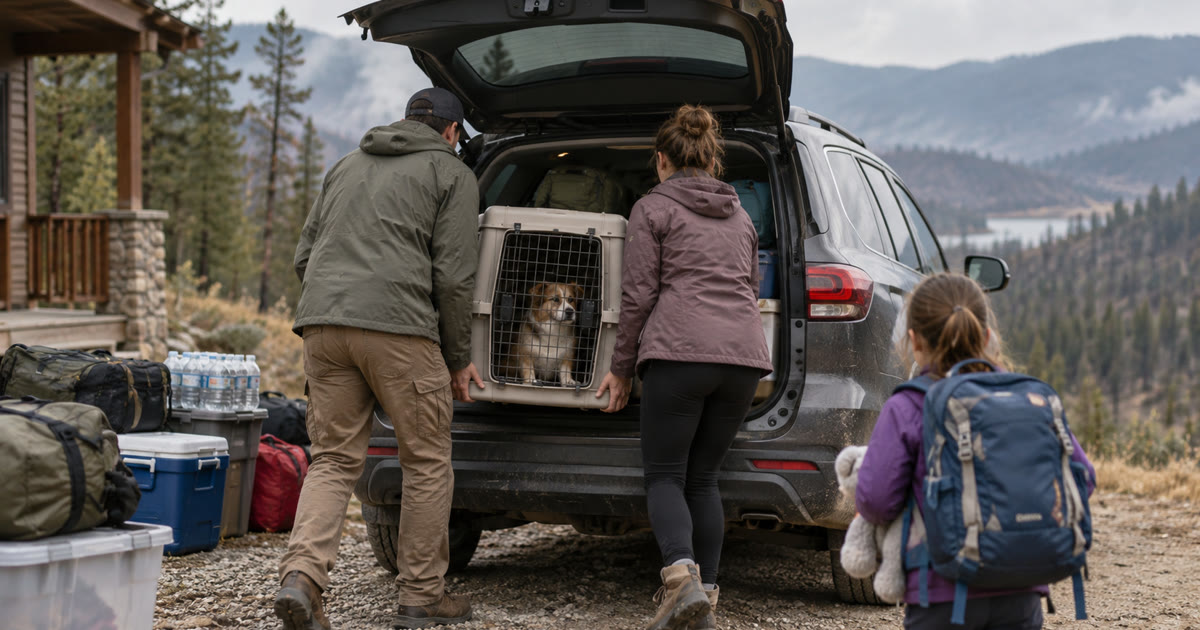
- A carrier sized appropriately for each pet, secured in the vehicle rather than loose.
- Leashes and harnesses for dogs, even normally well-behaved ones — disaster stress causes unpredictable behavior.
- Cats and small animals should stay in carriers the entire trip; a scared cat loose in a moving vehicle is a real safety hazard.
What to bring
- Food and water for several days, plus bowls.
- Medications with dosing instructions.
- Copies of vaccination records — required by many shelters and boarding facilities.
- A recent photo of you with your pet, useful for proving ownership if separated.
- A comfort item (familiar blanket or toy) to reduce stress.
If you can’t take your pet with you
If circumstances truly prevent bringing a pet (rare, but possible with very large animals or specific shelter restrictions), never simply leave them loose to fend for themselves — contact local animal control or a rescue organization in advance about emergency boarding or rescue options, and plan for this scenario before a disaster, not during one.
After the evacuation
Keep pets on a leash or in a carrier even once you’ve reached safety — unfamiliar environments combined with disaster stress increase the risk of a pet bolting and getting lost in an unfamiliar area.
Frequently asked questions
Should I ever leave my pet behind during an evacuation?
No, pets should evacuate with the family whenever possible. Plan ahead for pet-friendly shelter or boarding options so this is never a forced choice.
How much earlier should I evacuate if I have pets?
As soon as an evacuation becomes likely, not just when it’s mandatory — loading pets and their supplies takes extra time you may not have later.
Do I need vaccination records to evacuate with my pet?
Many pet-friendly shelters and boarding facilities require proof of vaccination, especially rabies, so keep copies accessible with your evacuation kit.
Is it safe to let my cat ride loose in the car during evacuation?
No, a scared cat loose in a moving vehicle is a real safety hazard for both the animal and the driver — always use a secure carrier.
What if my chosen shelter doesn’t accept pets?
Research pet-friendly alternatives (hotels, boarding facilities, veterinary clinics with emergency boarding) along your evacuation route before a disaster happens, not during one.
Should I keep my pet on a leash even after reaching a safe location?
Yes, unfamiliar surroundings combined with disaster stress increase the risk of a pet bolting, even if they’re normally well-behaved at home.
Bottom line
Never plan to leave a pet behind — research pet-friendly evacuation options ahead of time, leave early, and keep pets secured in a carrier or on a leash throughout the entire evacuation and after.
Related guides
🐕 Pet Emergency Preparedness Checklist
🏠 Emergency Pet Food and Water Supply
🏠 How to Make a Family Emergency Plan
This article is for general informational purposes only. Sources: ASPCA disaster preparedness guidance; Ready.gov pet evacuation recommendations.