
This site stays free thanks to small commissions from links like the ones below — it never costs you anything extra, and it never changes what we recommend. As an Amazon Associate we earn from qualifying purchases. Learn more.
Pet food storage gets overlooked in most household emergency planning, even though pets need the same baseline supply discipline as the rest of the family. This guide covers emergency pet food and water supply: how much to store, how long it lasts, and rotation tips.
Quick answer
Store at least 2 weeks of your pet’s regular food and a separate water supply (roughly 1 ounce per pound of body weight per day for most dogs and cats), and rotate stock so nothing expires unnoticed. Keep a manual can opener if you store canned food.
How much food to store
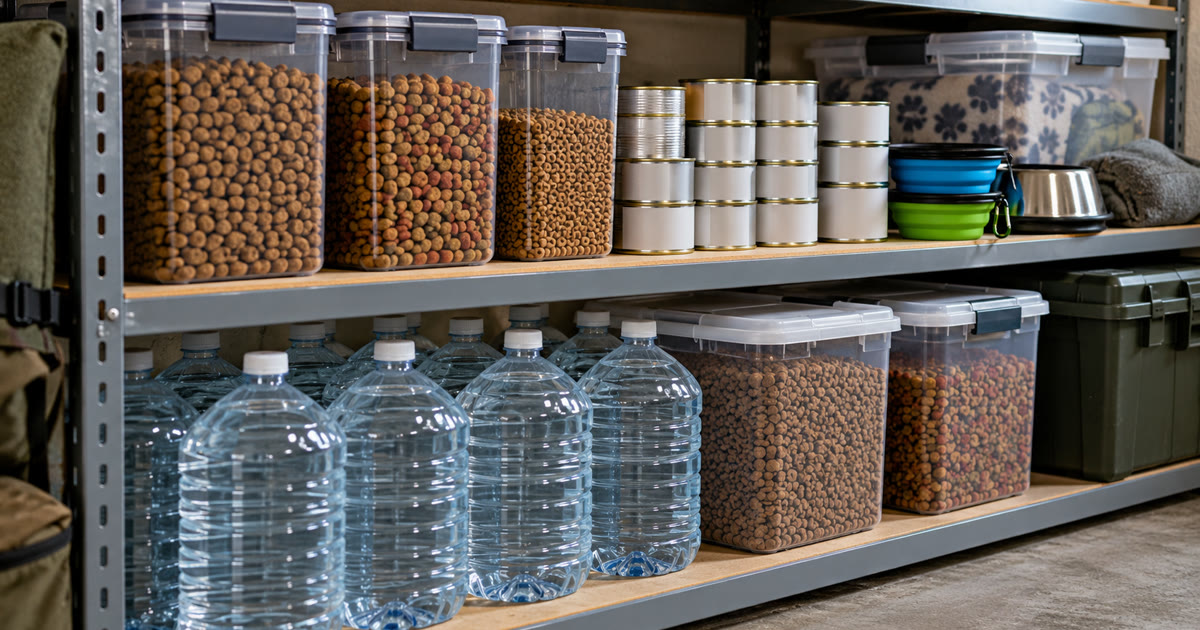
A 2-week minimum is a reasonable baseline for most households, scaled to your pet’s size and regular diet. Larger dogs need proportionally more; stock based on actual daily feeding amounts rather than guessing. Dry kibble generally stores longer than canned food, making it easier to rotate for long-term emergency stock.
How much water to store
Roughly 1 ounce of water per pound of body weight per day covers most dogs and cats under normal conditions — more in hot weather or for active breeds. Store this separately from your household water supply so a pet emergency doesn’t compete with human needs during a shortage.
Storage and rotation
- Store dry food in its original bag inside a sealed, airtight container to protect against pests and moisture.
- Check expiration dates every few months and rotate stock — use older food in regular feeding and replace it with fresh stock.
- Canned food has a longer shelf life unopened but needs more careful rotation tracking since dates vary by brand.
- Store in a cool, dry location — heat and humidity degrade pet food faster than most owners realize.
Special diets and medication
If your pet has a prescription diet or specific dietary restriction, stock extra of that specific food rather than planning to substitute something else during an emergency — sudden diet changes can cause digestive upset exactly when you need your pet calm and healthy. Keep any regular medications stored and rotated the same way.
What to watch for in stored food
Discard food that smells rancid, shows mold, or has been exposed to pests or water damage. Pets can be sensitive to spoiled food in ways that cause real illness, so don’t feed questionable stock just to avoid waste.
Frequently asked questions
How much emergency food should I store for my pet?
At least 2 weeks’ worth, scaled to your pet’s size and regular feeding amount, stored in a sealed, airtight container.
How much water does my pet need in an emergency?
Roughly 1 ounce per pound of body weight per day for most dogs and cats, more in hot weather, stored separately from household water.
Does dry food or canned food store longer?
Dry kibble generally has a longer practical shelf life and is easier to rotate for emergency stock, though unopened canned food also stores well if dates are tracked carefully.
How often should I rotate my pet’s emergency food supply?
Check every few months, using older stock in regular feeding and replacing it with fresh food to keep the supply usable.
Can I substitute a different food if my pet is on a prescription diet?
It’s best to stock extra of their specific prescription food — sudden diet changes can cause digestive upset during an already stressful emergency.
What should I do if stored pet food looks or smells off?
Discard it. Spoiled pet food can cause real illness, so don’t feed questionable stock just to avoid waste.
Bottom line
Store at least 2 weeks of food and a separate water supply scaled to your pet’s size, rotate stock every few months, and keep extra of any prescription diet rather than planning to substitute during an emergency.
Related guides
🐕 Pet Emergency Preparedness Checklist
🚗 How to Evacuate With Pets During a Disaster
🍟 How to Build an Emergency Food Supply
This article is for general informational purposes only. Sources: ASPCA pet preparedness guidance; American Veterinary Medical Association food storage recommendations.