
This site stays free thanks to small commissions from links like the ones below — it never costs you anything extra, and it never changes what we recommend. As an Amazon Associate we earn from qualifying purchases. Learn more.
Off-grid power doesn’t have to mean a $20,000 solar array on day one — most households build it up in stages, starting with keeping phones and a few lights running and growing from there. This guide covers off-grid power basics: the building blocks, how they fit together, and a sensible order to add them.
Quick answer
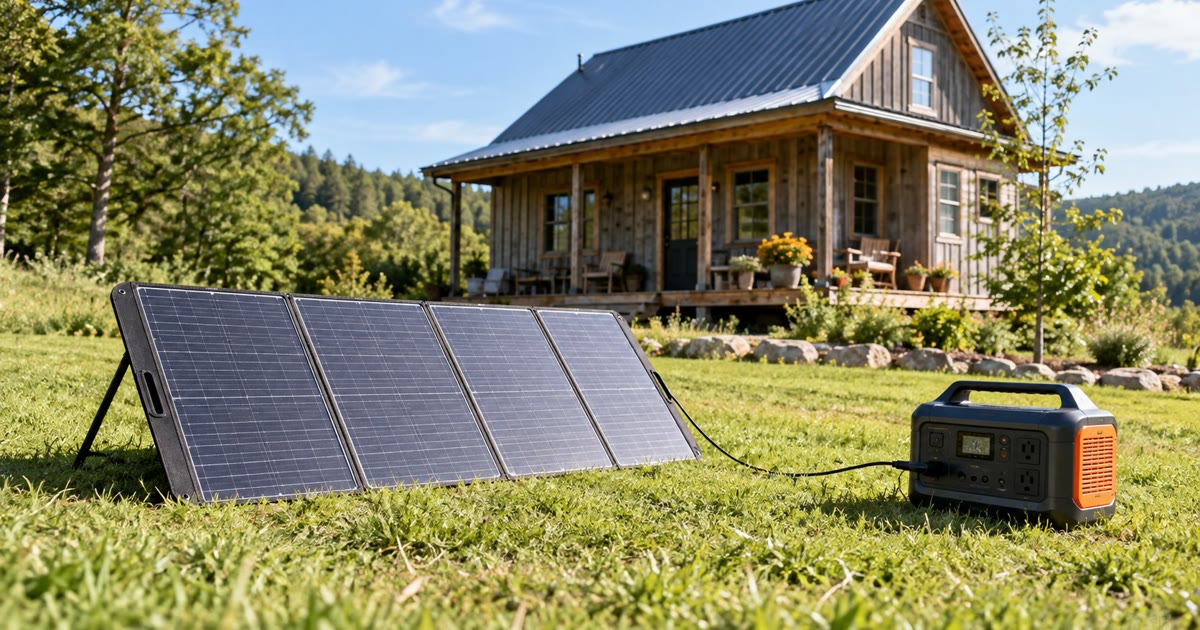
Off-grid power is built from four pieces: generation (solar panels, a generator), storage (batteries), a way to convert and manage power (charge controller, inverter), and the loads you actually want to run. For most people, start with a portable power station plus a folding solar panel — it bundles battery, inverter, and charge controller into one unit and covers phones, lights, and small devices before scaling to anything bigger.
The four building blocks
1. Generation: how you make power
- Solar panels — silent, no fuel, the standard renewable choice. Output drops on cloudy days and at night, so it’s paired with storage.
- Generator (gas, propane, or dual-fuel) — reliable on-demand power regardless of weather, but needs stored fuel and must run outdoors due to exhaust.
- Most serious off-grid setups use both: solar for routine daily use, a generator as backup for extended cloudy stretches or high demand.
2. Storage: where the power waits until you need it
- Lithium batteries (LiFePO4) are now standard in portable power stations — lighter, longer-lasting, and safer than older lead-acid batteries, though more expensive upfront.
- Storage capacity is measured in watt-hours (Wh) — a 1,000Wh unit can run a 100-watt device for about 10 hours, roughly, accounting for some conversion loss.
3. Conversion and management
- Charge controller: regulates power coming in from solar panels so it charges the battery safely without overcharging.
- Inverter: converts the battery’s stored DC power into the AC power your household outlets and most devices use.
- In a portable power station, both of these are already built in — this is why they’re the easiest entry point.
4. Loads: what you’re actually powering
- Start by listing what you actually need in an outage: phones, a CPAP or medical device, a few lights, a router, maybe a small fridge.
- Add up the wattage of your priority devices — this determines what size system you actually need, rather than buying the biggest option available.
A sensible order to build it up
- Start small: a portable power station (300–1000Wh) covers phones, a lamp, a radio, and charging small devices for a few days.
- Add solar charging: a foldable solar panel lets you recharge the power station indefinitely instead of running it dry once.
- Scale up capacity if you need to run more or larger devices — bigger power stations (2,000Wh+) or stacking multiple units.
- Add a generator as backup for extended outages or heavy loads (well pumps, larger appliances) that solar and battery alone can’t cover.
- Consider a full home solar + battery system only once you’ve confirmed through actual use what your real needs are — this is a large investment best made with experience, not guesswork.
Sizing a basic system: a worked example
A phone charger draws about 10–20 watts, an LED lamp about 10 watts, a router about 15 watts, and a laptop about 50 watts. Running all four for 5 hours a day uses roughly 475 watt-hours — comfortably within a 500–1000Wh power station’s daily capacity, especially with some solar input during the day to offset it.
What off-grid power won’t do
- A portable power station won’t run a central air conditioner, an electric water heater, or an electric stove — these draw far more power than small systems can sustain.
- Solar panels produce little to nothing at night or in heavy cloud cover — battery capacity and realistic expectations matter more than panel wattage alone.
- It’s not a substitute for the basics — water, food, heat, and sanitation planning matter more than electronics in most emergencies. See our full power outage preparedness guide.
Frequently asked questions
What’s the easiest way to start with off-grid power?
A portable power station paired with a foldable solar panel. It bundles the battery, charge controller, and inverter into one unit, covering phones, lights, and small devices without the complexity of a full installed system.
How many watt-hours do I need for a basic emergency setup?
For phones, a lamp, a router, and occasional laptop use, around 500 to 1,000 watt-hours of capacity covers a full day of light use, especially with some solar recharging during daylight hours.
Can solar panels alone power a house during an outage?
Not a whole house with typical appliances. Small portable solar setups work well for phones, lights, and small electronics, but central air conditioning, electric heat, and large appliances need far more capacity than portable systems provide.
Is a generator or solar power station better for backup power?
They serve different roles: solar and battery systems are silent and fuel-free but limited by battery capacity and weather, while generators provide more on-demand power but need stored fuel and must run outdoors. Many households use both.
What’s the difference between a charge controller and an inverter?
A charge controller regulates incoming power from solar panels to charge the battery safely. An inverter converts the battery’s stored DC power into the AC power that household outlets and most devices use. Portable power stations include both built in.
Do I need lithium batteries for off-grid power?
Not strictly, but lithium (LiFePO4) batteries are now standard in portable power stations because they’re lighter, last far more charge cycles, and are safer than older lead-acid batteries, despite a higher upfront cost.
Bottom line
Off-grid power is generation, storage, conversion, and the loads you want to run — start with a portable power station and a folding solar panel to cover the essentials, then scale up only once real use shows you what you actually need. A full home system is a big investment best made with experience behind it, not as the first step.
Related guides
🔌 How to Prepare for a Long-Term Power Outage
⚡ Portable Power Station vs. Generator
🏠 Winterize Your Home Checklist
This article is for general informational purposes only. Sources: U.S. Department of Energy solar and off-grid power basics; manufacturer specifications (Jackery, EcoFlow, Goal Zero); National Renewable Energy Laboratory (NREL) solar guidance.