
This site stays free thanks to small commissions from links like the ones below — it never costs you anything extra, and it never changes what we recommend. As an Amazon Associate we earn from qualifying purchases. Learn more.
An emergency blanket and a bivvy both trap body heat using the same reflective-material principle, but they’re built for different situations. This guide covers best emergency blankets and bivvies and when each one actually makes sense.
Quick answer
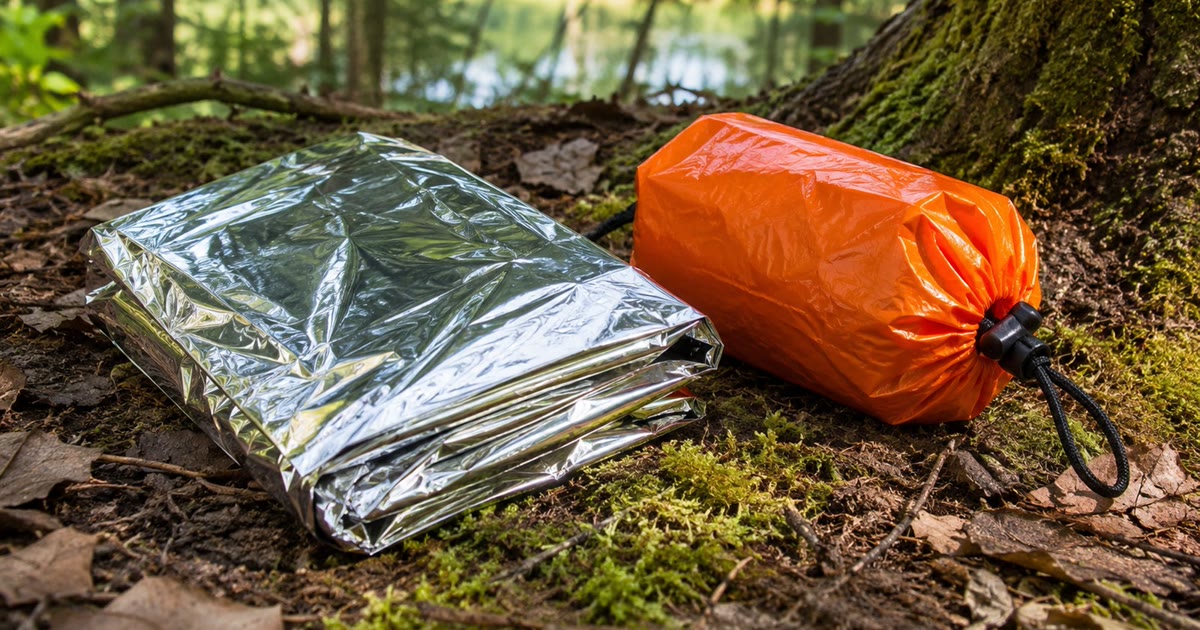
An emergency blanket is the lightest, cheapest option — good as a backup in every kit. An emergency bivvy (a sealed sack rather than a flat sheet) traps heat far more effectively and is worth the extra weight and cost if there’s a real chance of spending a night outside.
Emergency thermal blankets
A basic emergency thermal blanket is a flat, foil-like sheet that reflects body heat back — cheap, packable to almost nothing, and worth including in every kit as a baseline. It won’t block wind effectively on its own and can tear easily, so treat it as a backup layer, not a complete solution.
Emergency bivvies
An emergency bivvy seals around you like a sleeping bag, trapping significantly more heat than a flat blanket and blocking wind and some moisture. It’s heavier and bulkier than a thin blanket but genuinely capable of getting someone through an unplanned cold night, which a thin blanket alone often can’t do.
Reflective mylar blankets
A mylar emergency blanket is similar to the standard thermal blanket but often sturdier and reusable rather than single-use — a reasonable middle option if you want something slightly more durable than the cheapest disposable version.
What matters in choosing one
- Durability: cheaper thermal blankets tear easily; bivvies and heavier mylar options hold up better to repeated use.
- Wind resistance: a flat blanket does little against wind; a sealed bivvy blocks it effectively.
- Weight and pack size: blankets are nearly weightless; bivvies add real weight and bulk but deliver real protection in return.
- Reusability: some products are single-use, others can be used repeatedly — check before assuming you can reuse a cheap option.
How to use either effectively
Insulate from the ground first — any reflective material loses most of its value if you’re lying directly on cold ground, since heat loss through contact is faster than through air. Combine with as many clothing layers as available, and if using a flat blanket, wrap it as tightly as possible around the body rather than draping loosely.
Who needs which
- Everyday carry / car kit: a basic thermal blanket is enough as a low-cost backup.
- Backcountry hiking, winter conditions: an emergency bivvy is worth the extra weight given real overnight exposure risk.
- Home emergency kit: either works, since weight isn’t a concern — stock a few thermal blankets per household member.
Frequently asked questions
Is an emergency bivvy worth the extra weight over a blanket?
Yes, if there’s a real chance of an unplanned night outside — a bivvy traps far more heat and blocks wind, which a flat blanket largely can’t do.
Can emergency blankets be reused?
Some are single-use and tear easily; sturdier mylar options and bivvies can typically be reused multiple times. Check the specific product.
Do emergency blankets actually block wind?
Not effectively on their own — they’re thin and don’t seal around the body, so wind can still strip heat. A sealed bivvy performs much better here.
Why does ground insulation matter if I have a reflective blanket?
Heat loss through direct contact with cold ground happens faster than heat loss to air — any insulating layer beneath you significantly improves a blanket or bivvy’s effectiveness.
Should I carry a thermal blanket even if I also have a sleeping bag?
Yes, as a lightweight backup — if your main sleeping system is lost, wet, or inaccessible, a thermal blanket is better than nothing and weighs almost nothing to carry.
What’s the main difference between a blanket and a bivvy?
A blanket is a flat sheet you wrap around yourself; a bivvy is a sealed sack that encloses your whole body, trapping heat and blocking wind far more effectively.
Bottom line
A basic emergency blanket belongs in every kit as a cheap backup, while an emergency bivvy is worth the extra weight and cost for anyone with real exposure risk to an unplanned night outdoors.
Related guides
⛄ How to Treat Hypothermia and Frostbite
❄️ Best Winter Survival Gear
🏘 How to Build a Debris Hut Shelter
This article is for general informational purposes only. Product availability, pricing, and specifications change; check current listings. Sources: outdoor industry cold-weather gear guidance; American Red Cross exposure safety recommendations.