
This site stays free thanks to small commissions from links like the ones below — it never costs you anything extra, and it never changes what we recommend. As an Amazon Associate we earn from qualifying purchases. Learn more.
Cold-weather emergencies punish weak gear fast — a soaked glove or a dead flashlight matters a lot more at 15°F than at 55°F. This is a practical roundup of the best winter survival gear: what each category is for, what actually matters when you’re buying, and where to start if you’re building a kit from nothing.
Quick answer
Prioritize in this order: insulated, waterproof gloves and boots, a sleeping bag/pad rated for real cold, an emergency thermal blanket or bivvy, chemical hand/body warmers, a headlamp with lithium batteries, and a stove that runs in the cold. Extremity protection and sleep insulation matter more than almost anything else in winter.
Insulated, waterproof gloves
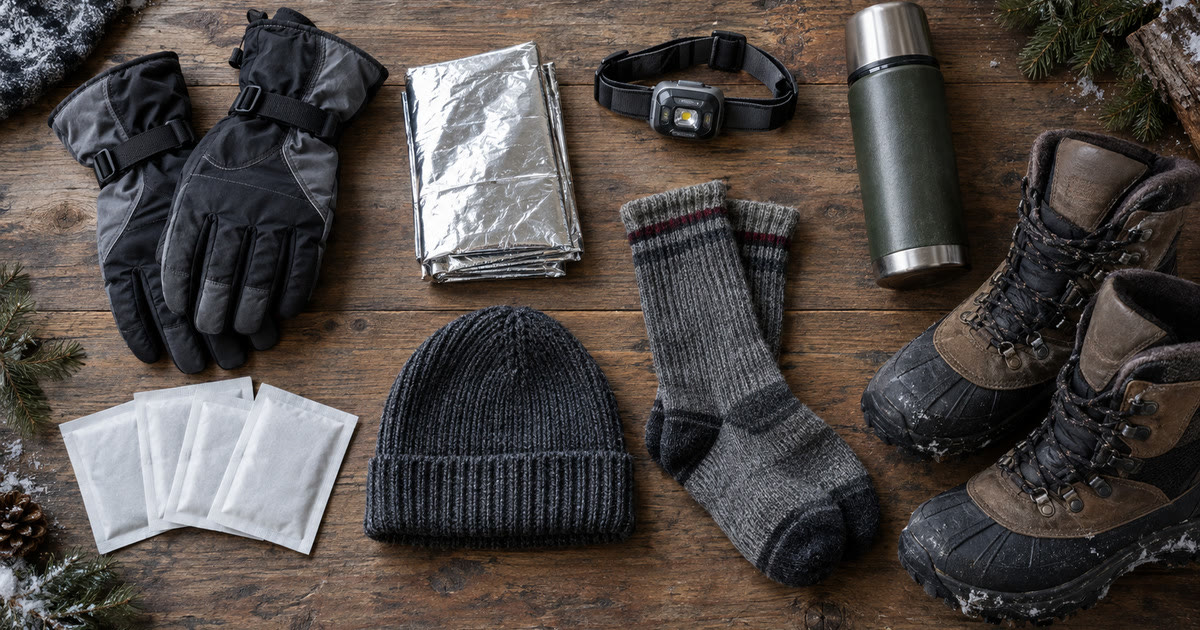
Wet hands lose dexterity and warmth fast, and cold hands make every other task harder. Look for a waterproof-breathable shell, real insulation (not just a thin liner), and enough dexterity to work a zipper or a lighter. Look up insulated waterproof gloves. Pair with thin liner gloves you can wear alone for fine tasks without exposing bare skin.
Insulated winter boots
A rating in grams of insulation (400g, 600g, 800g+) gives a rough guide — more for standing still in extreme cold, less for high-activity use where you’ll generate heat. Waterproofing matters as much as insulation, since wet feet in the cold are a fast path to frostbite. Look up insulated winter boots. Size them to fit a thicker sock without compressing circulation.
Cold-rated sleeping bag and pad
The single biggest failure point in winter emergencies is an inadequate sleep system. Choose a bag rated at least 10–15°F below the coldest temperature you expect, and never skip the pad — ground cold pulls heat away as fast as air does. Look up cold-weather sleeping bags and an insulated sleeping pad.
Emergency thermal blanket or bivvy
Cheap, tiny, and it belongs in every bag, car, and coat pocket — not just a dedicated kit. A reflective thermal blanket or a bivvy sack reflects body heat and blocks wind when you have nothing else. Look up emergency thermal bivvies.
Chemical hand and body warmers
Air-activated warmers give hours of low, steady heat for hands, feet, or tucked into a jacket near the core. Cheap enough to stock in bulk; keep a stash in every bag, glove box, and coat.
Look up hand and body warmers.
Headlamp with lithium batteries
Winter days are short, and cold drains standard alkaline batteries fast — lithium batteries hold up much better in freezing temperatures. A hands-free headlamp matters more in winter, when you’re often wearing gloves and handling gear one-handed. Look up a headlamp and stock lithium AA batteries as spares.
A stove that actually runs cold
Standard upright canister stoves lose power near freezing. For reliable winter cooking and snow-melting, a liquid-fuel or remote-canister stove performs far better in the cold. See our full survival stove guide for the tradeoffs.
Traction aids
Microspikes or crampons for icy ground, snowshoes if deep snow travel is realistic where you live. Falls on ice are one of the most common winter injuries, and traction is cheap insurance. Look up traction cleats.
A folding snow shovel
For digging out a vehicle, clearing a tent site, or building an emergency snow shelter. A compact folding model packs small enough to keep in any bag or trunk permanently. Look up a folding snow shovel.
How to buy without overspending
- Start with extremities and sleep — gloves, boots, and a sleep system prevent the most common and dangerous cold injuries.
- Buy quality where it matters most (boots, sleeping bag) and save on things you’ll use rarely.
- Test everything before winter, not during the first storm — a “waterproof” boot that isn’t is better discovered on a dry driveway than mid-emergency.
- Duplicate cheap items (hand warmers, batteries, thermal blankets) across your home kit, car kit, and bug-out bag rather than sharing one set.
Frequently asked questions
What is the single most important piece of winter survival gear?
A properly rated sleeping bag and pad, or failing that, an emergency thermal bivvy. Inadequate sleep insulation is behind most serious winter cold-exposure incidents, more than any single piece of clothing.
Why do lithium batteries matter for winter gear?
Standard alkaline batteries lose a significant portion of their usable power in freezing temperatures, while lithium batteries hold their charge and performance much better in the cold, making them the better choice for headlamps and other cold-weather electronics.
Do I need a special stove for winter?
For reliable performance, yes. Standard upright canister stoves lose pressure and power near freezing, while liquid-fuel and remote-canister stoves keep working and are much better for melting snow into drinking water in cold conditions.
How much insulation do winter boots need?
It depends on activity level: more insulation (600 to 800+ grams) for standing still in extreme cold, less for high-activity use where you’ll generate your own heat. Waterproofing matters as much as insulation grade, since wet feet chill fast.
Are chemical hand warmers worth stocking in bulk?
Yes. They’re inexpensive, take up almost no space, and provide hours of steady low heat for hands, feet, or tucked near the core. Keeping a stash in every bag, vehicle, and coat pocket is one of the cheapest upgrades to winter preparedness.
What traction device is best for icy conditions?
Microspikes work well for most icy walking and light trail use; full crampons are for steep, hard ice and technical terrain. Snowshoes are for deep, soft snow rather than ice, and address a different problem (flotation, not traction).
Bottom line
Winter gear priorities are extremities and sleep first, then reliable fire, light, and cooking that actually work in the cold. Build the kit before the first cold snap, test it on a dry day, and duplicate the cheap essentials across every bag you own.
Related guides
🏙️ Winter Bug-Out Bag Checklist
🧡 How to Layer Clothing for Cold Weather
🔥 Best Survival Stoves and Camp Cooking Gear
This article is for general informational purposes only. Product availability and pricing change; check current listings. Sources: National Outdoor Leadership School (NOLS) winter equipment guidance; CDC extreme cold safety; manufacturer specifications.