
This site stays free thanks to small commissions from links like the ones below — it never costs you anything extra, and it never changes what we recommend. As an Amazon Associate we earn from qualifying purchases. Learn more.
A standard bug-out bag packed for a mild-weather emergency can leave you dangerously underprepared in a winter one — cold changes what you need for shelter, water, and even your own body. This is a winter bug-out bag checklist: what to add, swap, and prioritize when the emergency happens in the cold.
Quick answer
Start with your standard 72-hour kit, then add: an insulated sleeping system rated for the cold, extra warm layers (not replacements — additions), hand and body warmers, a way to melt snow for water, and gear that still works when it’s freezing (batteries, water filters, fuel). Cold-weather kits should weigh a bit more and hold noticeably more insulation than a three-season bag.
Shelter and sleep system
- Sleeping bag rated at least 10–15°F below the coldest temperature you realistically expect — bag ratings are optimistic for most people.
- Insulated sleeping pad with a solid R-value; the ground pulls heat away faster than air does, so this matters as much as the bag.
- A four-season tent or a sturdy tarp shelter that sheds snow load, plus stakes rated for frozen or icy ground.
- Emergency bivvy as a lightweight backup even if you carry a full shelter.
Clothing (add, don’t just swap)
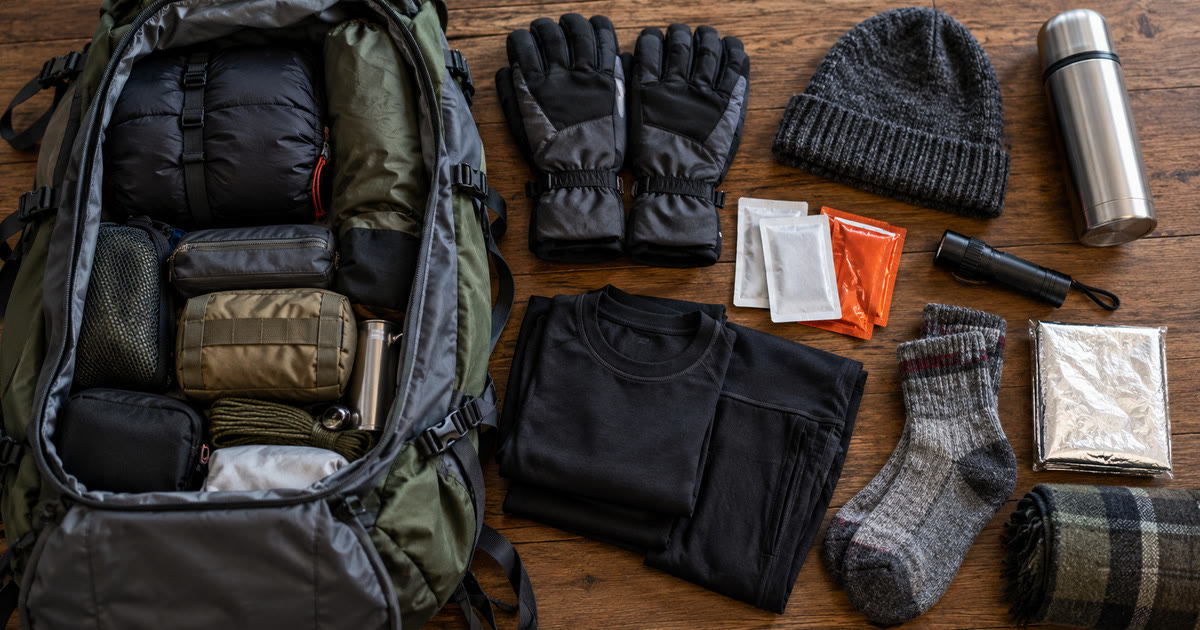
- Full three-layer system: base, insulating mid, weatherproof shell. See our layering guide.
- An extra complete dry set of base layers and socks — wet clothing in the cold is genuinely dangerous, and you may not be able to dry anything out in the field.
- Insulated, waterproof boots plus gaiters if you’ll be in deep snow.
- Insulated mittens or gloves plus thin liner gloves for dexterity tasks.
- A hat, neck gaiter, and eye protection (sun/wind/snow glare).
Water in freezing conditions
- Insulated water bottles or a bottle carried inside your jacket — exposed bottles and hoses freeze solid fast.
- A way to melt snow: a stove and pot are far more reliable than a filter alone, since filters can freeze, crack, and stop working in the cold.
- Keep filters from freezing — carry them close to your body if temperatures are below freezing; a frozen, cracked filter can pass contaminated water without you knowing.
- Chemical treatment (tablets) as backup, though they work more slowly in cold water.
Fire and heat
- Two independent fire-starting methods — a lighter (kept warm in a pocket, since cold drains them) and a ferro rod, plus dry tinder in a waterproof container.
- Chemical hand and body warmers — cheap, light, and effective backup heat for hands, feet, and core.
- A liquid-fuel or canister stove that performs in the cold (canister stoves lose power near freezing; see our stove guide).
Gear that behaves differently in the cold
- Batteries lose capacity fast in freezing temperatures — carry spares close to your body, and consider lithium batteries, which handle cold better than alkaline.
- Zippers and buckles can freeze or become brittle — handle gear gently and keep small mechanisms sheltered.
- Electronics and screens perform poorly when very cold; keep phones and GPS units insulated and close to your body.
- Fuel canisters lose pressure in the cold — warm a canister in your jacket before use if it’s struggling.
Food adjustments
- Your body burns significantly more calories staying warm — pack more food than you would for the same trip in mild weather.
- Favor foods that don’t need much prep and won’t freeze solid: nuts, nut butters, jerky, cheese, energy bars kept in an inner pocket.
- Warm food and drinks boost morale and core temperature meaningfully — a stove is worth the weight.
Winter-specific additions to your checklist
- Traction aids: microspikes or crampons for ice, snowshoes for deep snow if travel is likely.
- A small folding shovel — for digging a shelter, clearing a tent site, or digging out a vehicle.
- Sunglasses or goggles rated for snow glare, which causes real eye damage (snow blindness) surprisingly fast.
- A whistle and signal mirror — sound and light carry further in winter’s quiet, clear air.
- Lip balm and skin protection; wind and cold crack skin fast.
Frequently asked questions
How is a winter bug-out bag different from a regular one?
It needs a warmer-rated sleeping system, extra dry clothing layers rather than substitutes, more food for higher calorie burn, gear that still functions when it’s freezing (batteries, stoves, water filters), and traction and shelter equipment suited to snow and ice.
Do water filters work in freezing temperatures?
Not reliably. Filters can freeze, crack internally, and then pass contaminated water without any visible sign of damage. Keep filters warm against your body in freezing conditions, or rely on melting snow with a stove and boiling as your primary method.
Why do batteries die faster in cold weather?
Cold slows the chemical reactions batteries rely on to produce power, temporarily reducing their output and effective capacity. Carrying spares close to your body and using lithium batteries, which tolerate cold better than alkaline, helps.
How much warmer should a winter sleeping bag be rated than the expected temperature?
Aim for a bag rated at least 10 to 15 degrees Fahrenheit below the coldest temperature you realistically expect, since manufacturer ratings tend to be optimistic for average sleepers, and an insulated pad underneath matters just as much as the bag itself.
What’s the most overlooked item in winter emergency kits?
An insulated sleeping pad. People focus on the sleeping bag and forget that the cold ground pulls heat away from the body just as fast, if not faster, than cold air, making pad insulation just as critical as bag rating.
Can you use the same fire-starting gear in winter as in summer?
Mostly, but cold drains lighters and can make tinder harder to find dry, so carry a lighter kept warm in an inner pocket plus a ferro rod as backup, along with dry tinder stored in a waterproof container rather than relying on finding dry material in the field.
Bottom line
A winter bug-out bag isn’t your regular kit with a coat added — it needs a genuinely warmer sleep system, more food, backup fire and water methods that work when frozen, and gear chosen to survive the cold itself. Build it, or upgrade your existing bag, well before the first storm.
Related guides
🧡 How to Layer Clothing for Cold Weather
❄️ Best Winter Survival Gear
🏙️ Build a 72-Hour Survival Kit
This article is for general informational purposes only. Sources: National Outdoor Leadership School (NOLS) winter travel guidance; Ready.gov winter weather preparedness; CDC extreme cold safety.