
This site stays free thanks to small commissions from links like the ones below — it never costs you anything extra, and it never changes what we recommend. As an Amazon Associate we earn from qualifying purchases. Learn more.
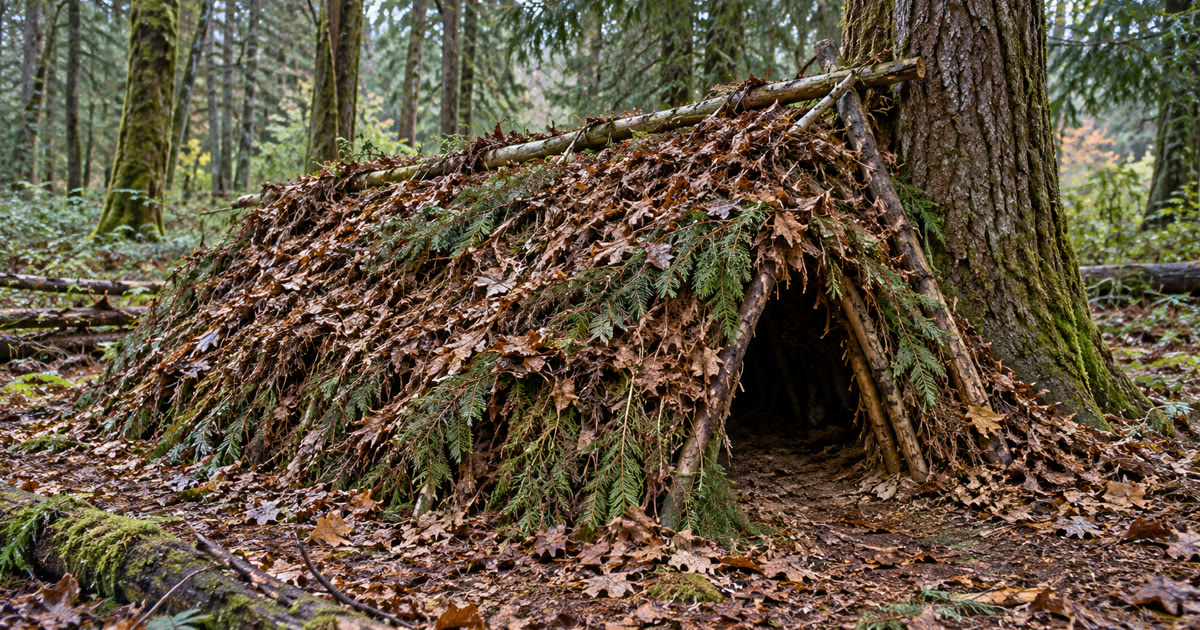
A well-built debris hut can keep you alive overnight in cold conditions using nothing but materials found on the ground — no tarp, no tent, no cordage required. This guide covers how to build a debris hut shelter step by step.
Quick answer
Build a low ridge-pole frame just big enough to fit your body, then pile debris (leaves, pine needles, dead grass) at least 2-3 feet thick over the frame for insulation. The core principle is trapped air — thickness matters far more than size, since a smaller shelter is easier to fully insulate and heat with your body.
Site selection
Choose ground that’s dry, slightly elevated to avoid water pooling, and sheltered from wind if possible. Avoid dead standing trees or branches overhead that could fall (widowmakers), and avoid low spots where cold air settles overnight.
Building the frame
- Find a ridge pole slightly longer than your body, propped at one end on a sturdy support (a low branch fork, rock, or stump) about waist height.
- Lean shorter branches along both sides of the ridge pole at an angle, creating a narrow A-frame tunnel just wide enough to fit your body with minimal extra space.
- Keep the entrance small and oriented away from prevailing wind.
- Add a lattice of smaller sticks over the frame to hold the debris layer in place and prevent it from falling through.
Piling on debris
This is the step people underestimate: pile leaves, pine needles, dead grass, or any dry debris at least 2-3 feet thick over the entire frame. The insulating value comes from trapped air pockets in the debris layer, not the debris itself — a thin layer provides almost no real insulation. Leave only a small, pluggable entrance.
Insulating the inside
Line the floor inside the shelter with a thick layer of debris as well — ground contact pulls heat away from your body faster than cold air does. Stuff dry debris into your clothing (inside layers, especially around the torso) for additional insulation once inside.
Sizing it right
Build it just big enough for your body with minimal extra airspace — a larger shelter requires more body heat to warm the air inside, which works against you. This is a key difference from a typical camping shelter built for comfort and movement rather than survival insulation.
When a debris hut makes sense
This is a backup shelter method for when you have no tent, tarp, or sleeping bag and need to survive an unplanned night outside — not a replacement for proper camping gear when you have it available. Building one correctly takes real time and effort (often an hour or more), so start building well before dark if conditions look uncertain.
Frequently asked questions
How thick does the debris layer need to be?
At least 2-3 feet thick over the entire frame — thinner layers provide almost no real insulating value since the trapped air pockets are what actually keep you warm.
Should a debris hut be big enough to move around in?
No, build it just large enough for your body — a smaller airspace is easier to warm with body heat and insulate effectively.
How long does it take to build a proper debris hut?
Often an hour or more for a well-insulated shelter, so start well before dark if you anticipate needing one.
Do I need cordage or a tarp to build a debris hut?
No, the entire point is building shelter from materials found on the ground — frame branches and piled debris, no cordage or fabric required.
Should I insulate the ground inside the shelter too?
Yes, ground contact pulls body heat away quickly, so a thick debris layer on the floor matters as much as the walls and roof.
What should I avoid when choosing a site for a debris hut?
Dead standing trees or overhead branches that could fall, low spots where cold air settles, and areas prone to water pooling.
Bottom line
Build a small frame sized to your body, then pile debris at least 2-3 feet thick over the entire structure and floor — thickness and a snug fit matter more than size or sophistication.
Related guides
🔥 How to Start a Fire Without Matches
⛄ How to Treat Hypothermia and Frostbite
🏠 How to Start a Fire With Flint and Steel
This article is for general informational purposes only. Sources: U.S. Army survival manual shelter-building guidance; wilderness survival education resources.