
The Survival Life is reader-supported. When you buy through links on our site, we may earn an affiliate commission at no extra cost to you. As an Amazon Associate we earn from qualifying purchases. Learn more.
Refrigeration is a recent invention; people kept meat edible for months or years long before it existed. In a long power outage, an off-grid setup, or a self-reliant kitchen, those same methods still work. This guide covers how to preserve meat without refrigeration — salting, drying, smoking, canning, and cold storage — how long each lasts, and the food-safety rules that keep it from making you sick.
Quick answer
The reliable no-fridge methods are salt curing, dehydrating (jerky), smoking (usually combined with salt), and pressure canning. Each works by removing water, adding salt, or killing microbes with heat — conditions bacteria can’t grow in. Pressure canning is the only safe way to can meat; a boiling-water bath is not hot enough and risks botulism.
Why meat spoils — and how preservation stops it
Bacteria, mold, and enzymes need moisture, warmth, and time. Preservation removes one or more: salt and sugar pull water out of the meat and out of microbial cells; drying lowers water activity below the level bacteria need; smoke adds antimicrobial compounds and helps dry the surface; heat (canning) kills what’s there and seals out the rest; cold slows everything down.
Method 1: Salt curing
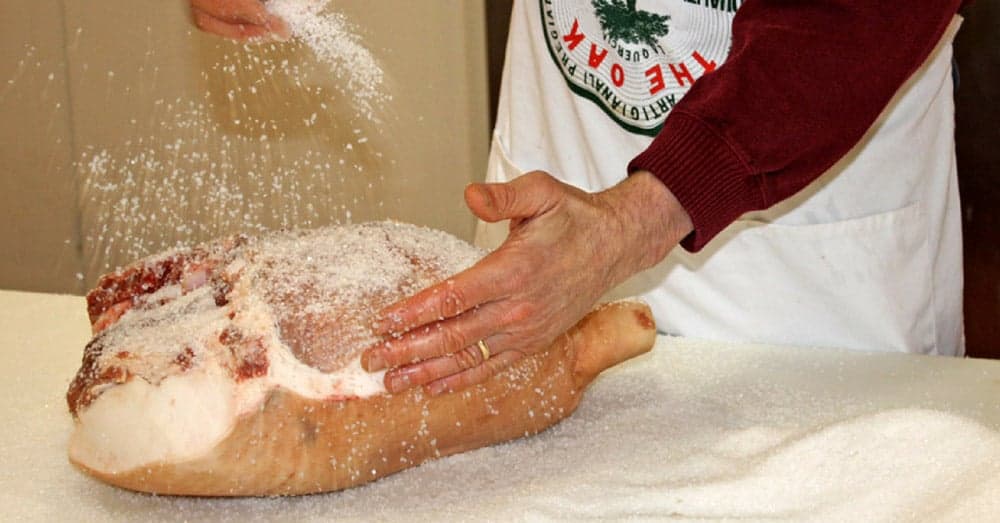
The oldest method. Salt draws moisture out and creates an environment bacteria can’t survive.
- Dry cure: rub the meat heavily with curing salt and kosher salt (many recipes add sugar and spices), pack it in more salt, and keep it cool (36–40°F is ideal) for days to weeks depending on thickness. Rinse, then dry-age or cook.
- Brine cure (wet): submerge the meat in a strong salt-and-nitrite solution for a set number of days per pound.
- Curing salt (pink salt / Prague powder) contains sodium nitrite, which prevents botulism in cured meats and gives ham its color. Use it exactly at the recipe’s ratio — it is not table salt and too much is toxic.
- Shelf life: properly cured and dried meats like country ham or salt pork keep for months to over a year in a cool, dry place.
Method 2: Dehydrating (jerky)
Slice lean meat thin (partially freezing it first makes this easier), trim all fat — fat goes rancid — and marinate or salt it. Dry at 160°F in an electric dehydrator, a low oven, or a smoker until the meat bends and cracks but doesn’t snap. The USDA recommends heating jerky to 160°F (165°F for poultry) before or after drying to kill pathogens. Store dry jerky in an airtight jar or vacuum-sealed bag: 1–2 months at room temperature, longer if vacuum-sealed and kept cool. In the field, a solar or fire-smoke drying rack does the same job.
Method 3: Smoking
Smoking alone is a flavor and surface-drying step, not full preservation — it’s almost always paired with salt curing.
- Hot smoking (165–200°F) cooks the meat as it smokes; the result is like any cooked meat and needs cold storage unless it’s also cured and dried.
- Cold smoking (below 90°F) flavors and dries cured meat over days without cooking it — this is how traditional hams and bacon are made. Cold smoking uncured meat is unsafe.
- Use a smoke generator or a smokehouse; keep temperatures in the safe range and cure first.
Method 4: Pressure canning
The most shelf-stable option and the best fit for a stocked pantry. Raw or browned meat is packed in jars and processed in a pressure canner at 10–15 PSI (adjust for altitude) for 75–90 minutes. The high temperature kills Clostridium botulinum spores that a water-bath canner can’t reach. Never can meat, poultry, or fish in a boiling-water bath — it’s a classic cause of botulism. Follow a tested recipe from a university extension or the USDA Complete Guide to Home Canning. Sealed jars last 3–5 years in a cool, dark place.
Method 5: Cold storage (root cellar, spring house, snow)
Not true preservation, but it buys time and extends the others. A root cellar or shaded north-side space that holds 32–40°F acts as a slow refrigerator for cured meats and canned goods. In winter, a cold shed or a snow-packed box keeps fresh meat frozen. Historically, meat was also stored submerged in rendered fat (confit) or lard, which seals out air.
Food-safety rules that matter
- Start with fresh, cold, clean meat. Preservation can’t fix meat that’s already spoiling.
- Use curing salt correctly for any cured or smoked product — it prevents botulism. Measure it precisely.
- Pressure-can, don’t water-bath, all meats.
- Trim fat before drying — it turns rancid and shortens shelf life.
- Keep smoking temperatures either fully cold (<90°F, cured meat only) or fully hot (>165°F). The 90–140°F range is where bacteria thrive.
- When in doubt, throw it out. Off smells, slime, mold on non-cured meat, bulging jar lids, or spurting on opening = discard, don’t taste.
How long each method lasts
| Method | Shelf life (cool, dry storage) | Needs |
|---|---|---|
| Salt cure (dry-cured ham, salt pork) | Several months to 1+ year | Salt, curing salt, cool space |
| Jerky (dried, airtight) | 1–2 months room temp; 6+ months vacuum-sealed/cool | Lean meat, heat source |
| Cured + cold-smoked (bacon, country ham) | Months | Cure + smokehouse |
| Pressure-canned meat | 3–5 years | Pressure canner, tested recipe |
| Confit (meat sealed in fat) | Weeks to months cool | Rendered fat, cool storage |
Frequently asked questions
How did people preserve meat before refrigeration?
Mainly by salt curing, drying it into jerky or biltong, smoking cured meat, sealing cooked meat under fat (confit), and storing everything in the coldest space available such as a root cellar, spring house, or snow.
Can you can meat in a boiling-water bath?
No. Meat, poultry, and fish must be pressure-canned. A boiling-water bath cannot reach the temperature needed to destroy botulism spores in low-acid foods, and doing it is a well-documented cause of fatal poisoning.
How long does homemade jerky last without refrigeration?
Properly dried jerky stored in an airtight container lasts about 1 to 2 months at room temperature, and 6 months or more if vacuum-sealed and kept somewhere cool. Any visible mold or off smell means throw it out.
Do I need curing salt to preserve meat?
For plain dried jerky you can use regular salt, but for any cured or smoked product — bacon, ham, sausage held at low temperatures — you need curing salt (sodium nitrite) to prevent botulism. Measure it exactly to the recipe.
Is smoked meat safe to store at room temperature?
Only if it was also salt-cured and dried, as with traditional country ham or hard salami. Hot-smoked meat that was not cured is simply cooked meat and needs cold storage.
What is the most shelf-stable way to preserve meat at home?
Pressure canning. Sealed jars of properly processed meat keep for 3 to 5 years in a cool, dark place with no power required, which makes it ideal for a long-term pantry.
Bottom line
Salt, dry, smoke, or can — each removes what bacteria need to grow. Start with fresh clean meat, use curing salt where recipes call for it, pressure-can rather than water-bath, and follow a tested recipe. Done right, you can keep a meat supply for months or years with no refrigeration at all.
Related guides
🍞 Emergency Food Supply on a Budget
🔌 How to Prepare for a Long-Term Power Outage
💧 How to Purify Water in the Wild
This article is for general informational purposes only. Follow tested recipes and current food-safety guidance. Sources: USDA Complete Guide to Home Canning; USDA FSIS “Jerky and Food Safety”; National Center for Home Food Preservation; university extension services.