
This site stays free thanks to small commissions from links like the ones below — it never costs you anything extra, and it never changes what we recommend. As an Amazon Associate we earn from qualifying purchases. Learn more.
A roof sheds thousands of gallons of free water a year that most households just let run into the storm drain. This guide covers building a rainwater collection system: the basic setup, how much you can actually collect, and what it’s safe to use that water for.
Quick answer
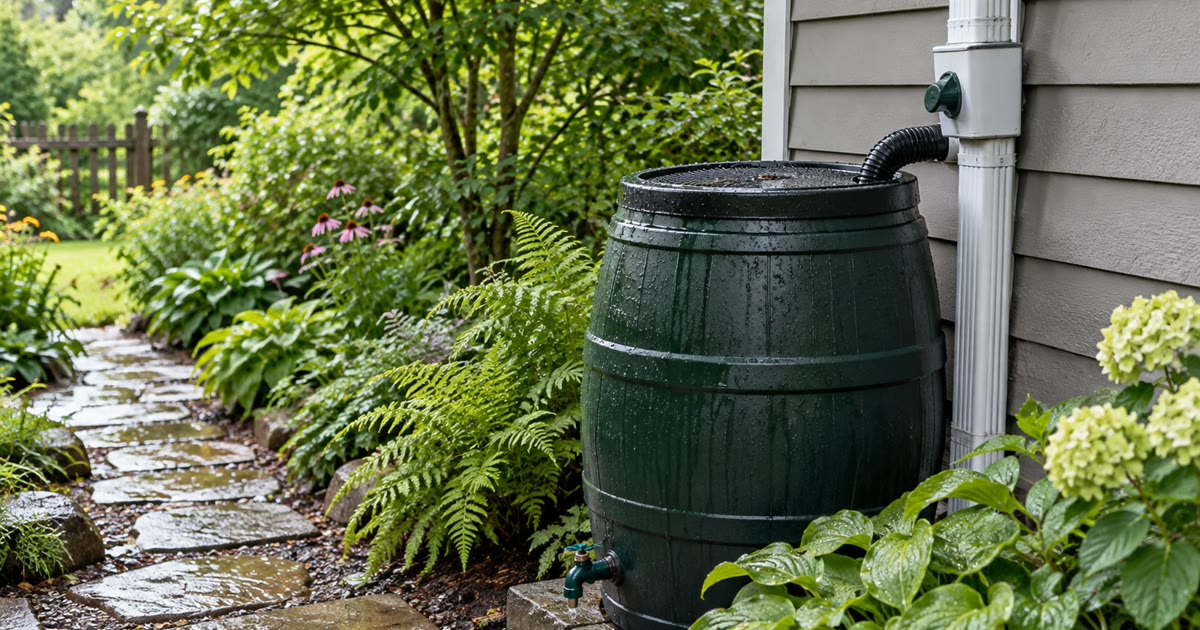
A basic system is a rain barrel connected to a downspout through a diverter, with a screened lid to keep out debris and mosquitoes. A 1,000 sq ft roof can collect roughly 600 gallons per inch of rain. Use collected water for garden irrigation freely; treat and filter it before using it for drinking.
How much water you can actually collect
The math is simple: for every inch of rain, you collect about 0.6 gallons per square foot of roof area. A 1,500 sq ft roof in a 1-inch rainstorm sheds roughly 900 gallons — far more than a single barrel can hold, which is why multiple barrels or a larger cistern pay off fast in a wet climate.
Basic components
- Gutters and downspouts — your existing roof drainage, already doing most of the work.
- A diverter — redirects downspout flow into your storage container; a “first-flush” diverter is worth adding, since it discards the first few gallons of each rain (which carry roof dust and bird droppings) before clean water starts filling the barrel.
- A storage barrel or cistern — a rain barrel kit (typically 50–65 gallons) for a starter setup; larger cisterns (hundreds to thousands of gallons) for serious collection.
- A screened lid — keeps out leaves, debris, and mosquitoes, which will breed in standing open water within days.
- An overflow outlet — directs excess water safely away from your foundation once the barrel is full, rather than letting it back up into the gutter.
- A spigot near the bottom for filling watering cans, plus a hose connection if you want gravity-fed drip irrigation.
Setting it up
- Place the barrel on a stable, slightly elevated stand (cinder blocks work) under a downspout — elevation gives you enough gravity pressure to use a hose.
- Cut the downspout and install the diverter at the right height to feed the barrel.
- Attach the screened lid before the first rain.
- Route the overflow hose away from your foundation, ideally toward a garden bed or a dry well.
- Connect multiple barrels with a linking kit if you want more capacity than one barrel provides.
What to use collected rainwater for
- Garden and lawn irrigation — the main use, and plants generally prefer rainwater to chlorinated tap water.
- Washing tools, outdoor cleaning, filling a compost tumbler.
- Flushing toilets in a prolonged outage, if you can carry it in buckets.
- Drinking water in an emergency — only after proper treatment (filtering and disinfection); roof runoff picks up dust, bird droppings, and whatever’s on your roofing material, so don’t drink it untreated. See our guide to purifying water.
Roofing material matters
Metal and asphalt shingle roofs are generally fine for irrigation use. Avoid collecting from roofs treated with certain chemical moss/algae treatments if the water will touch edible plants, and be cautious with older roofing that may contain lead flashing if you intend to drink the water even after treatment — when in doubt, use roof water for irrigation only.
Local rules to check first
Some states and municipalities regulate or restrict rainwater collection, particularly in water-rights-sensitive areas of the western U.S. Most places allow basic residential collection without a permit, but it’s worth a quick check with your local water authority before installing a large system.
Maintenance
- Clean gutters regularly so debris doesn’t clog the diverter or foul the water.
- Rinse the barrel and screen a couple of times a year.
- Disconnect and drain before a hard freeze in cold climates, or use a freeze-tolerant setup.
- Check the overflow route periodically to make sure it’s still directing water away from the foundation.
Frequently asked questions
How much rainwater can I collect from my roof?
Roughly 0.6 gallons per square foot of roof area for every inch of rain. A 1,500 square foot roof sheds about 900 gallons in a single 1-inch rainstorm, far more than a standard rain barrel holds.
Is collected rainwater safe to drink?
Not without treatment. Roof runoff picks up dust, debris, and bird droppings, so it needs filtering and disinfection before drinking, the same as any other untreated water source. It’s fine for garden irrigation without treatment.
Do I need a permit to collect rainwater?
Usually not for basic residential rain barrels, but some states, especially in the water-rights-sensitive western U.S., have restrictions on larger systems. Check with your local water authority before installing anything beyond a simple barrel.
What is a first-flush diverter and do I need one?
It’s a device that discards the first few gallons of each rain, which carry the most roof dust and debris, before directing clean water into your storage. It’s optional but improves water quality meaningfully, especially if you’ll use the water for anything beyond basic irrigation.
How do I keep mosquitoes out of a rain barrel?
Use a screened, sealed lid on every barrel. Standing open water breeds mosquitoes within days, so any system without a tight screen needs regular treatment or draining to prevent it.
Can I collect rainwater in a cold climate?
Yes, but disconnect and drain the system before a hard freeze, since ice can crack barrels and fittings. Some setups use freeze-tolerant components or are only run seasonally in colder regions.
Bottom line
A rain barrel with a diverter and screened lid is a cheap, simple way to capture free water for your garden and reduce dependence on municipal supply during a dry spell or outage. Scale up with more barrels or a cistern if you want real capacity, and always treat collected water before drinking it.
Related guides
🌱 How to Start a Survival Garden
💧 How to Purify Water in the Wild
🏟️ Homesteading for Preparedness
This article is for general informational purposes only. Check local regulations before installing a rainwater collection system. Sources: EPA WaterSense rainwater harvesting guidance; USDA Cooperative Extension rain barrel resources; National Drought Mitigation Center.