
This site stays free thanks to small commissions from links like the ones below — it never costs you anything extra, and it never changes what we recommend. As an Amazon Associate we earn from qualifying purchases. Learn more.
Air filtration is the component that actually determines whether a shelter protects against chemical, biological, or radiological threats — structural reinforcement alone doesn’t. This guide covers NBC air filtration basics: what it is, how it works, and what to look for.
Quick answer
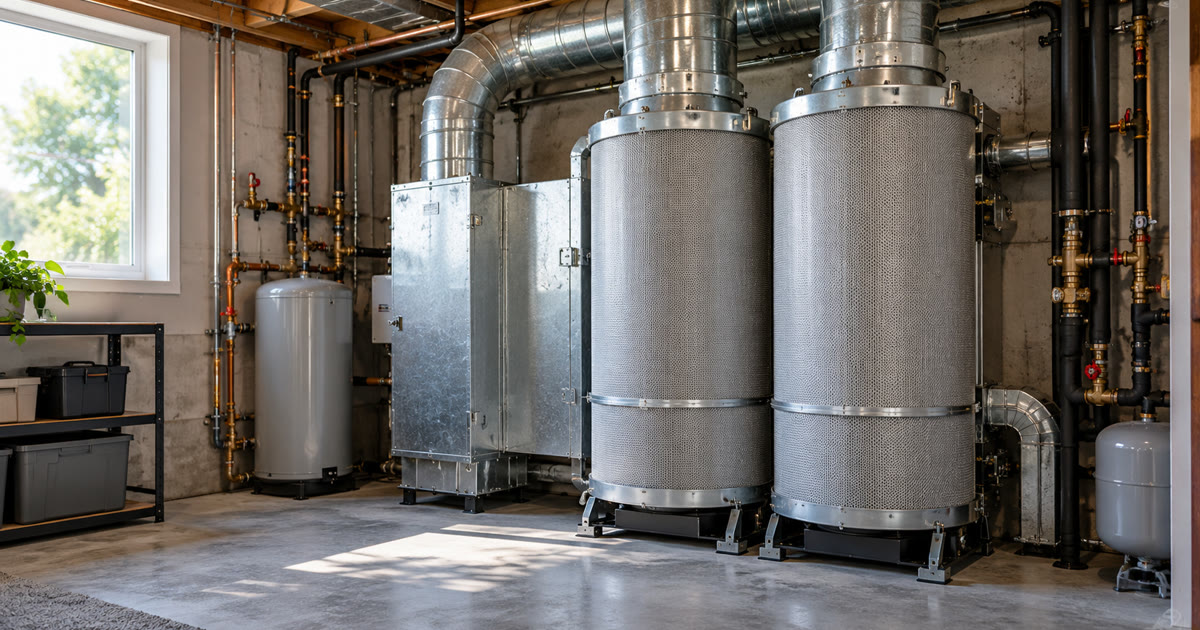
A real NBC (nuclear, biological, chemical) filtration system combines HEPA filtration (for particulates including radioactive fallout and biological agents) with activated carbon filtration (for chemical agents and gases), plus a way to maintain positive pressure inside the shelter so contaminated air can’t leak in through gaps.
Why basic ventilation isn’t enough
Standard ventilation moves air but doesn’t filter out radioactive particles, biological agents, or chemical contaminants — it just exchanges indoor air for outdoor air, which is exactly the wrong thing to do during an actual NBC event. Real protection requires filtering incoming air, not just circulating it.
HEPA filtration
HEPA (High-Efficiency Particulate Air) filters capture extremely small particles, including radioactive fallout dust and many biological agents like bacteria and some viruses attached to particles. This is the first stage of real NBC filtration but doesn’t address gases or chemical vapors on its own.
Activated carbon filtration
Activated carbon filters adsorb chemical agents and gases that pass through particulate filters — this stage is what distinguishes true NBC-rated systems from standard home air purifiers. The specific carbon formulation and quantity matter significantly for effectiveness against different chemical threats.
Positive pressure systems
A proper NBC shelter maintains slightly higher air pressure inside than outside, so any gaps or imperfect seals leak clean air outward rather than letting contaminated air leak in. This requires a blower system sized to overcome the shelter’s air leakage rate, which is part of why DIY filtration systems are risky without proper engineering.
Sizing a filtration system
Filtration capacity needs to match the shelter’s volume and the number of occupants — undersized systems can’t maintain adequate air exchange or positive pressure. This is a genuine engineering calculation, not a guess, which is why certified prefab systems or professional consultation matter for anyone serious about this level of protection.
Maintenance and shelf life
Filters have a finite capacity and shelf life even unused — check manufacturer specifications and replace or rotate stock periodically. A filtration system with expired or saturated filters provides a false sense of security rather than real protection.
Frequently asked questions
Does a HEPA filter alone protect against chemical agents?
No, HEPA filters capture particulates but not gases or chemical vapors — activated carbon filtration is needed for chemical protection.
Why does a shelter need positive pressure, not just filtration?
Positive pressure ensures any gaps or imperfect seals leak clean air outward rather than letting contaminated air leak inward, which filtration alone can’t guarantee.
Can I build an NBC filtration system myself?
It’s possible but requires real engineering knowledge to size correctly — this is one of the least forgiving components to get wrong, and professional or certified systems reduce that risk significantly.
Do filters expire even if unused?
Yes, both HEPA and activated carbon filters have a finite shelf life — check manufacturer specifications and rotate stock periodically.
Is standard home ventilation adequate during an NBC event?
No, standard ventilation just exchanges air without filtering it, which is counterproductive during an actual chemical, biological, or radiological event.
What’s the difference between a home air purifier and an NBC filtration system?
Home air purifiers are designed for everyday air quality, not sized or rated for the specific threats and positive-pressure requirements of true NBC protection.
Bottom line
Real NBC protection requires HEPA plus activated carbon filtration and a properly sized positive-pressure system — this is the component worth prioritizing and not skimping on if chemical, biological, or radiological threats are part of your actual risk assessment.
Related guides
⚠️ Fallout Shelter Basics
🏘 Basement Shelter Room Basics
📦 Prefab vs DIY Bunkers
This article is for general informational purposes only. Consult a certified shelter systems engineer for actual installation. Sources: FEMA shelter ventilation guidance; CDC chemical and radiological protection resources.