
This site stays free thanks to small commissions from links like the ones below — it never costs you anything extra, and it never changes what we recommend. As an Amazon Associate we earn from qualifying purchases. Learn more.
Home security matters more during and after a disaster than most people plan for — disrupted services and visibly vulnerable homes can attract opportunistic crime when normal community structure breaks down. This home security checklist for preppers covers practical steps beyond a standard alarm system.
Quick answer
Harden entry points (doors, windows, garage), maintain visible deterrents (lighting, cameras if power allows), have a plan that doesn’t rely solely on electricity or internet, and know your neighbors — community awareness is one of the most effective, lowest-cost security measures available.
Entry point hardening
- Solid-core or metal doors with deadbolts rated for security, not just standard door locks.
- Reinforced strike plates with longer screws that reach into the door frame’s structural wood.
- Window locks and security film on ground-floor windows, which slows forced entry significantly.
- A secured garage door, often the weakest entry point in otherwise secure homes.
Security that doesn’t depend on power
Standard electronic security systems fail during a power outage unless they have reliable battery backup. Plan for this gap: battery or solar-powered motion lights, mechanical locks that don’t need electricity, and a general plan for securing the home that works even with the grid down. See our off-grid power basics guide for backup power options that could keep some security systems running.
Visible deterrents
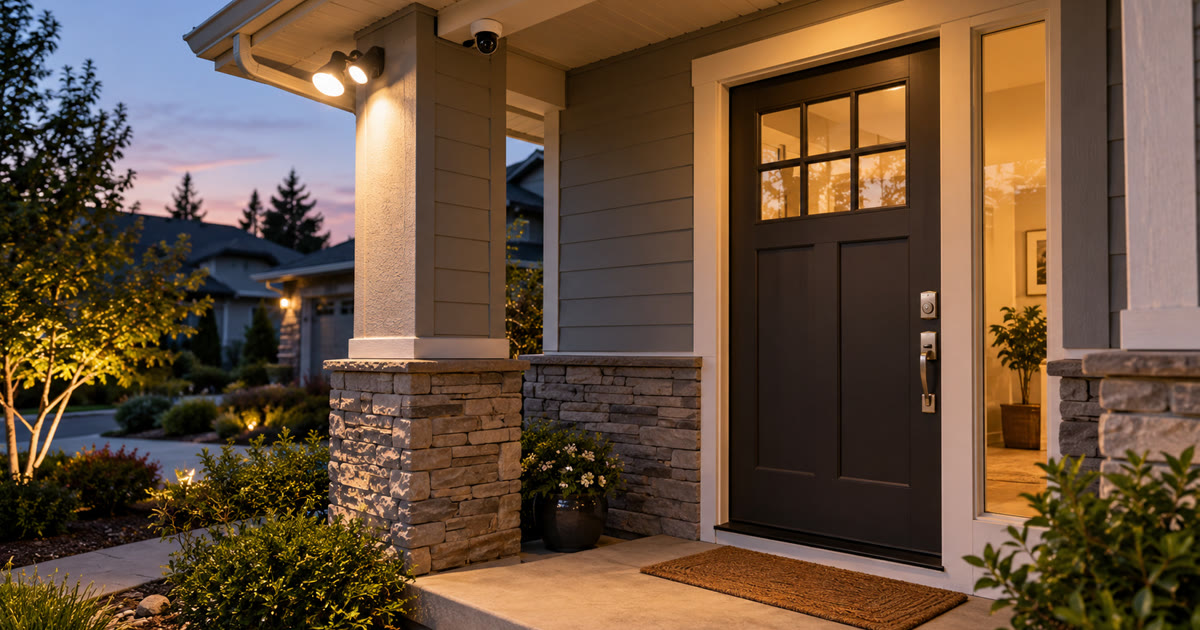
- Exterior lighting, ideally motion-activated and battery or solar powered as a backup.
- Visible camera systems — even the appearance of surveillance deters a significant amount of opportunistic activity.
- Maintained landscaping that doesn’t provide concealment near entry points.
Community and neighbors
Knowing your neighbors and having an informal mutual-watch arrangement is one of the most effective, lowest-cost security measures during extended disruptions. Isolated homes are more vulnerable than ones embedded in an aware, connected neighborhood.
Planning for extended disruption
If normal services (police response times, power, communication) are degraded for an extended period, your security plan needs layers that don’t depend on any single system working. This isn’t about preparing for worst-case scenarios obsessively — it’s about not having all your security eggs in one basket that fails when the grid does.
What to avoid
Avoid making your preparedness or security measures obviously visible from outside in ways that signal “this house has supplies worth taking” — a stocked home that looks ordinary from the street is safer than one that advertises its preparedness level.
Frequently asked questions
Does home security really matter more during a disaster?
Yes, disrupted services and normal community structure can create conditions for opportunistic crime that are less common in stable times.
What happens to my electronic security system during a power outage?
It depends entirely on whether it has reliable battery backup — plan for this gap with non-electronic deterrents and locks as well.
Is a visible camera system enough of a deterrent even without power?
The visible presence of cameras deters some opportunistic activity even if the system itself isn’t recording during an outage, though this shouldn’t be your only layer.
Should I tell my neighbors about my emergency preparations?
A trusted, mutual-watch relationship with neighbors is valuable, but avoid broadly advertising specific supplies or preparedness details that could make your home a target.
What’s the single weakest entry point in most homes?
Garage doors are often overlooked and weaker than front and back doors, despite providing direct access to the house interior.
How do I secure my home without relying on electricity?
Mechanical deadbolts, reinforced strike plates, window locks, and solar or battery-powered lighting all work independent of grid power.
Bottom line
Harden entry points, maintain deterrents that work without power, build community awareness with neighbors, and avoid visibly advertising your preparedness level — layered security beats relying on any single system.
Related guides
⚡ Off-Grid Power Basics
🏠 How to Make a Family Emergency Plan
💰 How Much Emergency Cash to Keep at Home
This article is for general informational purposes only. Sources: FEMA community preparedness guidance; National Crime Prevention Council home security recommendations.