
This site stays free thanks to small commissions from links like the ones below — it never costs you anything extra, and it never changes what we recommend. As an Amazon Associate we earn from qualifying purchases. Learn more.
Card networks, ATMs, and payment apps all need power and internet — and all three go down together in the exact emergencies that make cash matter most. This guide covers how much emergency cash to keep at home, in what denominations, and how to store it safely.
Quick answer
A reasonable target is $500–$1,000 in small bills ($1, $5, $10, $20) covering roughly one to two weeks of essential spending, kept in a fireproof, water-resistant box or safe. More if you live somewhere prone to extended outages (hurricanes, wildfires, winter storms); less is still far better than none.
Why cash matters in an emergency
- Card networks and point-of-sale systems need power and internet — both commonly fail together in storms, grid-down events, and regional outages.
- Stores that stay open often go cash-only when their systems are down, specifically to keep serving customers.
- ATMs run out or lose power along with everything else, and lines form fast once word spreads.
- Gas stations, generators-for-rent, and local vendors during a disaster often only take cash, especially small, informal sellers.
How much to keep
- Baseline: $500–$1,000 per household, enough for roughly one to two weeks of gas, food, and essentials at bare-bones spending.
- Higher end if you’re in a region with regular multi-day outages (hurricane zones, wildfire-prone areas, rural areas with slow utility restoration) — some households keep $2,000–$3,000.
- Scale to your household size and how long you’d realistically need to bridge before banks/ATMs are reliably back.
- This is a floor, not a full emergency fund — it’s specifically the cash you can physically spend when electronic payment is down, separate from your broader savings.
What denominations to keep
- Mostly $1, $5, $10, and $20 bills. In a real emergency, making change is hard — registers may be running on backup power or none at all, and small sellers won’t have change for a $100 bill.
- Avoid large bills ($50, $100) as the bulk of your stash; keep a few for larger needs, but they’re hard to spend and attract attention.
- Some households keep a roll of quarters too — useful for laundromats, vending machines, and parking if card readers are down.
How to store it safely
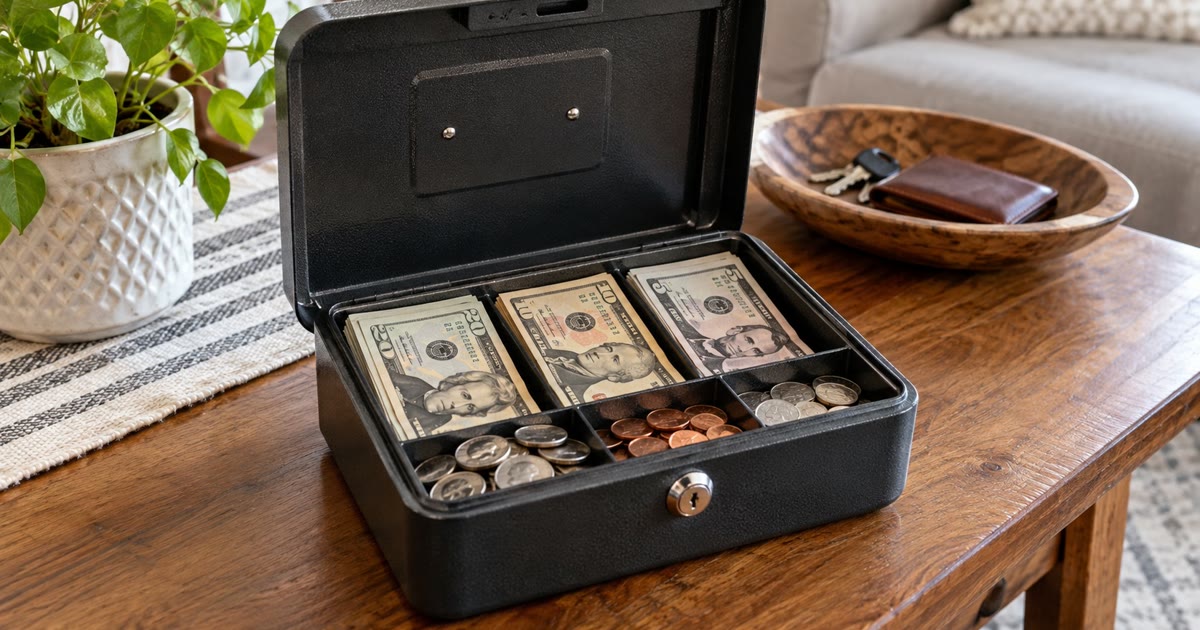
- A fireproof, water-resistant document box or small safe protects both cash and important papers in one place. See options like a fireproof document bag or box.
- Don’t keep it all in one spot. Split between a home safe and a portion in your bug-out bag or car kit, so a single event (house fire, having to evacuate without the safe) doesn’t wipe out your whole stash.
- Keep it somewhere you can grab fast if you need to evacuate, not buried behind other storage.
- Don’t advertise it — a home safe is good practice generally, but don’t mention your cash stash to people outside your household.
- Rotate and check periodically — damp basements and garages can damage bills over time; a sealed bag inside the box adds protection.
Building the stash without straining your budget
- Set aside a little from each paycheck rather than pulling a lump sum at once.
- Withdraw in cash occasionally instead of card, and set that cash aside rather than spending it.
- Treat it as a non-negotiable small expense, similar to how you’d budget for insurance — it’s protection, not spending money.
What cash won’t solve
Cash is one piece of preparedness, not the whole plan. It doesn’t replace stored water, food, or a way to cook and stay warm — see our guides to emergency food supply and long-term power outage preparedness. It also won’t help once local stores are fully out of stock, which is why supplies come first and cash is the bridge for what you still need to buy.
Frequently asked questions
How much cash should I keep at home for emergencies?
A reasonable baseline is $500 to $1,000 in small bills, covering about one to two weeks of essential spending. Households in regions prone to extended outages, like hurricane or wildfire zones, often keep more, up to $2,000 to $3,000.
What bill denominations are best for an emergency cash stash?
Mostly $1, $5, $10, and $20 bills. Making change is difficult during an emergency when registers may be on backup power, so small sellers often can’t break large bills.
Where is the safest place to store emergency cash at home?
A fireproof, water-resistant document box or small safe, kept somewhere you can access quickly if you need to evacuate. Splitting the stash between a home safe and a bug-out bag or car kit protects against losing it all in one event.
Why do stores go cash-only during emergencies?
Card networks and point-of-sale systems require power and internet, both of which commonly fail during storms and grid-down events. Stores that manage to stay open often switch to cash-only to keep serving customers without working payment systems.
Is keeping emergency cash the same as having an emergency fund?
No. An emergency fund is broader savings for financial setbacks like job loss, while emergency cash at home is specifically physical currency you can spend when electronic payment systems are down during a disaster.
How often should I check on my emergency cash stash?
Periodically, at least once or twice a year, to confirm it hasn’t been damaged by damp storage conditions and that the amount still matches your household’s needs.
Bottom line
Keep $500 to $1,000 or more in small bills, stored in a fireproof box you can grab quickly, split across a couple of locations. It’s a cheap, simple piece of preparedness that solves a very specific and common problem: every payment system failing at once, right when you need to buy something.
Related guides
🔌 How to Prepare for a Long-Term Power Outage
🏖️ How to Make a Family Emergency Plan
🏙️ Build a 72-Hour Survival Kit
This article is for general informational purposes only and is not financial advice. Sources: Ready.gov and FEMA financial preparedness guidance; FDIC guidance on cash access during emergencies.