

This site stays free thanks to small commissions from links like the ones below — it never costs you anything extra, and it never changes what we recommend. As an Amazon Associate we earn from qualifying purchases. Learn more.
Cats hide illness and injury far more effectively than dogs, which means a cat-specific first aid approach needs to account for a pet that often won’t show obvious signs until a problem is already serious. This guide covers cat first aid kit basics.
Quick answer
A cat first aid kit needs smaller-scale supplies than a dog kit (cats are smaller and generally less cooperative with handling), a secure way to restrain a frightened or injured cat safely, and awareness that several common human and dog medications are specifically toxic to cats in ways that differ from other pets.
Why cats need a different approach than dogs
Cats are more prone to hiding pain and illness (an evolutionary trait to avoid appearing vulnerable to predators), which means by the time a cat shows obvious distress, a condition may already be more advanced than it would be in a dog showing similar signs. This makes close observation and knowing your cat’s normal behavior baseline especially important for catching problems early.
Handling and restraint
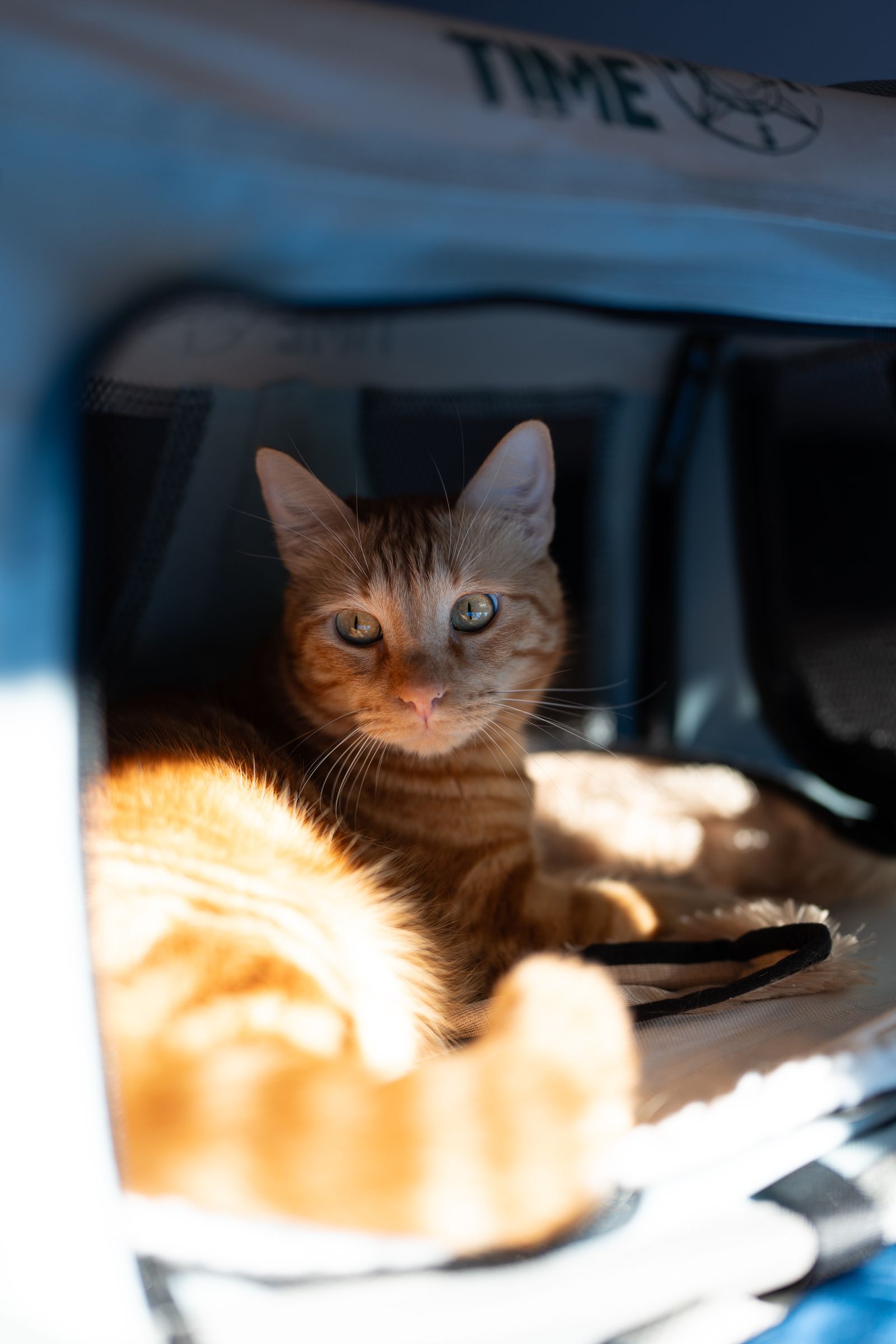
A secure, familiar carrier matters as much as the first aid supplies themselves when handling a stressed cat.
An injured or frightened cat can become genuinely dangerous to handle, with sharp claws and teeth and a strong flight instinct. A thick towel wrapped securely around the body (leaving the head exposed) — sometimes called a “cat burrito” — provides both restraint and a sense of security that reduces struggling during examination or treatment.
Supplies for a cat-specific kit
- Vet wrap sized appropriately for a cat’s smaller body.
- A soft muzzle or thick towel for safe restraint during treatment.
- Cat-safe antiseptic (check with your vet, since some common antiseptics are toxic to cats).
- A digital thermometer and lubricant (normal feline temperature runs higher than human normal, around 100.5-102.5°F).
- Saline solution for flushing wounds or eyes.
Medications that are toxic to cats specifically
Cats lack certain liver enzymes that many other animals (including dogs) have, making them specifically vulnerable to substances that might be safer for other pets. Acetaminophen is severely toxic to cats even in small amounts, and many essential oils and some flea treatments formulated for dogs are also dangerous for cats. Never apply or administer any medication or treatment to a cat without specific veterinary guidance for that species.
Common cat-specific emergencies
- Urinary blockage: particularly in male cats, straining to urinate with little or no output is a genuine emergency requiring immediate veterinary care, not a wait-and-see situation.
- String or thread ingestion: cats are drawn to string-like objects, and ingested string can cause serious intestinal damage — never pull visible string from a cat’s mouth, which can worsen internal damage.
- Heat stress: cats can overheat, though less commonly discussed than in dogs — watch for excessive panting (unusual for cats) or lethargy in hot conditions.
Travel and carrier considerations
A secure carrier is essential for any emergency transport — cats under stress can bolt unpredictably, making a carrier more important for cats than a simple leash might be for a dog. See our pet emergency preparedness checklist for broader household pet planning.
Frequently asked questions
Why do cats hide illness more than dogs?
It’s an evolutionary trait to avoid appearing vulnerable to predators, meaning visible distress often indicates a more advanced problem than in dogs.
What’s the safest way to restrain an injured cat?
Wrapping the body securely in a thick towel (leaving the head exposed), sometimes called a cat burrito, provides restraint and a sense of security.
Can I give my cat the same medications as my dog?
No, cats lack certain liver enzymes that make them specifically vulnerable to substances safer for dogs — never cross-apply medications between species.
Is straining to urinate a real emergency in cats?
Yes, particularly in male cats, urinary blockage is a genuine emergency requiring immediate veterinary care.
Should I pull visible string from my cat’s mouth?
No, pulling can worsen internal damage if the string has been partially swallowed — seek veterinary care instead.
Is acetaminophen safe for cats?
No, it’s severely toxic to cats even in small amounts and should never be given.
Bottom line
A cat-specific first aid kit needs appropriately sized supplies, a safe restraint method, and strict awareness of cat-specific medication toxicity — never assume what’s safe for a dog is safe for a cat.
Related guides
🐕 Pet Emergency Preparedness Checklist
🐰 Dog First Aid Kit for Hiking and Camping
🏠 How to Evacuate With Pets During a Disaster
This article is for general informational purposes only and is not veterinary advice. Consult a veterinarian for your cat’s specific health needs. Sources: American Veterinary Medical Association feline health guidance; ASPCA poison control resources.