
This site stays free thanks to small commissions from links like the ones below — it never costs you anything extra, and it never changes what we recommend. As an Amazon Associate we earn from qualifying purchases. Learn more.
A refrigerator without power doesn’t instantly spoil everything inside — how you manage it in the first critical hours determines how much food you save versus lose. This guide covers how to keep food cold without power.
Quick answer
Keep the refrigerator and freezer doors closed as much as possible (an unopened fridge stays cold for about 4 hours, a full freezer about 48 hours), group items together to retain cold better, and use ice or dry ice to extend this window if the outage continues longer.
The critical first rule: minimize door openings

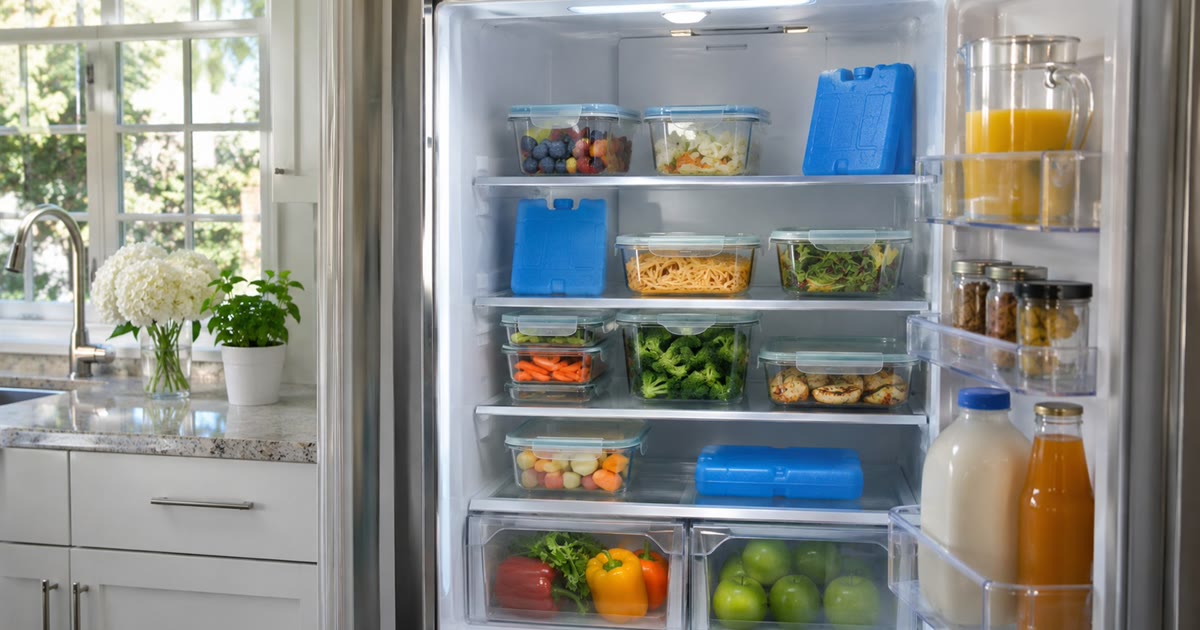
Grouping items together and limiting door openings helps retain cold during an outage.
Every time you open the fridge or freezer, cold air escapes and warm air replaces it, significantly shortening how long the contents stay safely cold. Plan ahead — know what you need before opening, and open as briefly and infrequently as possible during an outage.
How long food actually stays safe
- Unopened refrigerator: keeps food safely cold for about 4 hours.
- Full freezer: stays safely frozen for about 48 hours if unopened; a half-full freezer for about 24 hours, since more frozen mass retains cold longer.
- Partially thawed freezer food: safe to refreeze if it still contains ice crystals and has stayed at 40°F or below.
Using ice and coolers strategically
If an outage is expected to extend beyond the refrigerator’s safe window, move the most perishable items (meat, dairy, leftovers) into a cooler packed with ice, keeping the refrigerator itself closed for less critical items. This buys significant extra time for your most spoilage-prone food.
Dry ice for extended outages
Dry ice (solid carbon dioxide) keeps a freezer significantly colder for longer than regular ice — about 25 pounds can keep a 10-cubic-foot freezer below freezing for 3-4 days. Handle it with gloves (it causes frostbite-like burns on contact) and never store it in a fully sealed container, since it releases carbon dioxide gas as it sublimates.
Grouping and consolidating
Moving freezer items close together (rather than spread across shelves) helps them retain cold collectively better than items spread out with air gaps between them — frozen items literally help keep each other cold.
Knowing when to discard
When in doubt, throw it out — perishable food left above 40°F for more than 2 hours should be discarded regardless of how it looks or smells, since dangerous bacteria can grow without any obvious visual or smell change. This is one area where “it looks fine” isn’t a reliable safety signal.
Backup power options
For shorter outages, a portable power station can run a refrigerator for limited periods depending on capacity — check your fridge’s actual power draw against the unit’s output before relying on this as a primary plan, since refrigerators draw more power than many portable units can sustain long-term.
Frequently asked questions
How long does food stay safe in a refrigerator without power?
About 4 hours if the door stays closed, significantly less if opened frequently.
Can I refreeze partially thawed freezer food?
Yes, if it still contains ice crystals and has stayed at 40°F or below throughout the outage.
How much dry ice do I need for a freezer during an extended outage?
About 25 pounds can keep a 10-cubic-foot freezer below freezing for 3-4 days.
Is it safe to handle dry ice with bare hands?
No, it causes frostbite-like burns on contact — always handle it with gloves.
When should I discard refrigerated food after a power outage?
If perishable food has been above 40°F for more than 2 hours, discard it regardless of appearance or smell.
Can a portable power station run my refrigerator during an outage?
For shorter outages, yes, but check your fridge’s actual power draw against the unit’s output before relying on it as a primary plan.
Bottom line
Keep doors closed as much as possible, use ice or dry ice to extend the safe window for longer outages, and when in doubt about food safety after 2+ hours above 40°F, discard it rather than risk it.
Related guides
🔋 Best Portable Power Stations
🍟 How to Cook Without Electricity
⚠️ Generator Carbon Monoxide Safety
This article is for general informational purposes only. Sources: USDA food safety during power outage guidance; FDA refrigeration safety recommendations.