
This site stays free thanks to small commissions from links like the ones below — it never costs you anything extra, and it never changes what we recommend. As an Amazon Associate we earn from qualifying purchases. Learn more.
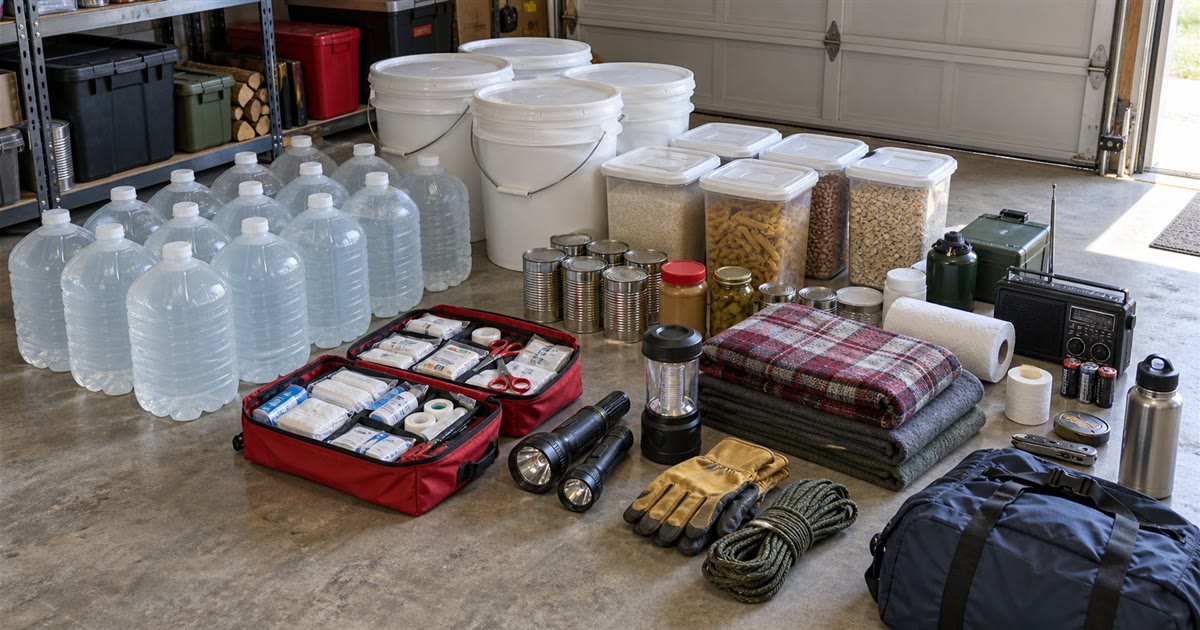
Quick answer: A 2-week kit scales up from the standard 72-hour bag: 14 gallons of water per person, 2 weeks of shelf-stable food, a way to cook without power, medications, hygiene supplies, and backup power/lighting — organized so you’re not scrambling to assemble it during an actual emergency.
Water and Food
| Category | Per person, 2 weeks |
|---|---|
| Water | 14 gallons minimum |
| Food (calories) | ~28,000-42,000 calories (2000-3000/day) |
| Medications | Full 2-week supply of any prescriptions |
Full Checklist
- Water storage (see our full water storage guide) + a backup filter
- 2 weeks of shelf-stable meals (rice, beans, canned goods, freeze-dried meals)
- Portable stove + fuel for cooking without power
- First aid kit, stocked and checked for expired items
- Flashlights, headlamps, extra batteries
- Portable power station or generator + fuel
- Hygiene: soap, wet wipes, toilet paper, feminine products, hand sanitizer
- Important documents (copies), cash in small bills
- Battery or hand-crank radio for updates
- Sleeping bags/blankets in case of no heat
- 2-week emergency food supply bucket — Check Price on Amazon
- Portable camp stove + fuel canisters — Check Price on Amazon
- Stocked first aid kit — Check Price on Amazon
- Hand-crank emergency radio — Check Price on Amazon
Organize It So It’s Actually Usable
A kit scattered across five closets doesn’t help in an emergency. Use clearly labeled bins by category (water/food, medical, power/light, hygiene) stored together, and do a semi-annual check to rotate expiring food, replace batteries, and refill medications.
Common Mistakes
Frequently Asked Questions
Is 2 weeks really necessary, or is 72 hours enough?
72 hours covers most short-term disruptions, but larger-scale events (major hurricanes, widespread grid failures) have taken far longer than 3 days to restore services in real cases — 2 weeks gives meaningfully more margin.
How often should I rotate food in a long-term kit?
Check shelf-stable items at least twice a year, using a ‘first in, first out’ system so nothing sits past its recommended date unnoticed.
Do I need a separate kit for pets?
Yes — food, water, medications, and comfort items for pets should be planned separately since they’re easy to forget when focused on the family’s needs.
What’s the biggest gap people forget in a 2-week kit?
A way to cook without power (camp stove and fuel) is one of the most commonly overlooked items — canned food is easy to store but much better hot.