
This site stays free thanks to small commissions from links like the ones below — it never costs you anything extra, and it never changes what we recommend. As an Amazon Associate we earn from qualifying purchases. Learn more.
Most survival content focuses on wilderness scenarios, but the vast majority of people live in cities — where the actual risks (civil unrest, infrastructure failure, dense population during a disaster) look very different. This guide covers urban survival skills for city dwellers.
Quick answer
Focus on building hyper-local knowledge (multiple routes out of your area, nearby resources), keeping a compact bug-out bag suited to urban movement, knowing how to handle crowd and civil unrest situations safely, and maintaining a self-reliant supply buffer since urban infrastructure failures (water, power) cascade faster than in rural areas.
Know multiple routes
Map at least two or three ways out of your neighborhood that don’t rely on a single bridge, highway, or chokepoint — these fail or clog first during an evacuation. Know routes that work on foot, not just by car, since vehicle evacuation can become impossible in a true mass event.
Urban bug-out bag differences
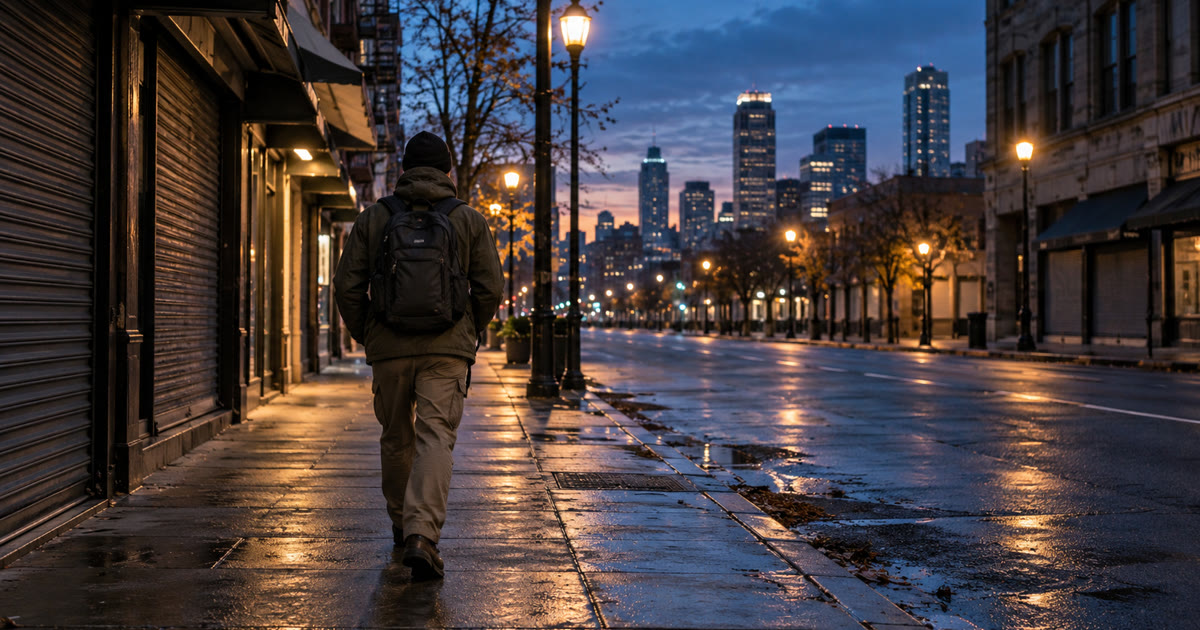
An urban kit should be less conspicuous than a tactical-looking backpack, which can draw unwanted attention. Prioritize water purification (urban water sources are often more questionable, not less), a way to navigate without GPS, cash in small denominations, and comfortable walking shoes stored at your workplace if you commute far from home.
Water and food in a dense environment
City water systems can fail or be compromised during a disaster faster than people expect, and store shelves empty within hours of any disruption warning. Keep a real supply at home rather than assuming you can buy what you need when something happens — see our emergency food supply guide for the basics.
Navigating crowds and civil unrest
- Avoid large crowds during unrest when possible — density itself becomes a hazard during a stampede or confrontation.
- Know the layout of areas you frequent well enough to find alternate exits without relying on signage or crowd flow.
- Keep a low profile rather than drawing attention, especially regarding visible supplies or gear.
- Have a communication plan with family that doesn’t depend on cell networks staying functional, since networks often overload during mass events.
Apartment and high-rise specific concerns
Elevators fail during power outages, so know your building’s stairwells and have a plan for mobility-limited household members. Water pressure in high-rises often depends on electric pumps, meaning upper floors can lose water even when lower floors in the same system don’t.
Building local community
Knowing neighbors in a dense urban environment provides real mutual support during disruptions — shared information, shared resources, and shared watch during periods of instability. This matters as much in cities as the physical supplies you keep.
Frequently asked questions
How is urban survival different from wilderness survival?
Urban risks center on infrastructure failure, crowd dynamics, and civil unrest rather than exposure and foraging — the skills and gear priorities shift accordingly.
Should my urban bug-out bag look different from a typical hiking pack?
Yes, a less conspicuous bag avoids drawing attention, which matters more in a dense population during a disruption than in the backcountry.
Why does city water fail faster than rural water during disasters?
Municipal systems often depend on continuous power for pumps and treatment, and demand surges fast in dense population centers, so failures can cascade quickly.
What should I know about my building if I live in an apartment?
Elevator failure during outages, stairwell locations, and whether water pressure depends on electric pumps that could fail independent of lower floors.
How many evacuation routes should I know from my neighborhood?
At least two or three, including routes that work on foot, since a single route can become blocked or impassable during a mass evacuation.
Does knowing my neighbors actually help with urban survival?
Yes, mutual support, shared information, and shared watch during instability provide real value that physical supplies alone don’t cover.
Bottom line
Urban survival prioritizes multiple evacuation routes, a low-profile kit, real water and food buffers, and awareness of crowd and civil unrest risks — different priorities than wilderness survival, but just as important for most people.
Related guides
🏠 How to Make a Family Emergency Plan
🍟 How to Build an Emergency Food Supply
💰 How Much Emergency Cash to Keep at Home
This article is for general informational purposes only. Sources: Ready.gov urban disaster preparedness guidance; FEMA community resilience resources.