
This site stays free thanks to small commissions from links like the ones below — it never costs you anything extra, and it never changes what we recommend. As an Amazon Associate we earn from qualifying purchases. Learn more.
Your vehicle is often the single most important piece of evacuation equipment you own, yet it’s the one most people never specifically prepare. This guide covers bug out vehicle essentials.
Quick answer
Keep your fuel tank never below half full, maintain the vehicle proactively (not reactively), carry a dedicated car emergency kit, and know alternate routes beyond your usual GPS-suggested path in case primary roads are blocked.
The half-tank rule
Never let your fuel drop below half — this single habit means you’re never caught needing to evacuate with an empty tank during a crisis when gas stations may have long lines, no power, or be entirely out of fuel. This costs nothing extra over time, just a shift in when you refuel.
Proactive maintenance
A vehicle that breaks down during an evacuation is worse than having no vehicle at all, since it can block your route and strand you somewhere worse than home. Keep up with oil changes, tire condition (including a functional spare), battery health, and brake condition — this isn’t about dramatic upgrades, just not deferring basic maintenance.
What belongs in the vehicle itself
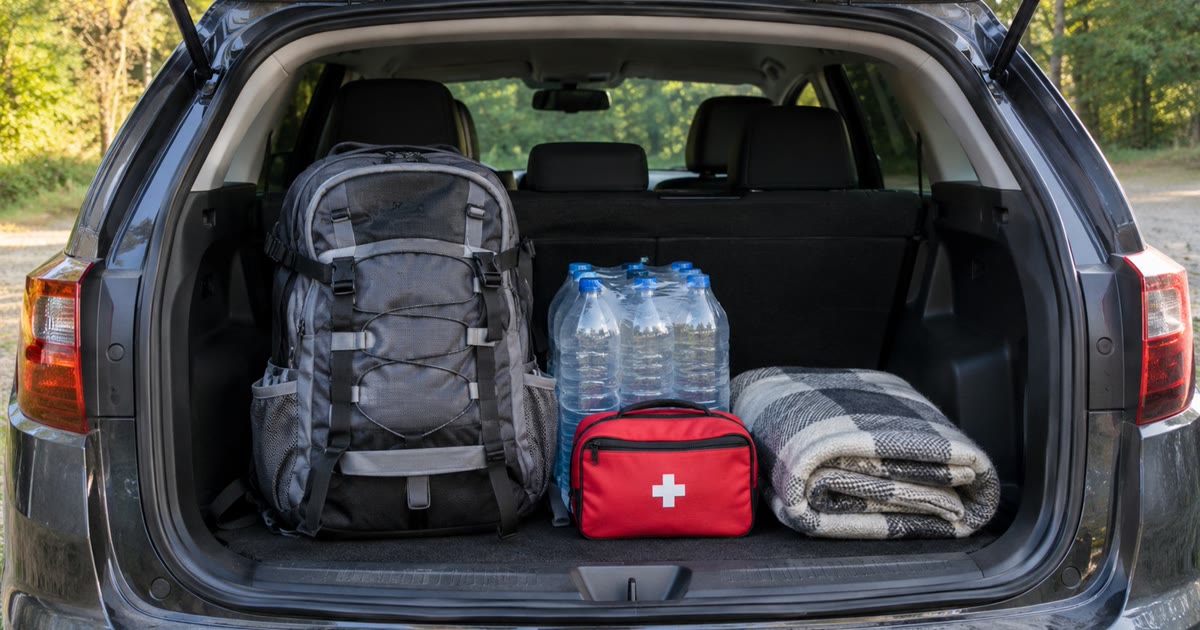
- A dedicated car emergency kit — see our winter car emergency kit guide as a starting structure, adapted seasonally.
- A physical paper map as backup to GPS, which can fail with cell service or power.
- Jumper cables or a portable jump starter.
- Basic tools and a tire repair kit, in addition to the spare.
Alternate routes
GPS apps typically route you based on normal traffic conditions, not evacuation scenarios where primary roads may be closed, flooded, or gridlocked with other evacuees. Identify at least one or two alternate routes manually in advance, and know which roads are prone to flooding or congestion in your specific area.
Keeping important items accessible
Important documents, a portion of your emergency cash, and basic supplies kept in the vehicle mean you’re not solely dependent on reaching home first before evacuating — useful if you’re away from home when an emergency develops. See our emergency cash guide for how much makes sense to keep accessible.
Multiple vehicles in a household
If your household has more than one vehicle, don’t assume only one needs preparation — any vehicle could be the one you’re in when an emergency starts. Apply the same fuel, maintenance, and kit standards across all household vehicles, not just the “main” one.
Frequently asked questions
Why keep the fuel tank above half instead of filling up when it’s convenient?
So you’re never caught needing to evacuate with an empty tank during a crisis when fuel access may be limited or unavailable.
What car maintenance matters most for emergency readiness?
Tire condition (including a functional spare), battery health, and brake condition — deferred basic maintenance is what typically causes breakdowns at the worst time.
Why carry a paper map if I have GPS?
GPS depends on cell service and power, both of which can fail during an actual emergency, while a paper map works regardless.
Should I plan alternate evacuation routes in advance?
Yes, GPS routes based on normal conditions, not evacuation scenarios where primary roads may be closed or congested with other evacuees.
Should every vehicle in my household be prepared, or just one?
All of them — any vehicle could be the one you’re in when an emergency starts, so apply the same standards across the household.
What should I keep in my vehicle beyond a standard emergency kit?
Important documents, some emergency cash, and basic supplies, so you’re not dependent on reaching home first before evacuating.
Bottom line
Keep your tank at least half full, stay proactive on maintenance, carry a dedicated emergency kit, and know alternate routes — your vehicle’s readiness matters as much as what’s packed inside it.
Related guides
🚗 Best Car Emergency Kit for Winter Driving
🏠 How to Choose a Bug Out Location
💰 How Much Emergency Cash to Keep at Home
This article is for general informational purposes only. Sources: AAA vehicle emergency preparedness guidance; FEMA evacuation planning recommendations.