
This site stays free thanks to small commissions from links like the ones below — it never costs you anything extra, and it never changes what we recommend. As an Amazon Associate we earn from qualifying purchases. Learn more.
A good first aid kit is only useful if it has the right supplies for the situations you’re actually likely to face — car accidents, hiking falls, kitchen burns, or a kid’s scraped knee. This guide covers best first aid kits for the home, car, and trail, and what to check before you buy one.
Quick answer
For most households, a comprehensive home/car kit with 150+ pieces covering wound care, burns, and sprains is enough. For backcountry trips, pick a compact hiking-specific kit that’s lighter but includes blister care, tick removal, and a way to stabilize a sprain — weight matters more there than item count.
What a real first aid kit needs
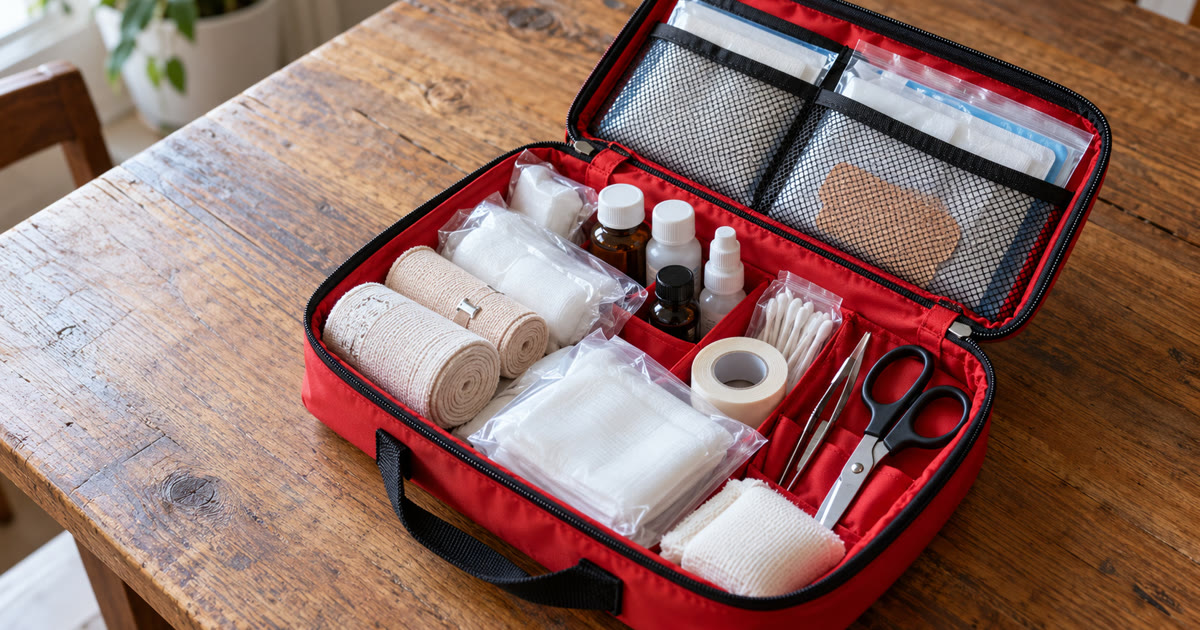
- Wound care: adhesive bandages in several sizes, gauze pads, a roll of gauze, medical tape, antiseptic wipes.
- Bleeding control: at minimum, pressure dressings; a dedicated trauma kit is better for serious bleeding (see our guide to stopping severe bleeding).
- Burns and blisters: burn gel, blister pads — cheap items that get used constantly in real life, not just emergencies.
- Sprains and fractures: an elastic bandage and a way to splint, even improvised.
- Medications: pain relievers, antihistamines, anti-diarrheal — check expiration dates every year.
- Tools: tweezers (for splinters and ticks), small scissors, nitrile gloves, a CPR mask.
Home and car kits
A solid option here is a compact first aid kit sized for hiking that also works well tossed in a car — it’s light enough to keep in a glovebox but stocked with the basics you’d actually reach for. For a stationary home kit, a larger fixed box with extra stock (more bandages, more gauze, replacement medication) makes more sense than carrying capacity.
Trail and backpacking kits
On the trail, every ounce counts, so a trimmed-down kit focused on blisters, minor wounds, and sprain support beats a bulky all-in-one box. Add a tick-removal tool and any personal medications. Pair it with basic wilderness first aid knowledge — knowing how to use what’s in the kit matters more than the kit itself.
What’s usually missing from pre-made kits
- Enough bandages for more than one or two incidents — most pre-made kits are thin on consumables.
- Personal medications and known allergy needs.
- A written list of emergency contacts and any medical conditions, especially for kids’ kits.
- Instructions — a small first aid manual or laminated card is worth adding since memory fails under stress.
Maintaining your kit
Check it twice a year: replace used items, swap expired medication and ointments, and confirm nothing has melted or frozen if it’s stored in a car. A kit that looks full but has expired antiseptic and dried-out burn gel isn’t actually ready.
Frequently asked questions
What’s the difference between a home and a trail first aid kit?
A home kit can be larger and heavier since it doesn’t need to be carried, with more consumables on hand. A trail kit is trimmed down for weight, focusing on blisters, minor wounds, and sprain support.
How often should I check my first aid kit?
Twice a year is a good baseline — check expiration dates on medication and ointments, and restock anything used or missing.
Do I need a separate trauma kit for severe bleeding?
Yes, ideally. Standard first aid kits aren’t built for severe bleeding control. A dedicated trauma kit with a tourniquet and pressure dressing is a worthwhile add, especially for hiking or range use.
What size kit do I actually need?
Match it to use case: a 150+ piece kit for home/car covers most household incidents, while a compact 50-100 piece kit is enough for day hikes and keeps weight down.
Should kids have their own first aid supplies?
A family kit covers kids fine, but adding kid-sized bandages and noting any allergies or conditions on a card inside the kit helps anyone else administering care.
What tools should every kit include besides bandages?
Tweezers, small scissors, nitrile gloves, and a CPR face shield are easy to overlook but come up often in real situations.
Bottom line
Pick your kit based on where it’ll live: a bigger, well-stocked kit for home and car, a lighter trimmed kit for the trail. Either way, check it twice a year — an expired kit gives false confidence.
Related guides
🎧 How to Stop Severe Bleeding
💊 How to Treat a Wound in the Wild
🏠 How to Make a Family Emergency Plan
This article is for general informational purposes only and is not medical advice. Product availability, pricing, and specifications change; check current listings. Sources: American Red Cross first aid guidance; CDC wilderness first aid recommendations.