
This site stays free thanks to small commissions from links like the ones below — it never costs you anything extra, and it never changes what we recommend. As an Amazon Associate we earn from qualifying purchases. Learn more.
Far from a hospital, a small cut you’d shrug off at home can turn into a real problem if it’s not cleaned and cared for properly. This guide covers how to treat a wound in the wild: stopping bleeding, cleaning, closing, and watching for infection when help is hours or days away.
Quick answer
Control bleeding with direct pressure first. Once bleeding is controlled, irrigate the wound with clean water under pressure to flush out debris, close small clean wounds with butterfly closures or steri-strips if the edges meet easily, cover with a sterile dressing, and change it daily while watching for redness, swelling, warmth, or pus — signs of infection that need real medical care.
Step 1: stop the bleeding
- Apply firm, direct pressure with the cleanest cloth or gauze available. Don’t lift to check — keep steady pressure for several minutes.
- Elevate the wounded area above heart level if possible.
- For bleeding that won’t stop with pressure or is spurting, this is beyond routine wound care — see our guide to stopping severe bleeding, which may require a tourniquet and evacuation.
Step 2: clean the wound
- Wash your hands or put on gloves if you have them, before touching the wound.
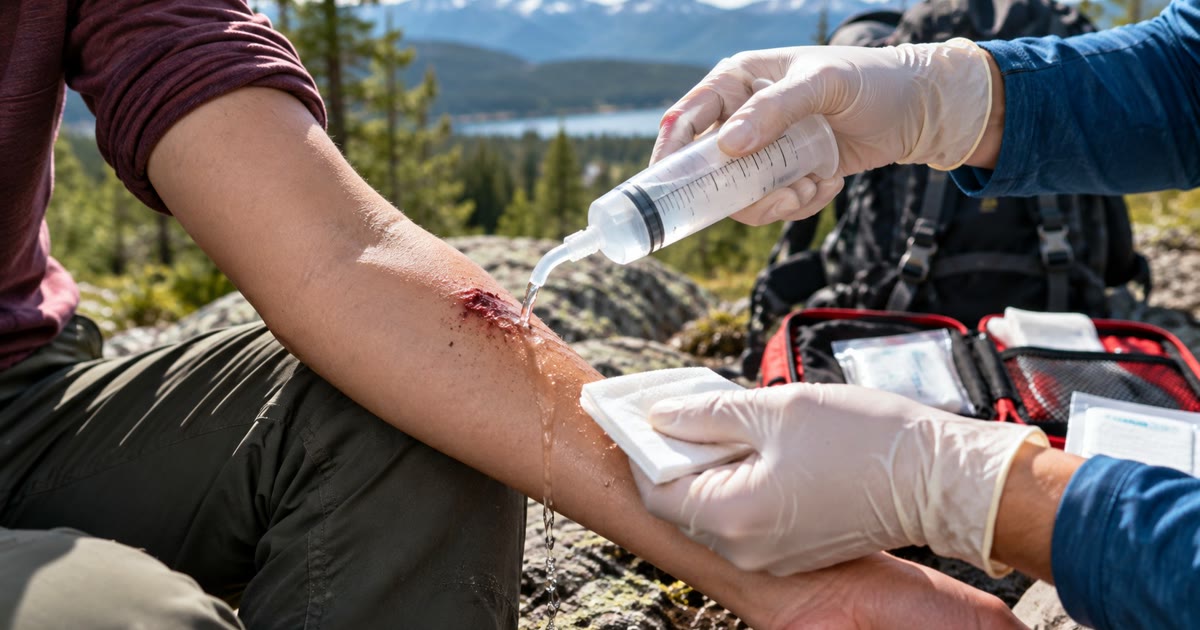
- Irrigate thoroughly with the cleanest water available, under some pressure — a syringe, a punctured water bottle cap, or a hydration bladder tube all work. This is the single most effective step for preventing infection; aim for at least a pint of water through the wound.
- Remove visible debris (dirt, splinters, bark) with clean tweezers once irrigated.
- Avoid alcohol, iodine, or hydrogen peroxide directly in the wound — they can damage healthy tissue and actually slow healing; save antiseptics for the surrounding skin, not the wound bed itself.
- Pat the surrounding skin dry; leave the wound itself slightly moist for better closure and healing.
Step 3: decide whether to close it
- Close with butterfly/steri-strips if: the wound is clean, the edges come together easily without gaps, it’s less than about 6–8 hours old, and it’s not on a joint that will pull it open.
- Leave open and just dress if: the wound is deep, gaping, jagged, contaminated, an animal or human bite, or more than 8 hours old — closing a dirty wound traps bacteria inside and raises infection risk significantly.
- Never close a deep puncture, a wound with embedded debris you can’t fully remove, or anything showing early infection signs.
Step 4: dress and protect
- Apply a thin layer of antibiotic ointment if you have it, then a sterile non-stick dressing.
- Secure with gauze wrap or tape, snug but not tight enough to cut circulation.
- Change the dressing daily (or sooner if wet or dirty), re-checking and re-irrigating if needed.
- Keep the wound protected from dirt and water during activity when possible — a waterproof cover for bathing or stream crossings.
Watching for infection
Check the wound at every dressing change for:
- Increasing redness spreading from the wound edges (a thin red line tracking up a limb is a serious sign — possible lymphangitis, needs urgent care).
- Swelling, warmth, or throbbing pain that’s getting worse, not better.
- Pus or cloudy discharge, or a foul smell.
- Fever, chills, or feeling generally unwell.
Any of these means the wound needs real medical attention, including possible antibiotics — don’t wait it out in the field if these appear and evacuation is possible.
Special cases
- Puncture wounds: bleed a little intentionally if deep and dirty (encourages debris out), irrigate deeply, don’t close, and watch closely — these have an outsized infection risk relative to their size.
- Animal bites: irrigate extensively, do not close, and get medical care — rabies risk and bite-wound infection rates are both high.
- Burns: cool with water, don’t pop blisters, cover loosely, and treat as a wound once any blister breaks on its own.
- Fishhooks and splinters: remove cleanly if shallow and accessible; leave deeply embedded objects for professional removal rather than digging and causing more damage.
What to carry
A irrigation syringe, butterfly closures, sterile gauze, non-stick pads, medical tape, antibiotic ointment, and nitrile gloves cover the vast majority of field wound care. See our full first aid kit checklist.
Frequently asked questions
What’s the most important step in treating a wound in the wild?
Thorough irrigation with clean water under some pressure. It physically flushes out bacteria and debris better than any antiseptic, and is the single biggest factor in preventing infection in a wound you can’t get professionally cleaned.
Should you close a wound in the wilderness?
Only if it’s clean, the edges meet easily, it’s less than 6 to 8 hours old, and not on a joint. Dirty, deep, gaping, or bite wounds should be left open and dressed, since closing traps bacteria and raises infection risk.
Can you use alcohol or hydrogen peroxide to clean a wound?
Not directly in the wound. Both can damage healthy tissue and slow healing. Use them on intact surrounding skin if needed, but rely on thorough water irrigation to clean the wound itself.
What are the signs a wild wound is getting infected?
Spreading redness, increasing swelling or warmth, pus or foul discharge, worsening pain, or fever. A red line tracking up a limb from the wound is a serious sign requiring urgent medical care.
How often should you change a wound dressing in the field?
At least once a day, or sooner if it becomes wet or dirty, checking the wound each time for signs of infection and re-irrigating if debris is present.
Are puncture wounds more dangerous than cuts?
For their size, yes. Punctures trap bacteria deep in the tissue with a small surface opening, making infection more likely. They generally shouldn’t be closed and need thorough irrigation and close monitoring.
Bottom line
Stop the bleeding, irrigate thoroughly with clean water, close only clean fresh wounds with easily-meeting edges, dress and change daily, and watch closely for spreading redness, swelling, or pus. A small, well-tended wound rarely becomes a real problem — a dirty, ignored one can.
Related guides
🩹 How to Build a Survival First Aid Kit
💊 How to Stop Severe Bleeding
💧 How to Purify Water in the Wild
This article is for general informational purposes only and is not a substitute for professional medical care or wilderness first aid training. Sources: Wilderness Medical Society wound management guidelines; American Red Cross first aid guidance; CDC wound care and infection guidance.