
This site stays free thanks to small commissions from links like the ones below — it never costs you anything extra, and it never changes what we recommend. As an Amazon Associate we earn from qualifying purchases. Learn more.
Reading and watching only takes you so far — real competence comes from hands-on instruction and repetition with other people. This guide covers where to learn survival and preparedness skills: the classes worth paying for, the free and low-cost options near you, and the communities that keep you practicing.
Quick answer
Start with certified first aid, CPR, and Stop the Bleed (Red Cross, American Heart Association, local hospitals). Add your county’s free CERT (Community Emergency Response Team) course. For wilderness skills, take a weekend class from a reputable local school or a Wilderness First Aid course. Get a ham radio license through a local club. Then keep the skills alive with a practice group — friends, family, a club, or an online community with local meetups.
Foundational classes (do these first)
- First Aid / CPR / AED — American Red Cross and American Heart Association offer these everywhere, in person and hybrid. This is the highest-value class for the money, full stop.
- Stop the Bleed — a free ~90-minute course on controlling life-threatening bleeding with pressure, packing, and tourniquets. Offered by hospitals, fire departments, and schools.
- CERT (Community Emergency Response Team) — free, run through local emergency management or fire departments under FEMA. About 20–30 hours covering disaster prep, light search and rescue, fire safety, triage, and team organization. Search “[your county] CERT.”
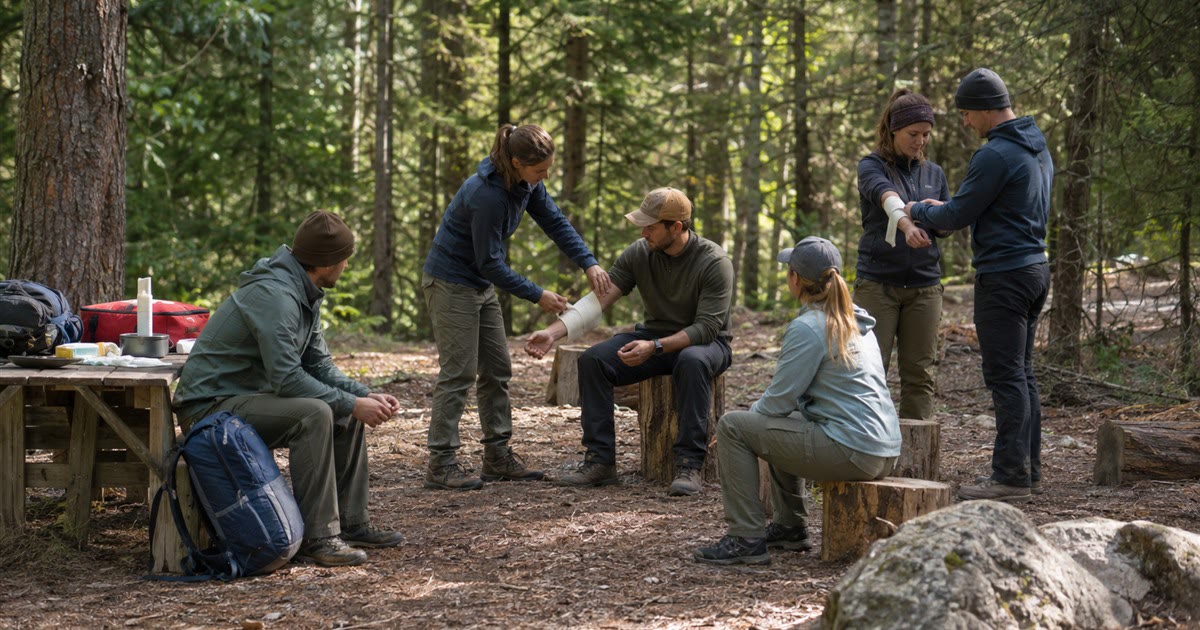
- Wilderness First Aid (WFA) — a 16-hour weekend course (NOLS, SOLO, or similar) on managing injuries and illness when help is hours or days away. Wilderness First Responder (WFR) is the 70–80 hour version for trip leaders.
Wilderness and bushcraft schools
Weekend and week-long courses in fire, shelter, water, navigation, foraging, and trapping. Look for schools with a long track record, small student-to-instructor ratios, verifiable reviews, and a clear safety and ethics policy. Well-known U.S. names include the Boulder Outdoor Survival School (BOSS), Sigurd Olson / Vermont Wilderness School, the Pathfinder School, Ancestral Knowledge, and regional schools in most states. How to choose: match the course to your environment (desert, eastern woodland, mountains), start with an intro weekend, and ask what you’ll actually build and do each day.
Navigation, climbing, and water skills
- Map and compass / land navigation — orienteering clubs (find one through the U.S. orienteering association), REI classes, and Scouting programs. Pair with a real map and a baseplate compass.
- Swiftwater and water safety — if you paddle or live near rivers, a swiftwater rescue course is worth it.
- Winter skills / avalanche (AIARE) — essential before any backcountry winter travel.
Communications: get your radio license
When phones and internet fail, amateur (ham) radio still works. The entry-level Technician license takes a weekend of study and a 35-question exam; local clubs (find one via the ARRL club finder) run classes and test sessions and will help you get on the air. GMRS is a simpler license-by-fee option for family radios. Start with an inexpensive dual-band handheld and practice on local repeaters and weekly nets. See our two-way radio guide.
Food, water, and self-reliance skills
- Home food preservation — your USDA Cooperative Extension office (every U.S. county has one) offers low-cost, science-based canning, dehydrating, and pressure-canning classes and will test your pressure-canner gauge.
- Gardening — Extension Master Gardener programs, community gardens, and seed libraries.
- Foraging — only learn wild plants and mushrooms in person, from a regional expert, with a regional field guide. Never from a photo alone.
- Butchery, baking, fermentation, sewing, small-engine repair — community colleges, maker spaces, and adult-education programs.
Free and low-cost resources
- Ready.gov and FEMA’s free online courses (Independent Study, e.g. IS-22 “Are You Ready?”) — solid baseline planning material.
- Red Cross Emergency and First Aid apps — step-by-step guidance offline.
- Local fire departments — many run free home-safety, extinguisher, and preparedness sessions.
- Libraries and county emergency management — workshops, tool libraries, and CERT sign-ups.
- Scouting, 4-H, and search-and-rescue volunteer units — structured skill progressions and mentors.
Communities that keep you practicing
Skills fade without use, so the community matters as much as the class:
- A personal practice group — two or three friends or family who train monthly. The most effective option by far.
- Local clubs — orienteering, ham radio (ARRL-affiliated), hiking and mountaineering clubs, garden clubs, CERT teams.
- Neighborhood networks — Map Your Neighborhood and similar programs organize blocks for disaster response.
- Online with local meetups — reputable forums and subreddits (r/preppers, r/bushcraft, r/CampingandHiking) for reference and gear talk; use them to find people to train with in person, and filter out fear-driven content.
- Faith and civic groups — many run preparedness and mutual-aid programs.
A 6-month learning plan
- Month 1: First Aid/CPR + Stop the Bleed.
- Month 2: Sign up for the next CERT cohort; start Technician license study.
- Month 3: Land navigation class or orienteering meet; take the radio exam.
- Month 4: Extension food-preservation class; start a monthly practice group.
- Month 5: Weekend intro wilderness/bushcraft course for your region.
- Month 6: Wilderness First Aid; join a local club to keep skills current.
Frequently asked questions
What survival class should I take first?
A certified First Aid, CPR, and AED course, plus the free Stop the Bleed class. Medical emergencies are the most likely and most time-critical, and these skills apply everywhere from the trail to the kitchen.
What is CERT and is it worth it?
Community Emergency Response Team is a free FEMA-based program run by local emergency management, usually 20 to 30 hours, covering disaster preparedness, fire safety, light search and rescue, disaster medical basics, and team organization. It’s one of the best free preparedness trainings available, and it plugs you into a local response network.
How do I find a reputable wilderness survival school?
Look for years in operation, small class sizes, verifiable reviews, instructors with real credentials, a written safety policy, and a curriculum matched to your region. Start with a one- or two-day intro course before committing to a longer program.
Do I need a license to use a survival radio?
To transmit on amateur (ham) bands, yes — the entry-level Technician license requires a 35-question exam that a weekend of study covers, and local clubs run classes and test sessions. GMRS requires a license by fee with no exam. FRS walkie-talkies and receiving on a weather radio need no license.
Where can I learn home canning safely?
Your county USDA Cooperative Extension office offers low-cost, science-based classes in water-bath and pressure canning, dehydrating, and fermentation, and will test your pressure-canner gauge. Always follow current tested recipes.
Are online prepping communities useful?
Yes for reference, gear discussion, and finding local people to train with, but quality varies and some content is fear-driven. Use them to organize in-person practice and cross-check advice against authoritative sources like Ready.gov, the Red Cross, and Extension.
Bottom line
Book a First Aid class this month, sign up for CERT, get a radio license, and take one hands-on wilderness course for your region — then lock it in with a small group that practices monthly. Certifications open doors; the practice group is what makes the skills stick.
Related guides
🧠 15 Wilderness Survival Skills
📚 Best Survival Books (Honest Picks)
📻 Best Two-Way Radios for Emergencies
This article is for general informational purposes only. Program names are examples, not endorsements; verify current offerings and credentials locally. Sources: FEMA CERT program; Ready.gov; American Red Cross and American Heart Association training catalogs; ARRL licensing information; USDA Cooperative Extension / National Center for Home Food Preservation.