
This site stays free thanks to small commissions from links like the ones below — it never costs you anything extra, and it never changes what we recommend. As an Amazon Associate we earn from qualifying purchases. Learn more.
You almost certainly have survival-useful items sitting in a kitchen drawer or garage shelf right now without realizing it. This guide covers survival uses for common household items — things you already own that double as real emergency gear.
Quick answer
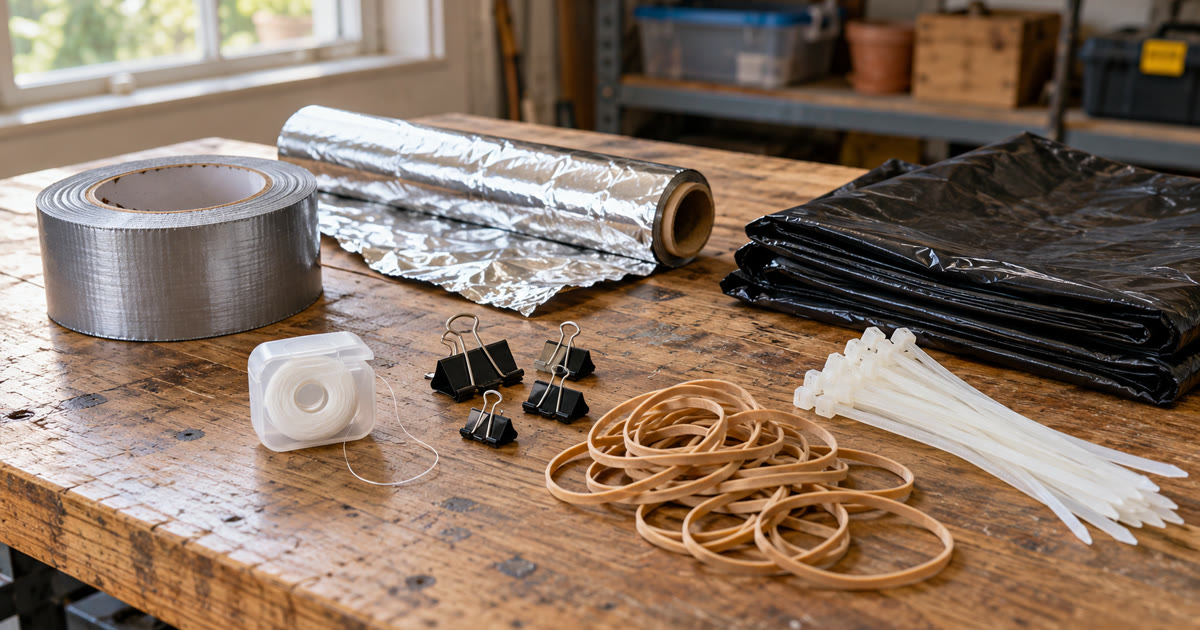
Duct tape, aluminum foil, plastic bags, dental floss, and cotton balls with petroleum jelly are among the most versatile household items for survival use, covering repairs, water collection, signaling, cordage, and fire-starting respectively.
Kitchen items
- Aluminum foil: doubles as a makeshift reflector for signaling, a cooking surface, or emergency insulation when shaped around a container.
- Plastic bags and wrap: waterproofing, water collection (tied around leafy branches to collect condensation), and improvised bandaging over wounds to keep them dry.
- Cotton balls with petroleum jelly: an excellent, cheap fire-starting tinder — the petroleum jelly makes them burn longer and catch more easily than dry cotton alone.
- Coffee filters: a decent pre-filter for removing sediment from dirty water before using a proper purification method.
Bathroom and medicine cabinet items
- Dental floss: surprisingly strong cordage for small repairs, lashings, or even improvised sutures in a true emergency (with proper sterilization and knowledge).
- Maxi pads: designed to absorb fluid — a genuinely effective improvised wound dressing for larger wounds when proper gauze isn’t available.
- Super glue: can close small cuts in a pinch (medical-grade cyanoacrylate exists, but household super glue has been used this way historically).
Garage and tool items
- Duct tape: repairs gear, seals leaks, splints minor injuries alongside a rigid support, and can even patch a small hole in a tent or tarp.
- Zip ties: fast, strong fastening for gear repair or securing a shelter tarp.
- WD-40 or similar lubricant: can help start a fire when sprayed on dry tinder (flammable, use carefully) and prevents rust on tools stored long-term.
Clothing and textile items
- Socks: can be used as improvised mittens, water filters (basic sediment removal), or padding inside boots for insulation.
- A bandana or large cloth: dozens of uses — bandage, dust mask, water pre-filter, signal flag, sling, or carrying pouch.
A caution on improvised use
These items are backups, not replacements for proper gear — dental floss as sutures or super glue on a wound carries real infection risk compared to sterile medical supplies. Use improvised solutions when nothing better is available, and seek proper medical care when it is.
Frequently asked questions
What household item is most useful for fire-starting?
Cotton balls soaked in petroleum jelly — cheap, light, and they catch a spark easily while burning long enough to ignite kindling.
Can I really use dental floss for sutures?
In a true emergency with no better option, it has been used this way historically, but it carries real infection risk compared to sterile medical sutures — treat it as a last resort, not a plan.
What’s a good improvised wound dressing?
Maxi pads are designed to absorb fluid and work surprisingly well as an improvised dressing for larger wounds when gauze isn’t available.
Can aluminum foil really be used for signaling?
Yes, its reflective surface can catch and redirect sunlight similar to a signal mirror, though a dedicated signal mirror works better and more reliably.
Is duct tape actually useful for survival situations?
Very much so — it repairs gear, seals leaks, helps splint injuries alongside rigid support, and patches small holes in tents or tarps.
Should I rely on household items instead of a proper survival kit?
No, these are useful backups and good to know, but a dedicated, properly stocked kit should always be your primary plan.
Bottom line
Everyday household items — duct tape, foil, plastic bags, dental floss, cotton balls with petroleum jelly — have real survival uses, but they’re backups for when proper gear isn’t available, not a substitute for a stocked kit.
Related guides
🔥 How to Start a Fire Without Matches
🧭 25 Paracord Uses Every Prepper Should Know
🏠 How to Make a Family Emergency Plan
This article is for general informational purposes only and is not medical advice. Improvised solutions carry risks compared to proper equipment; seek professional care when available. Sources: American Red Cross improvised first aid guidance; U.S. Army survival manual field expedient guidance.